
Get Ready! Important Announcement Tomorrow Could Bring Unfavourable News
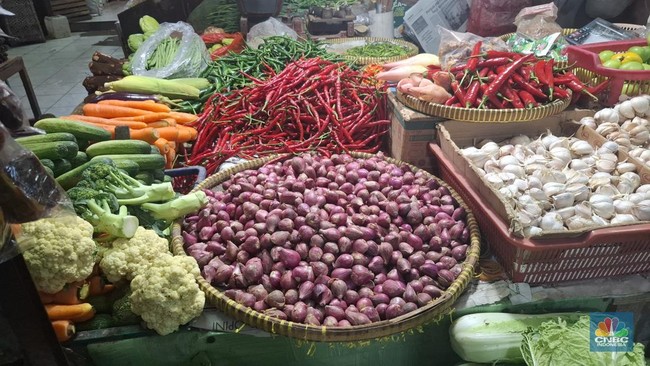
Jakarta, CNBC Indonesia - Indonesia’s inflation is expected to increase again in September 2026. Rising prices for several food commodities are one of the largest sources of pressure, especially chillies.
The Central Bureau of Statistics (BPS) is scheduled to announce the September 2026 inflation data tomorrow, Thursday (1/10/2026).
A market consensus gathered by CNBC Indonesia from 12 institutions/agencies predicts that the Consumer Price Index (CPI) will experience inflation of 0.30% month-to-month (mtm) in September 2026. On a year-on-year (yoy) basis, inflation is expected to be at the 3.30% level.
In the inflation data announcement for the previous period, BPS recorded inflation of 0.21% (mtm) and 3.19% (yoy) in August 2026. Consequently, the polling results indicate that inflationary pressure is expected to increase both monthly and annually in September.
Food Prices Heat Up Again
Rising food prices are one of the primary drivers of inflation in September. Bank Mandiri Chief Economist Andry Asmoro predicts that the volatile food group will experience inflation of 1.77% (mtm), an increase from 0.88% in August. Pressure comes mainly from the prices of bird’s eye chillies and red chillies. Based on Bank Mandiri’s monthly average calculations, the price of bird’s eye chillies rose by approximately 37% compared to August, while red chillies increased by about 25%.
Rice prices are also expected to rise by 0.76% monthly, higher than the 0.27% increase in the previous month. This movement is also reflected in the National Strategic Food Price Information Centre (PIHPSN) data. The average price of bird’s eye chillies during September surged by 30.34% to Rp81,634 per kilogram, from Rp62,631 per kilogram in August. The average price of red chillies also rose by 23.40% to Rp62,991 per kilogram, from Rp51,045 per kilogram in the previous month. The increase in these two commodities is one of the main sources of food price pressure during September.
A similar view was expressed by Bank Danamon Economist Hosianna Evalita Situmorang. According to her, food is the main source of the inflation increase in September. “The main driver comes from volatile food, specifically the increase in chilli prices,” Hosimanna told CNBC Indonesia.
Bank Maybank Indonesia Economist Juniman also sees pressure coming from more food commodities. “September inflation is primarily driven by the rise in food prices such as rice, cooking oil, beef, chicken, eggs, wheat, chillies, and red chillies,” Juniman told CNBC Indonesia.
Non-Subsidised Fuel Price Increases Also Contribute to Inflationary Pressure
In addition to food, the increase in non-subsidised fuel (BBM) prices also contributed to the inflationary pressure occurring throughout September. Pertamina implemented price adjustments for several non-subsidised fuel products starting 1 September 2026. Bank Mandiri noted that the prices of Pertamax Turbo, Dexlite, and Pertamina Dex increased by approximately 7%-20% compared to the previous month.
Bank Mandiri predicts that the administered prices group will experience a slight inflation of 0.02% (mtm), after recording deflation of 0.33% in August. However, pressure from this group is expected to remain limited as both subsidised fuel prices and electricity tariffs did not undergo adjustments.
“Pressure on administered prices is relatively limited because there were no adjustments to subsidised fuel prices or electricity tariffs,” said Hosianna.
Aviation tariffs are also expected not to exert significant pressure. Bank Mandiri noted that ticket prices from online bookings tended to be lower, even though the upper limit for additional fuel surcharges was increased from 30% to 40% at the beginning of September.
Price pressure also comes from several core inflation components. Juniman stated that education costs are rising alongside the start of the new academic year for higher education. “Education costs are increasing in line with the start of the new academic year for academies and universities,” said Juniman.
He also assessed that the movement of the rupiah is influencing the price of imported goods, which is visible in items such as electronics, cars, and motorcycles. “The weakening of the rupiah has contributed to increased import inflation, reflected in the rising prices of electronic goods, cars, and motorcycles,” said Juniman.
However, Bank Mandiri sees the potential for overall core inflation to slow down. Monthly core inflation is expected to be 0.13% in September, lower than 0.21% in August. One of the moderating factors is the price of gold, which is expected to fall by approximately 2.2% monthly after rising in August. Bank Mandiri also noted that the rupiah strengthened by about 0.54% throughout September in its calculations.
Under these conditions, the September inflation increase is expected to stem more from food prices and certain specific components, rather than a price increase occurring uniformly across all groups of goods and services.