
Germany’s Economy Trapped in Crisis as Chinese Competition Intensifies
Germany’s export-led economic model is facing unprecedented pressure amid rising support for the far-right Alternative für Deutschland (AfD).
Competition from Chinese companies is gradually eroding the market share of key German industries. Persistently high energy prices, expensive labour and cumbersome bureaucracy are compounding the country’s structural economic crisis.
After contracting for two years, Germany’s real gross domestic product (GDP) grew by just 0.2% last year, according to the Federal Statistical Office, Destatis. German exports to China fell by 9.7% in 2025, while shipments of vehicles and automotive parts to the country plunged by a third.
Although there are signs that Germany’s economy is beginning to recover, the government’s latest forecast of 1.3% growth in 2026 remains modest compared with the rapid expansion seen before the COVID-19 pandemic.
The AfD is currently ahead of other political parties in several German opinion polls. The country’s economic challenges are among the main factors driving increased support for the right-wing populist party.
Germany’s domestic intelligence agency says there are strong indications that the AfD as a whole is a far-right party.
The AfD has pledged to put Germany back on a path to economic growth by halting the transition to renewable energy, cutting taxes and renegotiating European Union agreements. It also wants to reform the welfare system and drastically restrict immigration.
Merz targets growth through advanced technology
As Chancellor Friedrich Merz’s coalition government seeks a new growth strategy to counter the rise of populist politics, Germany has set out a high-tech development agenda focused on six priority sectors.
These are artificial intelligence (AI), quantum computing, microelectronics, biotechnology, clean energy including nuclear fusion, and carbon-neutral mobility.
Irene Bertschek, head of the Digital Economy research unit at the Leibniz Centre for European Economic Research (ZEW), says Germany has very strong research capabilities in these key enabling technologies, particularly carbon-neutral technology.
However, the research is often commercialised abroad. The United States still leads in AI development, while China is rapidly closing the gap, Bertschek told DW.
New investment worth trillions of euros
A report published on Monday by the Made for Germany initiative, a group of 147 companies and investors, expands on the government’s plan. It estimates that the new technologies and related sectors could attract as much as €4.1 trillion (about Rp78.8 quadrillion) in investment by 2035.
Realising that potential, however, will not depend primarily on established industrial giants such as Volkswagen, Siemens and BASF.
“It will not be mainly the established companies that conquer these new fields, but innovative newcomers — start-ups,” Oliver Falck, director of the ifo Center for the Economics of Innovation and Digital Transformation, told DW.
Falck said the challenge was to create conditions that enable start-ups to grow, including proximity to leading universities, access to private capital and the freedom to experiment.
He also urged the government to provide early-stage funding, known as the “valley of death”. The term refers to the risky phase between research and commercial viability, when private funding is often difficult to secure.
Investors target sectors with growth potential
Several indicators suggest that this shift is already under way. Data from Deutsche Bank and startupdetector, a German start-up database and market intelligence platform, show that more than 3,000 start-ups were established in Germany in the first half of 2026, an 88% increase on the same period last year. A third of the new companies focus on AI.
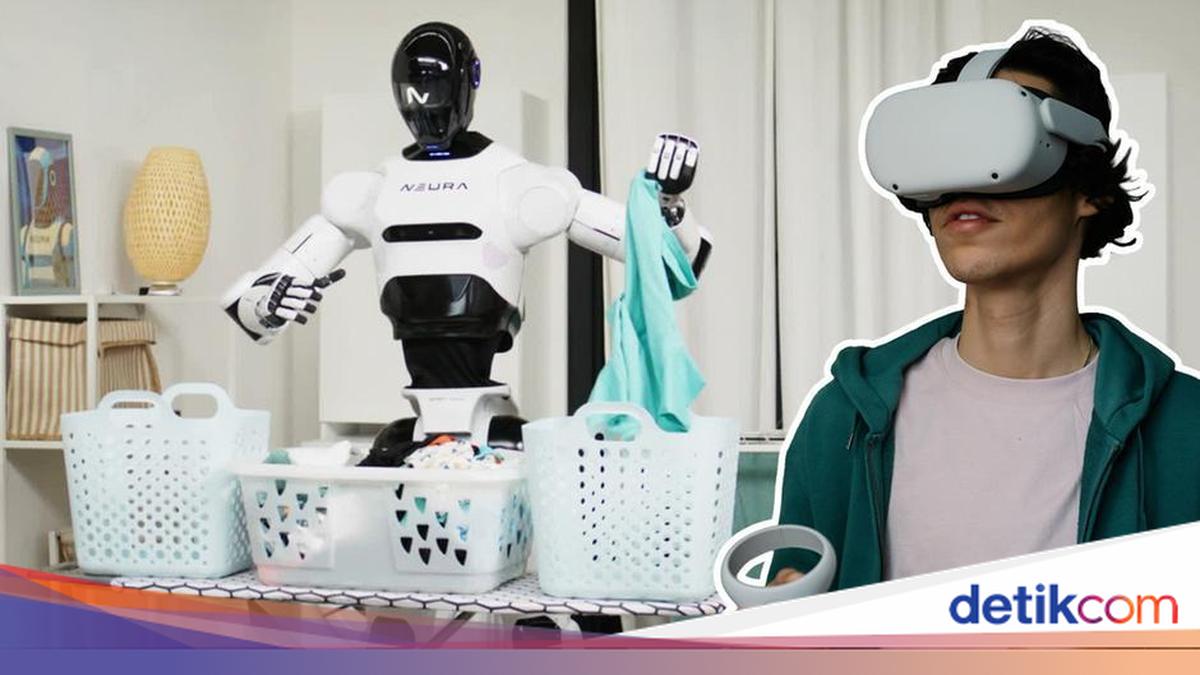
Venture capital investment surged by 44% to €5.8 billion (about Rp111.4 trillion) in the first half of 2026. Beneficiaries include Neura Robotics and drone manufacturers Stark and Quantum Systems.
Meanwhile, US investors are increasingly acquiring well-known German Mittelstand companies — traditional small and medium-sized enterprises (SMEs) with specialised technologies.
“The German Mittelstand is highly innovative. What matters now is investing in key technologies such as artificial intelligence and harnessing the potential that comes from combining them with established technologies,” Bertschek said.
Bertschek, who also chairs the German government’s Commission of Experts for Research and Innovation (EFI), said SMEs should make better use of the large volumes of production data they hold. They should also work with AI start-ups to help these young companies grow.
Proposal to establish special economic zones
Another idea for accelerating the shift to high-tech sectors comes from Sven Gabor Janszky, head of Leipzig-based futures research institute 2b AHEAD. He argues that Germany needs special economic zones to capture the next wave of economic growth.
“For certain technologies, you relax regulations, recruit ambitious workers and channel funding into those zones,” Janszky told DW.
He said the approach could emulate Silicon Valley in the United States and major Chinese cities such as Shenzhen and Shanghai’s Pudong district. The model also recalls the conditions that helped rebuild Germany’s economy after the Second World War.
Janszky believes special economic zones could help Germany become a pioneer in emerging fields rather than continuing to rely on the strengths of its legacy industries.
“EU regulations may try to prohibit this, but Germany has to overcome that so we can grow the economy again,” he added.
Defence spending to boost technology growth
Germany’s sharp increase in defence spending will also help develop several high-tech sectors now designated as government priorities.
According to the International Institute for Strategic Studies (IISS), Germany’s defence budget is expected to reach about €120 billion (around Rp2.3 quadrillion) in 2026, equivalent to roughly 2.6% of GDP. The government aims to raise that figure to 3.5% by 2029.
The defence procurement associated with the increase will provide a major boost to the production of drones, sensors, communications systems and other dual-use technologies, which can serve both civilian and military purposes.
Cost gaps are not always decisive
China, Germany’s main competitor, has a significant advantage through much lower energy and labour costs, as well as substantial government subsidies. This means Germany may continue to face a price disadvantage when exporting newly developed advanced technologies. But, according to Falck of the ifo institute, that does not necessarily mean Germany cannot compete.
“Take the semiconductor industry, for example. It may not be realistic for Germany to aim for a leading position across the entire value chain. But it can be enough to lead in certain strategic areas,” he said.
“And that is precisely where Germany has an advantage: as a supplier of equipment for cutting-edge semiconductor factories and as a supplier of power semiconductors for enormous AI factories around the world.”
In other words, with the advantage of being an early mover, decades of high-quality production data and a focus on specialised niches, Germany can still maintain an important position in advanced technology and engineering.
Source: jawawa.id (https://jawawa.id/newsitem/germanys-economy-trapped-in-crisis-as-chinese-competition-intensifies-1792752811)
Originally published by detikcom (https://news.detik.com/dw/d-8720982/ekonomi-jerman-terjebak-krisis-persaingan-china-menguat), translated from Indonesian