
Germany Sheds WWII Trauma, Steps Up Military Build-Up
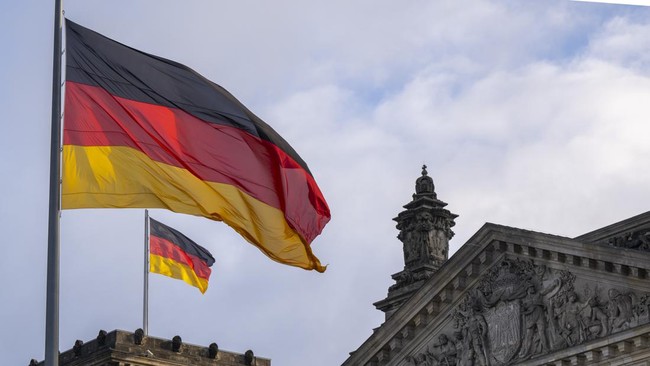
Jakarta, CNBC Indonesia - For decades after World War II, Germany was known for its extreme caution regarding military matters. As a nation with Europe’s most sensitive war history, Berlin was more often associated with economic strength, automotive industry, and exports rather than tanks or weaponry.
However, the war in Ukraine has gradually changed Germany’s approach to security.
In 2022, Chancellor Olaf Scholz announced a €100 billion special defence fund to modernise the German military, or Bundeswehr. This move marked one of Germany’s largest policy shifts since the end of the Cold War.
Scholz even referred to the moment as a “Zeitenwende” or “turning point”.
The Threat Now Feels Real
Invasion of Ukraine has made many European nations view war threats as tangible, not merely distant geopolitical issues.
For years after the Cold War, many European countries cut defence budgets. Now the situation is changing rapidly, with security issues returning to the heart of regional economic and political policy.
At the same time, the United States is increasingly focused on countering China in Asia. This has led many European nations to question how long they can continue relying on Washington’s security umbrella.
“There is no longer free security in Europe,” said German Defence Minister Boris Pistorius last year.
As Europe’s largest economy with a GDP of around $4.7 trillion, Germany faces mounting pressure.
NATO Targets Now a Focus
For years, Germany was criticised for defence spending being too low relative to its economic size.
NATO’s target is for members to spend at least 2% of GDP on defence. However, this target long sparked debate in Germany due to the sensitive nature of military issues in public opinion.
The war in Ukraine has changed many things.
In 2024, Germany is expected to meet the NATO 2% target for the first time in decades. According to NATO, German defence spending this year is projected to reach around €90 billion, equivalent to over Rp1.6 trillion.
This figure brings Germany closer to becoming one of Europe’s largest military powers.
Economic Ripple Effects
Increased defence spending is not just about tanks or fighter jets.
Europe’s defence industry is growing rapidly, from ammunition production, air defence systems, to military drones and AI technology. German defence firm Rheinmetall, for instance, saw its shares surge over 300% since the Ukraine war began in 2022.
The effects are spreading to other industries.
Large military expenditures typically drive manufacturing investment, supply chains, technology research, and new job creation. NATO estimates total defence spending by European and Canadian nations will exceed $430 billion in 2024, a sharp rise from pre-Ukraine war levels.
Not Just Germany
This change is occurring across many European nations.
Poland is now one of NATO’s highest military spenders relative to GDP, projected at over 4%. Finland and Sweden have also joined NATO after decades of neutrality.
Markets are already reacting to these shifts.
Shares of European defence companies like Rheinmetall, Saab, and BAE Systems have soared in recent years amid rising regional security demands.
Europe Enters a New Era
Germany’s shift is significant because it is no longer just about one country increasing its military budget.
For many analysts, Berlin’s move signals that the world may be entering a new security era. Major war has returned to Europe, while the United States can no longer be the sole “security umbrella” for its allies.
NATO Secretary-General Mark Rutte has even urged European nations to adopt a “wartime mindset” to tackle long-term threats.
For years, Germany’s economic strength overshadowed its military capabilities. But in an increasingly unstable world, Berlin now believes a strong economy alone is no longer sufficient.
For many analysts, this change may not only reshape Germany but also the direction of Europe for decades to come.