
Germany Faces Difficult Mission to Find a Permanent Repository for Nuclear Waste
Few political and environmental issues are as complex as managing radioactive waste from nuclear power plants. The problem remains unresolved in 31 countries that have or have had nuclear facilities, even though the first large nuclear power plant began operating in Russia in 1954.
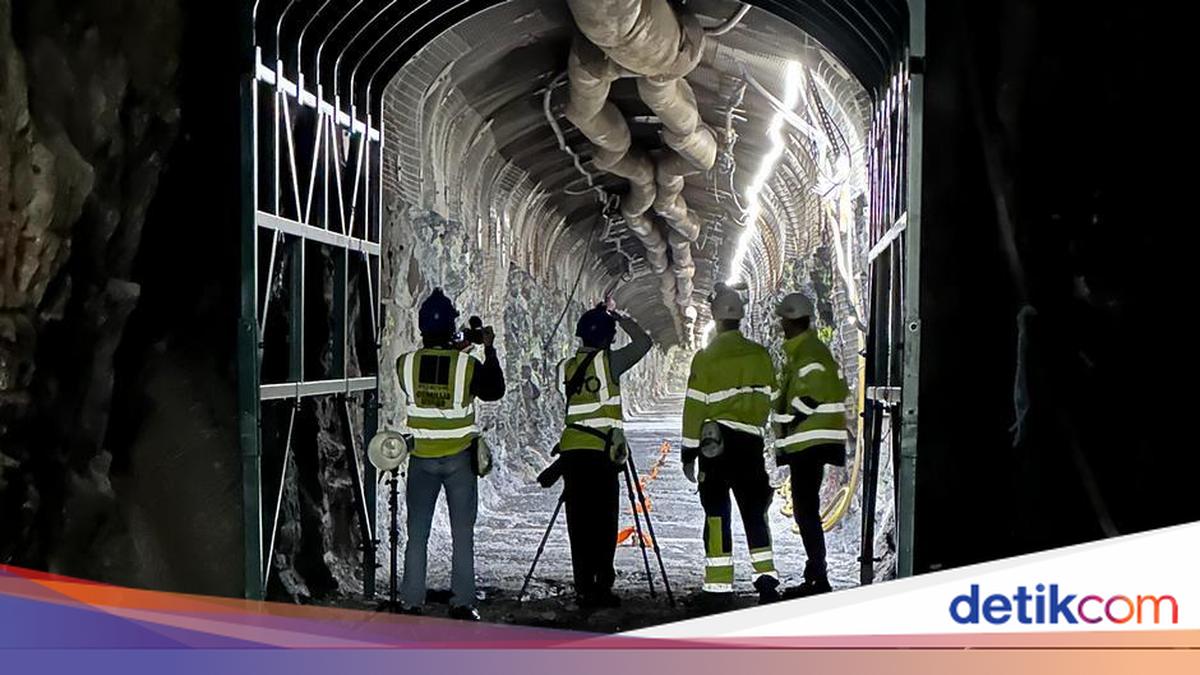
Finland is the first country in the world to have a final repository for highly radioactive nuclear waste. The facility is on an island in south-western Finland, 400 metres underground, at one of the country’s two nuclear power plants. The project took 40 years to complete.
Germany: a decade in search of a solution
In all the other countries that have had nuclear facilities, including Germany, there is still no clear solution. To use an analogy, the rubbish is ready to be collected by a lorry waiting outside the house, but the rubbish collectors have not arrived because there is nowhere to take it. Being surrounded by rubbish is unpleasant, and no one wants to live near a landfill site of this kind.
Germany is, however, making progress. The Bundesgesellschaft für Endlagerung (BGE), a state-owned company established specifically to deal with radioactive waste, is looking for a suitable site. It has been searching for nearly ten years and, following Finland’s example, is looking for a repository deep underground.
Most experts have long agreed that nuclear waste, particularly spent fuel from nuclear power plants, which will remain radioactive for thousands of years, must be buried underground.
Only five per cent of Germany’s territory meets the criteria
Germany hopes to identify a site for a permanent repository by 2050. However, Environment Minister Carsten Schneider (SPD) wants to review whether the search can be significantly accelerated. The minister’s spokesman, Stephan Gabriel Haufe, said at a federal press conference: “At least Russia, the United States, the United Kingdom and Japan do not yet have procedures as advanced as Germany’s. Finland is, of course, the global leader. But Germany is among the front-runners.”
This week, BGE announced that only five per cent of Germany’s territory remains eligible for consideration as a repository site, spread across 11 of the country’s 16 states. The state-owned company is consulting geologists, nuclear experts and physicists, as well as residents and politicians. One thing is clear: nuclear waste produced over decades of operating nuclear power plants must remain in Germany and will not be exported.
The nuclear plants have closed, but their waste remains
The waste is currently stored at the power plant sites. There are 19 former nuclear power plant sites in the process of being dismantled, as well as several research facilities. In 2011, following the reactor disaster in Fukushima, Japan, Germany ended the commercial use of nuclear energy. The last power plants were shut down in 2023. But the waste remains.
Dagmar Dehmer, head of communications at BGE, responded to DW’s question about why the search for a permanent repository is taking so long.
“Because safety has to be demonstrated over a very long period. In Finland, that is 100,000 years, while in Germany, Switzerland and France it is one million years. The work required is immense, regardless of projections about the future. Developments, interactions between geology and technology, and the radioactive decay of radionuclides over time all have to be considered together and assessed for safety,” Dehmer said.
Around 400 metres deep, surrounded by a strong rock barrier
Experts assess the geological safety of potential sites. They examine whether the rock formations at a depth of 400 metres are stable enough and whether groundwater could become contaminated. The aim is to find a repository surrounded by a rock layer about 100 metres thick as a barrier. Suitable geological formations include clay, granite and salt rock.
The criteria are tightened step by step, reducing the number of sites that qualify. Other considerations, such as proximity to major cities, will only be taken into account much later. One thing is certain: no one will welcome a permanent repository for radioactive waste, whether in a city or the countryside.
Dehmer: ‘Finland trusts government action’
Dagmar Dehmer’s task is to build public confidence in the government. She must continually explain why the legacy of nuclear power plants needs to be addressed, regardless of people’s views on nuclear energy.
Dehmer said this has been achieved in Finland: “There is a high level of trust in government action in Finland. The Finnish Radiation and Nuclear Safety Authority, Stuk, is one of the most respected institutions in the country. Germany can learn from Finland by persevering, not continually changing direction, and having the patience across generations needed to achieve a good result.”
Ultimately, permanent nuclear waste storage is extremely expensive. The search for a repository and the storage of waste at existing sites already cost about €1.4 billion a year (Rp28.4 trillion). Experts estimate that the repository facility itself could cost around €14 billion (Rp284 trillion) once completed. The hope is that the 28,000 cubic metres of radioactive waste will remain safely underground for ever.
Source: jawawa.id (https://jawawa.id/newsitem/germany-faces-difficult-mission-to-find-a-permanent-repository-for-nuclear-waste-1793793183)
Originally published by detikcom (https://news.detik.com/dw/d-8738486/jerman-dalam-misi-sulit-cari-tempat-penyimpanan-akhir-limbah-nuklir), translated from Indonesian