
Germany Calls Indonesia a Pillar of ASEAN Stability
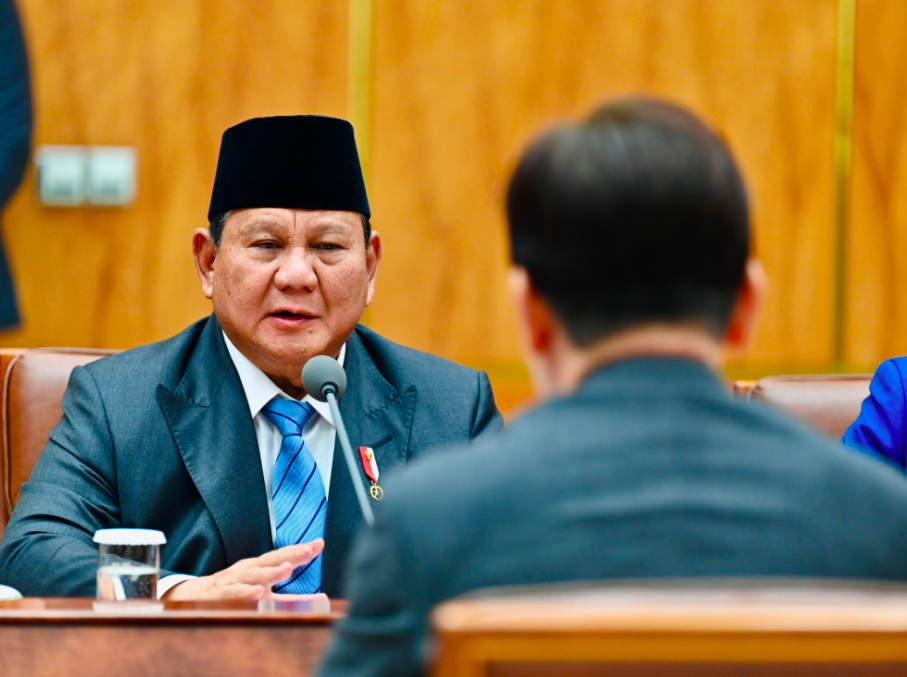
German President Frank-Walter Steinmeier has stressed Indonesia’s importance to Germany amid rising global uncertainty and conflict. During a state visit to the Merdeka Palace on Monday, Steinmeier described Indonesia as an increasingly vital factor for stability in the Southeast Asian region. This marks his fourth visit to Indonesia, a frequency he said reflects the strategic nature of the decades-long relationship. “The number of visits shows how important the relationship with Indonesia is for us in Germany,” Steinmeier stated.
He described a difficult global situation, citing the war in Europe, ongoing conflicts in various regions, and increasing violence as challenges requiring closer international cooperation. In this context, Steinmeier believes the partnership between Indonesia and Germany holds significance beyond bilateral relations, as both nations are committed to maintaining a world order based on rules and international principles. “In a situation where the world is shaken by increasing violence in many regions, a partnership like the one between Germany and Indonesia is very meaningful,” he said.
Steinmeier noted that the foundation of the relationship has been strengthened since the 2012 Jakarta Declaration, but vast potential remains for further cooperation in climate, education, research, and culture. He also highlighted the growing interconnectedness between Europe and the Indo-Pacific, stating that developments in the Asia-Pacific can no longer be separated from global dynamics affecting Europe. He praised ASEAN as a pillar of regional security architecture, with Indonesia holding a central position in maintaining stability. “Indonesia is an important stability factor within the ASEAN region. And we see that Indonesia not only believes in this role but is increasingly developing it,” he said.
Beyond geopolitical issues, discussions also touched on economic cooperation. Steinmeier expressed hope that the long-running negotiations on the Indonesia-European Union Comprehensive Economic Partnership Agreement (IEU-CEPA) can be concluded and signed soon. He noted the agreement could potentially eliminate up to 90% of trade tariff barriers and open new investment opportunities between Indonesia and European nations. Germany, he said, feels a responsibility to support the ratification process so that the economic benefits can be realised quickly, believing the deal will strengthen innovation cooperation, expand investment, and pave the way for German small and medium-sized enterprises to enter Indonesia.
Steinmeier views Indonesia not only as an attractive market but also as a promising investment destination, evidenced by the presence of German companies operating in the country and a business delegation accompanying his visit. He also addressed energy cooperation, stating that the transition to renewable energy cannot be achieved by countries in isolation, especially given the world’s ongoing dependence on fossil fuels. He sees many opportunities for collaboration between Indonesian and German companies to accelerate clean energy development and strengthen energy security.
Beyond political and economic agendas, Steinmeier highlighted tolerance as one of Indonesia’s strengths. Following the palace meeting, he was scheduled to visit the Istiqlal Mosque and inspect the Silaturahmi Tunnel connecting the mosque to the Jakarta Cathedral. Based on his previous visits, Steinmeier assessed that Indonesia has successfully maintained interfaith harmony and made it an important national value. He expressed appreciation for the government’s welcome and optimism that bilateral relations will continue to strengthen in the future, hoping that discussions with President Prabowo Subianto will lead to concrete cooperation benefiting both countries.