
German President’s Visit to China: Diplomatic Manoeuvring at a Critical Moment
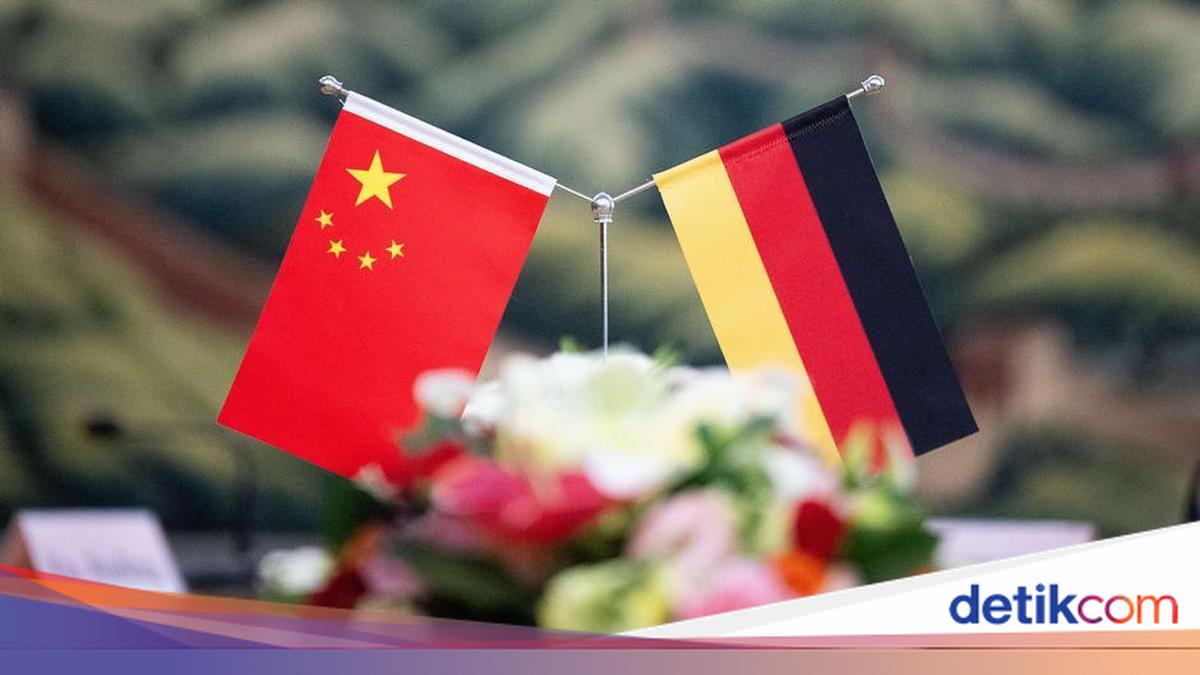
Eight years have passed since Frank-Walter Steinmeier’s last trip to China. Since then, China, Europe and the relationship between them have changed considerably.
During his several days in China, the German president intends to see the situation in the country first-hand before concluding his visit with meetings with Chinese leaders in Beijing.
The meetings are taking place as China’s leaders gather this week for the annual plenary session of the Central Committee of the Chinese Communist Party. Visits by foreign heads of state during this period are relatively rare.
According to the German President’s Office, the focus of the state visit, which runs from 26 to 31 October, is “Germany’s diverse and complex relationship with China, and the challenges that come with it”. In addition to visiting several sites that are centres of cultural exchange, Steinmeier is scheduled to visit Volkswagen’s factory in Hefei.
Diplomatic manoeuvring between competing interests
The automotive industry clearly illustrates the dilemma facing Germany in its China policy. For German carmakers, machinery manufacturers and chemical companies, China is one of the most important markets for selling their products.
At the same time, state-backed overcapacity in China is putting pressure on European producers. Dependence on raw materials and technology is also a concern, prompting Germany and Europe to step up efforts to find alternative partnerships.
Steinmeier, once a supporter of “change through trade” (Wandel durch Handel), a policy now shown to have failed, must now articulate a firmer European approach in Beijing.
Amid the tension between partnership and competition, Europe recently reached an agreement to reduce imports of plug-in hybrid vehicles from China. “That is a concrete step, but it can only be the beginning,” said Michael Laha, a China expert at the German Council on Foreign Relations (Deutsche Gesellschaft für Auswärtige Politik, DGAP) in Berlin.
German chancellor and president both travel to East Asia
At the same time as Steinmeier’s state visit to China, German Chancellor Friedrich Merz is travelling to the Indo-Pacific with a group of business representatives.
In Japan, Singapore and South Korea, the agenda includes competitiveness, technological transformation, defence cooperation and critical raw materials. Merz is visiting several companies and attending major regional economic conferences in Tokyo and Seoul.
Berlin is therefore sending two messages at once. While the chancellor is “deliberately strengthening Germany’s partnerships in the Indo-Pacific amid fundamental global change”, the president is seeking dialogue with Beijing as Germany and Europe recalibrate their relationship with China.
“This dual trip is a very carefully coordinated message to China: Germany remains committed to partnership, but is also pursuing a de-risking strategy,” said China expert Laha. He said this was a difficult balancing act, but one that also allowed China to save face.
Limited scope for human rights issues
While Merz is accompanied by a large business delegation, Steinmeier has brought representatives from the cultural, political and scientific communities to China. Mikko Huotari, director of the Mercator Institute for China Studies (MERICS), is also scheduled to take part, despite Beijing having imposed sanctions on the institute.
“His participation sends a clear message to China that Germany does not consider those sanctions acceptable,” Michael Laha said.
In 2021, for the first time since the 1989 Tiananmen crackdown, the European Union imposed sanctions on several Chinese party and local officials, as well as an organisation. They were accused of serious human rights abuses and of repressing the Uyghur minority. In retaliation, Beijing imposed travel bans and other sanctions on European politicians, academics and institutions, including MERICS.
DGAP expert Laha does not expect human rights to feature prominently during the German president’s visit. Steinmeier is known as a pragmatist on China policy. As foreign minister, he distanced himself from his predecessor Joschka Fischer’s critical approach to China and criticised Chancellor Angela Merkel for receiving the Dalai Lama.
China urged to fulfil its international responsibilities
On Ukraine, Steinmeier is likely to speak more firmly and raise China’s role. “Beijing is clearly on Moscow’s side,” Michael Laha said. However, the German government believes China could do more to encourage Russia to engage in serious negotiations and find a resolution to the conflict.
Steinmeier may make this point in a speech at Peking University on Thursday. According to the German President’s Office, Germany has “accompanied China’s rise for many years with respect and a positive attitude”. The issue now is no longer simply how China will continue to rise, but how it will use its growing power.
“If the German president stresses that Russia is using its power to attack a sovereign country, he may also be alluding to another issue connected with the region: Taiwan,” Laha said. Such a statement would call on Beijing to take greater responsibility for safeguarding the regional and international order.
At the end of his visit, Steinmeier will meet Chinese leaders in Beijing. The planned talks include meetings with Chinese President Xi Jinping, whom he has known for nearly two decades, as well as Premier Li Qiang and Zhao Leji, chairman of the Standing Committee of the National People’s Congress.
The visit concludes Steinmeier’s focus on Asia during his second term. Since Germany entered the era of fundamental change known as the Zeitenwende, he has made particular efforts to strengthen ties with partners in the region and diversify partnerships. China—Germany’s most important and most challenging partner—is now the final destination in that series of visits.
Source: jawawa.id (https://jawawa.id/newsitem/german-presidents-visit-to-china-diplomatic-manoeuvring-at-a-critical-moment-1793080414)
Originally published by detikcom (https://news.detik.com/dw/d-8725877/kunjungan-presiden-jerman-ke-china-manuver-diplomatik-saat-situasi-genting), translated from Indonesian