
German Navy Deploys Minehunters, Prepares for Possible Hormuz Strait Mission
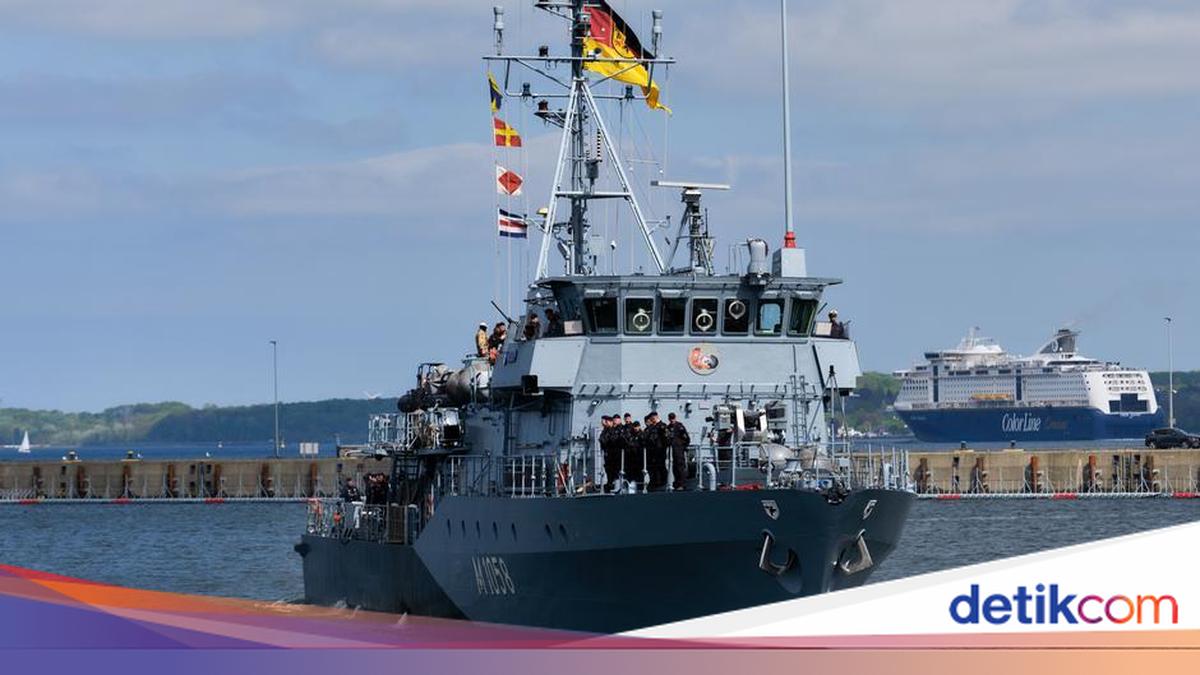
The German Navy has set course for the Strait of Hormuz. On Thursday morning, the minehunter Fulda departed its home port of Kiel, joining the tender Mosel and the minehunter Datteln, which had already sailed from the German Defence Ministry’s base in Berlin. The two latter vessels were previously assigned to the eastern Mediterranean.
Within the next five to seven days, the Bundeswehr fleet is scheduled to transit the Red Sea before calling at the port of Djibouti. From there, approximately 140 German Navy personnel will prepare for a possible mine-sweeping operation in the Strait of Hormuz.
Speaking in Brussels on Thursday morning, German Defence Minister Boris Pistorius said the deployment order was issued in preparation for a “possible peace mission in the Strait of Hormuz”. The key word is “possible”, as not all conditions have yet been met, despite the United States and Iran having agreed to a ceasefire to continue peace negotiations.
According to the German Defence Ministry, the main prerequisites include a sustained end to hostilities, a basis in international law, and a mandate from the German parliament, the Bundestag. Under German rules, any armed deployment of the Bundeswehr abroad must receive parliamentary approval.
Mine clearance is a particular speciality of the Bundeswehr. “We have a great deal of experience in this area,” Johannes Peters, a maritime security expert at the University of Kiel’s Institute for Security Policy, told DW. According to Peters, the North Sea and the Baltic Sea are two of the world’s maritime regions with the largest quantities of unexploded ordnance from the First and Second World Wars. Millions of objects such as mines, ammunition, and various types of explosives still lie on the seabed. “Because that area is essentially our operational zone, we have considerable expertise, including in handling and clearing unexploded bombs,” Peters said.
Following attacks by the United States and Israel in late February, Iran effectively closed the Strait of Hormuz by randomly scattering sea mines. Shipping companies reacted by delaying or avoiding the Persian Gulf, causing global supplies of crude oil and liquefied natural gas to plummet. Fuel prices soared worldwide. For the narrow waterway to be passable for merchant vessels again, the war must fall completely silent and the scattered mines must be swept.
However, “sea mines are very difficult to find,” Nitya Labh, a maritime security expert from the Chatham House think tank in London, told DW. According to her, there are various types of sea mines: floating mines on the surface, moored mines anchored to the seabed but suspended in the water that detonate when detecting a nearby vessel, and mines laid directly on the seabed. Even after a mine’s position is known, the clearance process can take weeks to months. The problem is that even Iran admits it does not know all the mine locations, as some have drifted with ocean currents.
“We do not know the exact number of mines, nor the specific areas where they were placed. So there is a lot of uncertainty,” said Johannes Peters. He stressed that mine clearance operations cannot follow a standard procedure. Laying sea mines can be done quickly, but clearing them takes far longer. “But that is precisely what minehunter vessels are designed for,” he said.
The German Navy’s minehunters are designed to find mines without being detected by the mines’ triggering devices. The ships have hulls made of non-magnetic steel. Many modern mines react to the magnetic field generated by steel-hulled vessels. Additionally, the sound of propellers and ship engines can also trigger mine explosions. For this reason, minehunter vessels are capable of moving extremely quietly.
Unmanned systems are indispensable tools in such operations. Vessels like the Fulda carry surface drones of the Seehund type, which can mimic the acoustic signature and magnetic field of large ships to lure mines into detonating. Furthermore, the Seefuchs underwater drone can both identify and destroy mines. When technology reaches its limits, mine clearance divers are deployed.
One crucial requirement for the mine-clearing mission to proceed is the consent of the surrounding countries, including Oman, as well as the parties involved in the conflict. “Iran must certainly agree to it,” said Peters. “They must accept that the navies of other countries are helping to clear mines in the Strait of Hormuz.”
French President Emmanuel Macron has said around 20 countries have made concrete commitments to contribute to the mission. According to Nitya Labh of Chatham House, it is vital for Germany, France, and Britain—if they participate—to make clear that they are not parties to the conflict and are not taking sides with either the United States or Iran. She also assessed that the involvement of Gulf state navies, such as those of Oman or Saudi Arabia, in the mission would be a positive step.
Whether the mine-sweeping mission in the Strait of Hormuz materialises also depends on the implementation of the framework agreement between Iran and the United States. The agreement serves as a starting point for negotiations on several contentious issues, particularly Iran’s nuclear programme. The negotiations are targeted to produce a final agreement within 60 days.
German Chancellor Friedrich Merz had already tempered expectations on Wednesday regarding the imminent start of a Bundeswehr mission. He estimated that the Bundestag would only debate the operational mandate during the final sitting week before the summer recess, which begins on 6 July. Nonetheless, the German Navy is already in position. “We are ready. If the time comes,” the navy stated.