
German Minister Visits Istiqlal and Cathedral, Impressed by Indonesian Tolerance
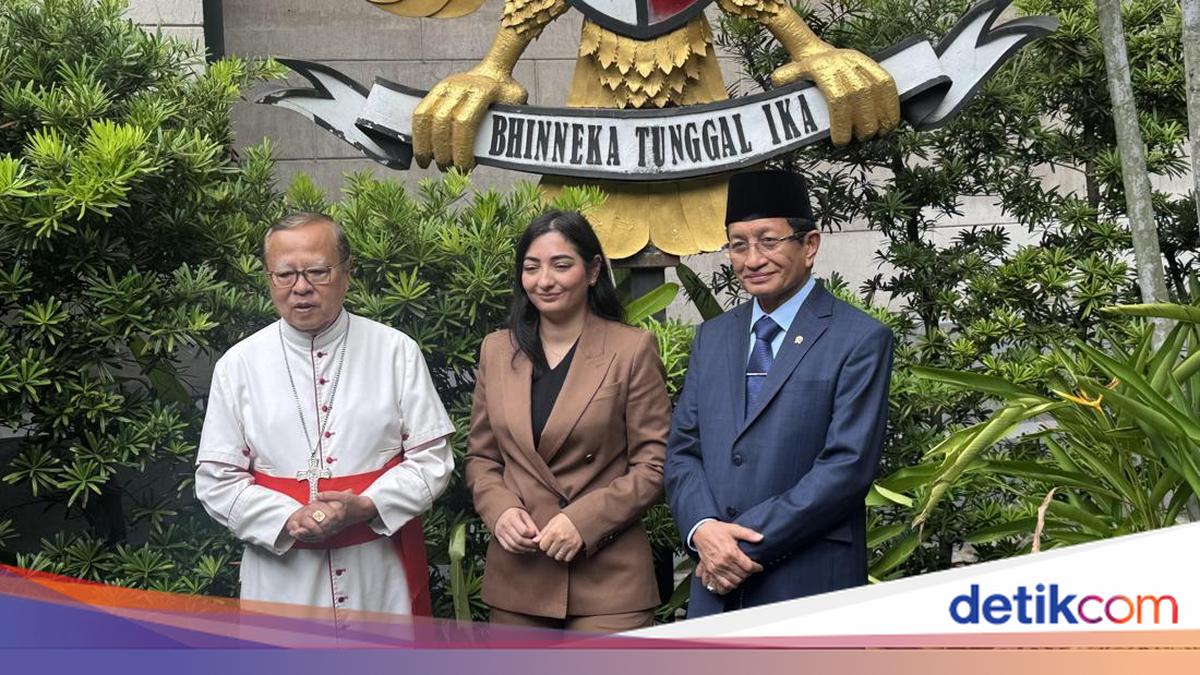
Germany’s Federal Minister for Economic Cooperation and Development, Reem Alabali Radovan, visited the Istiqlal Mosque, the Tunnel of Friendship, and Jakarta Cathedral in Central Jakarta. Alabali Radovan said she was impressed by tolerance in Indonesia.
“It is a great honour for me and my delegation from Germany to be able to stand here, in the Tunnel of Tolerance between the mosque and the Catholic cathedral. This is very impressive, and it shows the direction being taken by Indonesia and Indonesian society, which is also a path of peace, friendship, and interfaith tolerance,” Alabali Radovan told reporters at the Tunnel of Friendship on Wednesday (19/8/2026).
Alabali Radovan said tolerance in Indonesia could serve as a model for many places, including Germany. She said tolerance, friendship, and dialogue are very important for getting through difficult times.
“I think it is very important, especially in the difficult times we are currently experiencing, that we see real examples of tolerance, friendship, and dialogue. In my view, this is a good model for many places in the world. Likewise, of course, for us in Germany, we can also learn from this,” she said.
Alabali Radovan said she felt honoured by today’s visit. She thanked Indonesia’s Religious Affairs Minister Nasaruddin Umar and all the people of Indonesia.
“Once again, it is an extraordinary honour and privilege to be here. Thank you. Thank you to the Minister and to all of you who have welcomed us here today, and also to all the people of Indonesia,” she added.
During the visit, Alabali Radovan was guided by Religious Affairs Minister Nasaruddin Umar and Archbishop of Jakarta Cardinal Ignatius Suharyo. Nasaruddin said the Istiqlal Mosque and Jakarta Cathedral, connected by the Tunnel of Friendship, are one of the symbols of tolerance in Indonesia.
“We have many ornaments, ornaments of tolerance, including sound. If you come from that direction, you can hear the sound of church bells. And if you enter from the mosque side, you can hear the sound of the beduk, a symbol of Islamic tradition. So, this is a symbol of Indonesian tolerance,” Nasaruddin explained to Alabali Radovan.
Meanwhile, Cardinal Suharyo explained the history of the founding of the Istiqlal Mosque. He said the location of the Istiqlal Mosque originated from a proposal by Indonesia’s first president, Soekarno.
“President Soekarno insisted that the mosque should be built in this place for two reasons. The first reason was to erase the memory of colonialism, because the site previously contained two places with Dutch names. The second reason was so that this national or state mosque would be located close to the Cathedral, and that was very symbolic from the outset,” Suharyo explained to Alabali Radovan.