
German Chancellor Visits Singapore, Japan and South Korea to Deepen Security Cooperation
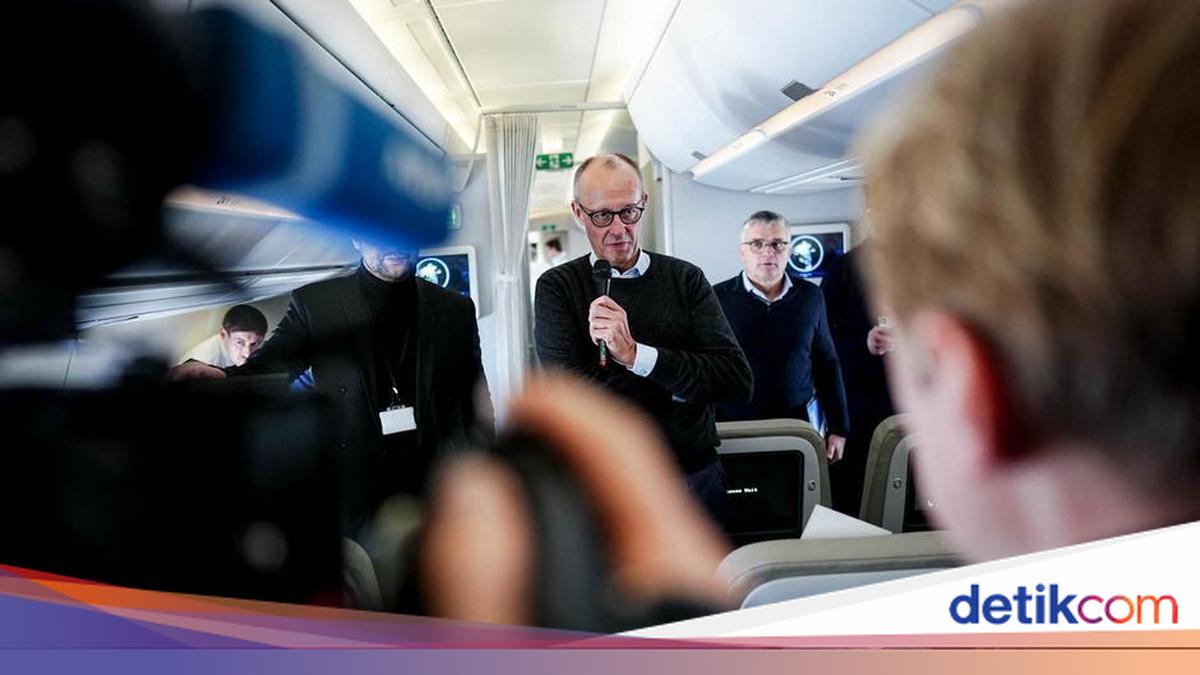
German Chancellor Friedrich Merz began a five-day visit to Asia on Monday (26 October). Singapore is his first destination, before he continues to Japan and South Korea.
Merz is accompanied by 30 senior business figures, including representatives of German industrial, technology, defence and energy-supply companies.
At the same time, German President Frank-Walter Steinmeier is visiting China. Although the two trips are officially unrelated, they appear to share a goal: strengthening Germany’s economic and security ties amid geopolitical instability that threatens global supply chains.
Japan seeks close partners
In Singapore, Merz is scheduled to deliver a keynote speech on foreign policy and meet Prime Minister Lawrence Wong. On Wednesday (28 October), he will travel to Japan to meet Prime Minister Sanae Takaichi and attend the German-Japanese Business Summit.
Merz’s visit “will be very welcome in Tokyo”, said Ben Ascione, an assistant professor of politics and international relations at Waseda University in Tokyo.
“For more than a decade, Japan has sought new security allies and closer trade partnerships,” he told DW.
“This effort to broaden ties began under Prime Minister Shinzo Abe. Takaichi is continuing along that path, given rising tensions in the Indo-Pacific and growing uncertainty surrounding Donald Trump’s second administration,” he added.
Different but connected threats
Japan is deeply concerned about China’s increasingly assertive moves in the region, particularly as Beijing strengthens its ties with Russia and North Korea’s unpredictable regime.
China and Russia have held joint military exercises in waters off Japan. China also continues to insist that Taiwan must come under its control.
According to Ascione, any conflict involving Taiwan, the disputed islands in the South China Sea or other territorial claims in the region would have a major impact on global trade. Germany would also feel the effects.
“Japan and Germany currently face different primary security threats. Germany is focused on Russia’s invasion of Ukraine, while Japan is watching China, North Korea and Russia closely. But I think Germany’s view is increasingly aligning with Takaichi’s perception of the security threat from China,” Ascione said.
“Takaichi will emphasise the importance of a rules-based order and a free and open Indo-Pacific policy amid today’s geopolitical uncertainty,” he added. “In recent years, Japan has moved to strengthen resilience, including supply-chain resilience, and to broaden and deepen its security partnerships.”
Japan welcomes German military presence
Ascione said Japan would also “welcome” the deployment of German naval vessels or military aircraft to the region. Such a move would build on previous cooperation, including the frigate Bayern’s visit to Tokyo in 2021 and joint exercises by the two countries’ fighter aircraft in 2024.
In May 2021, the Bayern became the first German Navy warship in 20 years to dock in Tokyo. The vessel later took part in joint air and maritime exercises with Japanese military units.
In July 2024, German Eurofighter Typhoons also conducted exercises with Japanese fighter aircraft in northern Japanese airspace.
Merz and Takaichi are expected to exchange views on how to address geopolitical threats. Discussions will include strengthening supply-chain resilience, protecting strategic industries and ensuring access to critical technologies, components and raw materials.
One example is rare earth elements, which are needed for a range of advanced technologies but remain predominantly supplied by China.
South Korea’s approach to North Korea under scrutiny
From Japan, Merz is scheduled to continue to South Korea to meet President Lee Jae-myung and open the 19th Asia-Pacific Conference of German Business in Seoul.
He is also scheduled to visit the Demilitarised Zone (DMZ), which separates North and South Korea.
Saeme Kim, a researcher at the Asan Institute for Policy Studies, expects security issues to dominate discussions in Seoul once again.
Kim said, however, that Merz might also raise concerns about what is seen as South Korea’s effort to draw closer to North Korea and, indirectly, Russia.
“There has recently been discussion about petroleum exports to Russia, although Seoul says it has not breached sanctions,” she said.
According to Kim, South Korea is seeking to reopen channels of communication with North Korea, even as Kim Jong Un’s regime has sent troops to fight in Ukraine.
“Germany is not alone. I think many European countries will be troubled by the Lee administration’s efforts to improve relations with North Korea and Russia,” Kim said.
South Korea also continues to provide humanitarian assistance to North Korea, while Pyongyang is strengthening its economic ties with China and Russia.
“The government needs to remember that some of these policies will harm South Korea’s own interests in the long term,” she said.
Can South Korea learn from German reunification?
Merz could also share experience of Germany’s reunification in 1990 as a point of reference for efforts to build cooperation between the two Koreas.
“South Korea can certainly draw lessons, but there are many differences,” Kim said. “Technically, the two Koreas are still at war, and Seoul has to deal with a neighbour on its border that aspires to become a nuclear power.”
Merz will have the chance to see North Korean territory from a distance during his visit to the DMZ. However, the visit could be cancelled amid continuing tensions following an incident last month in which a North Korean landmine injured three South Korean soldiers.
North Korea accused South Korea of fabricating the incident.
Source: jawawa.id (https://jawawa.id/newsitem/german-chancellor-visits-singapore-japan-and-south-korea-to-deepen-security-cooperation-1793105600)
Originally published by detikcom (https://news.detik.com/dw/d-8726774/kanselir-jerman-lawat-singapura-jepang-korsel-pererat-kerja-sama-keamanan), translated from Indonesian