
German and Russian Foreign Ministers Meet Following Four Years of Ukraine Invasion: What Was Discussed?
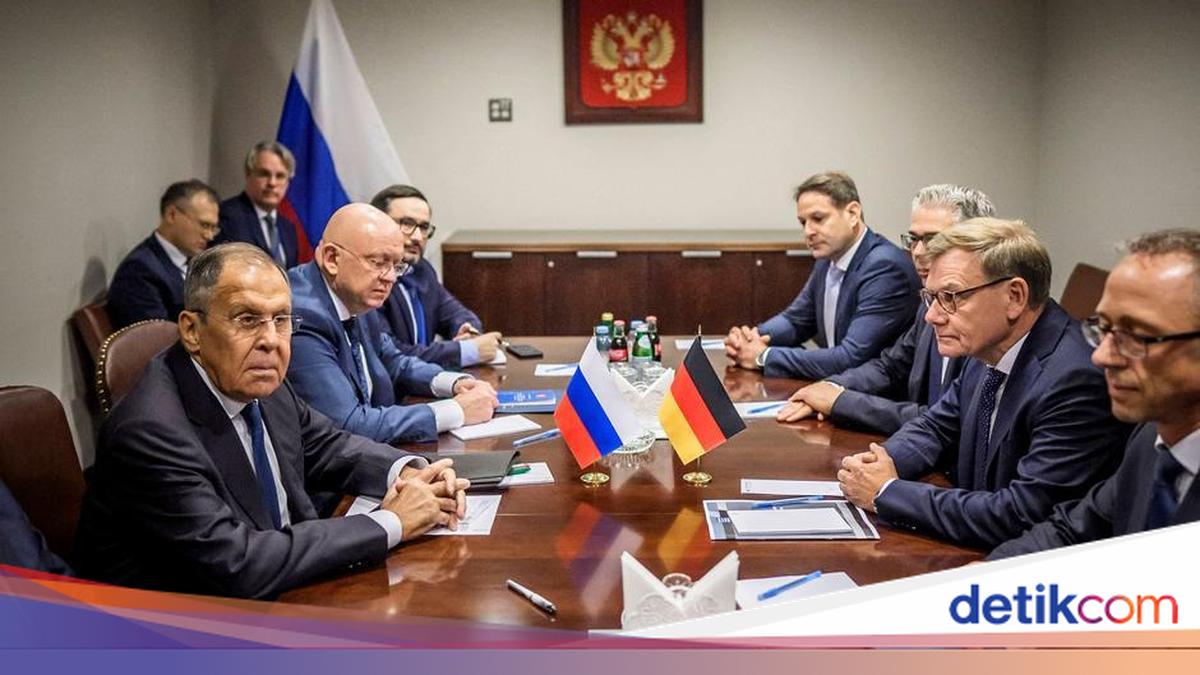
The meeting between German Foreign Minister Johann Wadephul (CDU) and his Russian counterpart, Sergey Lavrov, on Saturday in New York was quite unexpected. Throughout the weekend until Monday (28/9), political circles in Berlin have been intensively debating whether the approximately 20-minute meeting was an appropriate move.
The two politicians met on the sidelines of the UN General Assembly, yet they have not managed to resolve the fierce disputes between their two nations.
In a government press conference in Berlin on Monday, the spokesperson for the German Foreign Minister, Josef Hinterseer, stated that the results of the meeting were very disappointing. This was compounded by the fact that, following the meeting, Lavrov made disparaging remarks towards his German counterpart.
Hinterseher noted that this did not surprise Germany, stating, “We are certainly aware of the propaganda value of such face-to-face meetings, which can be exploited appropriately by the Russian side. Nevertheless, in this situation, the meeting was justifiable.”
In fact, this surprising encounter was the first high-level bilateral meeting since the start of the Russian aggression against Ukraine in early spring 2022. The last time this occurred was when former German Foreign Minister Annalena Baerbock (Greens) met Lavrov in January 2022, less than a month before the invasion began.
Since then, relations between Germany and Russia have been frozen, particularly in recent months. The German Foreign Office stated that Wadephul was requested by politicians from the “Global South”—those concerned with the gap between the Northern and Southern hemispheres—to organise a bilateral meeting. This is due to the fact that, as a result of the Russia-Ukraine war, grain supplies from both Russia and Ukraine have been disrupted.
A ceasefire in the Black Sea is required for exports to resume. Addressing this, spokesperson Hintersecker said on Monday (28/9), “Wheat is a perishable commodity. Therefore, swift action is required to address this during the autumn.”
However, the meeting also failed to produce any results regarding this matter.
Lavrov: ‘You should have just called!’
How cold the relationship remains, and is expected to stay, was clearly demonstrated by Russian diplomat Sergey Lavrov. Using a dismissive tone towards Wadephul, the Russian Foreign Minister told the German news agency (dpa) that he heard nothing different from Berlin’s daily public statements.
Consequently, he told Wadephul, “You should have just called and said: please read my explanation.”
Meanwhile, Wadephul chose more moderate wording following the talks. In an ARD television broadcast, he stated that one important reason for him to agree to the meeting was the drone attack attempt at Leipzig airport.
The German Federal Government accused Russia of being responsible for the incident. “Fortunately, nothing bad happened,” the German Foreign Minister said. However, he emphasised to Lavrov that Germany would oppose and fight such actions.
Some German parties wish to engage in dialogue with Russia
In principle, the German Foreign Minister added that the vacuum in diplomatic relations following the Russian attack on Ukraine in early 2022 was appropriate. However, the time has now come to resume dialogue. “We do not need to negotiate with friends, but we must negotiate with adversaries,” Wadephul summarised.
This appears to be a reaction to long-standing demands from Wadephul’s political opponents, such as the far-right Alternative for Germany (AfD), as well as Alliance Sahra Wagenknecht (BSW) and the Left Party, to resume discussions with Russia even while the war is ongoing.
However, so far, the Russian side has shown no willingness to engage in dialogue. “To everyone who constantly says that Germany must negotiate, that Germany must speak with Russia, I say to them now: we are doing it,” explained the German Foreign Minister.
Criticism and praise from politicians
Criticism of the meeting also came from within their own party. For instance, CDU foreign affairs and security expert and Member of the Bundestag, Roderich Kiesewetter, told the Frankfurter Allgemeine Zeitung, “I view this meeting very critically. On reflection, a telephone call would have been more prudent. Because the result would remain the same.”
The belief that Russia can be brought to the negotiating table was dismissed by Russian Foreign Minister Lavrov at the end of the meeting, stating, “It is considered a joke, as usual.”
A very different view was expressed by SPD foreign policy politician Ralf Stegner. The Social Democratic Party (SPD) is the CDU’s junior partner in government.
Stegner told the weekly newspaper Frankfurter Sonntagszeitung that this meeting signals, “Europeans are still here.” Praise also came from the Green Party, which is in opposition to the CDU.
The background to this German initiative is also linked to US President Donald Trump, who supports re-including Russia in the group of leading industrial nations, which would then be included in the G8 format rather than the G7.
Trump has also invited Russian President Vladimir Putin to attend the G20 meeting in December in Miami, Florida, USA. In other words, if the situation changes, Germany does not want to be marginalised.
Source: jawawa.id (https://jawawa.id/newsitem/german-and-russian-foreign-ministers-meet-following-four-years-of-ukraine-invasion-what-was-discussed-1790654211)
Originally published by detikcom (https://news.detik.com/dw/d-8683769/menlu-jerman-rusia-bertemu-usai-4-tahun-invasi-ukraina-bahas-apa), translated from Indonesian