
German and Indonesian Students Design Future for Barelang Transmigration Area
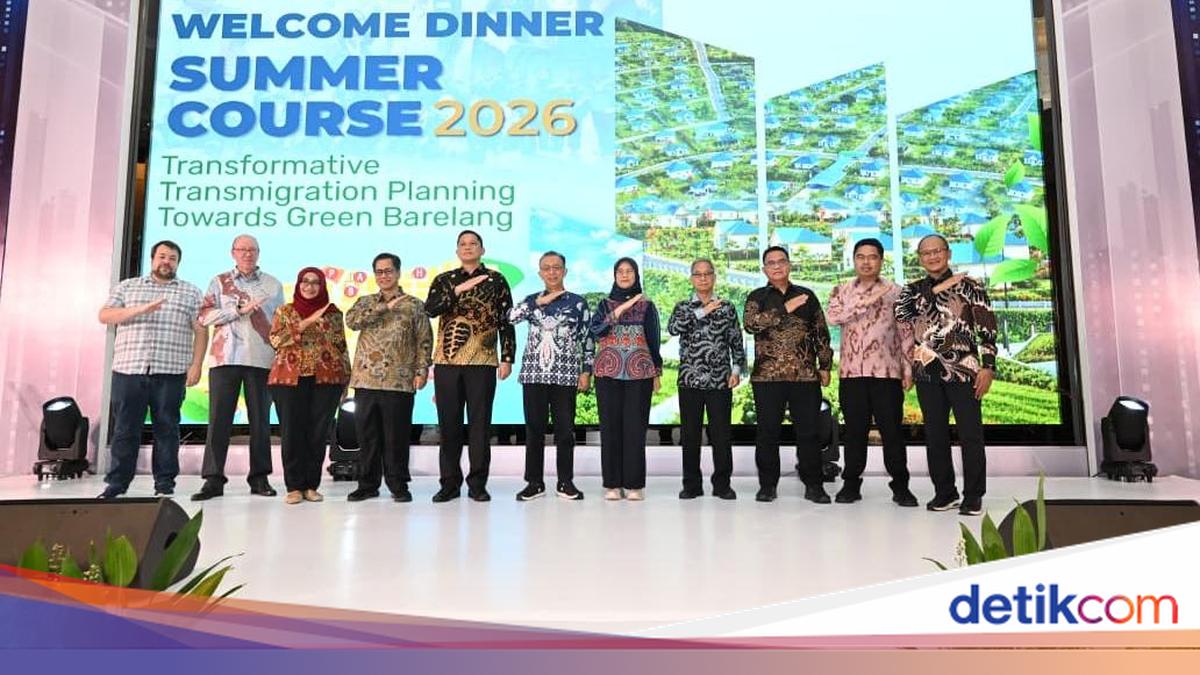
Twenty students from the Technical University of Munich (TUM), Germany, alongside academics and students from various Indonesian universities, have begun field studies to explore the potential and challenges of the Barelang Transmigration Area in Batam, Riau Islands. Through the Summer Course 2026, this cross-border collaboration aims to produce a regional development plan that merges global perspectives with the needs of the local community.
The Acting Director General of Economic Development and Community Empowerment of Transmigration at the Indonesian Ministry of Transmigration, Harlina Sulistylorini, stated that the Summer Course 2026 is directed towards creating the ‘Green Barelang Spatial Development Design’. This design will address aspects of economy, social structure, infrastructure, connectivity, and the environment.
“Our colleagues from TUM will assist in exploring and analysing the potential of Barelang Rempang, particularly the Rempang Transmigration Area. The final output is a green concept design that we can later implement to improve the area and enhance community welfare,” said Harlina in a written statement on Saturday (3/10/2026).
During the process, participants will directly observe the area’s condition, including economic potential, spatial planning, infrastructure, and social and environmental conditions. They will also engage in dialogues with residents to understand the challenges and needs faced by the community.
Harlina emphasised that the development of Barelang is intended to benefit local residents primarily. The regional development is expected to create more employment opportunities and encourage the utilisation of existing natural resources.
“The Rempang area is designated for the local community here, so they can be further empowered, given more opportunities for employment, and better utilise the natural resources surrounding Rempang,” Harlina added.
The activity, initiated by Diponegoro University (UNDIP) in collaboration with TUM, the Ministry of Transmigration, and the Batam Indonesia Free Zone Authority (BP Batam), is part of the ‘Transmigration Patriot’ (Trans Patriot) programme. This programme bridges academic knowledge with real-world regional needs through classroom learning, discussions, field observations, and direct community dialogue.
The collaboration also involves the Patriot Expedition Team from the Bandung Institute of Technology (ITB), Sepuluh Nopember Institute of Technology (ITS), IPB University, and the University of Indonesia (UI), who have previously worked in the Barelang Area. The findings and guidance from these teams are expected to ensure that the ideas generated during the Summer Course remain connected to the actual conditions and needs of the local population.
TUM representative Walter Timo de Vries noted that direct field learning is a vital component of student education. He believes students should not only understand theory but also observe the opportunities, challenges, and lived experiences of those residing and working in the area.
“The most important thing for us is not just teaching in a classroom. The best way to learn is to see firsthand how theory is applied, what the opportunities are, and the challenges faced by the community,” said de Vries.
Interestingly, the Summer Course learning process is a two-way street. TUM is not only bringing a German perspective but also seeks to learn from the development experiences of Barelang.
Conversely, the Ministry of Transmigration hopes that German expertise in community participation, local resource management, and regional self-sufficiency can serve as a reference for development within the specific context of Barelag.
The Mayor of Batam, Amsakar Achmad, welcomed the collaboration. He noted that Batam’s uniqueness as a hub for industry, investment, services, and tourism, combined with areas like Barelang that hold sustainable development potential, makes the Summer Course an ideal space to bring together knowledge, innovation, local experience, and international perspectives.
“The government provides policy and resources, universities bring knowledge and innovation, the community brings experience and local wisdom, while the international community opens wider perspectives and opportunities for cooperation,” said Amsakar.
The Rector of UNDIP, Achmad Zulfa Juniarto, stated that this activity is a tangible form of university contribution to regional development. UNDIP is partnering with TUM and several Indonesian universities so that academic knowledge can be directly applied to address development issues on the ground.
Furthermore, Professor of Regional and Urban Planning at UNDIP, Wiwandari Handayani, assessed the Summer Course as an opportunity to merge global perspectives with local contexts. It is hoped that superior human resources from various countries and universities can work alongside the community to produce solutions suited to the character and needs of the region.
In addition to regional development, participants are scheduled to visit Penyengat Island to learn about the history, trade, and Malay culture that shape the character of the Riau Islands. The Ministry of Transmigration hopes this interaction will enrich the participants’ perspectives and open further opportunities for cooperation in research, education, and community empowerment.
Through the Summer Course 2026, the Ministry of Transmigration encourages that the ‘Transmigration Transformation’ does not stop at physical construction, but also produces ideas based on knowledge, innovation, the environment, and community needs. The designs produced in Barelang are expected to serve as a foundation for future research, education, and collaborative activities to support the development of the transmigration area.