
German Ambassador Optimistic Indonesia-EU Trade Deal Will Proceed Smoothly
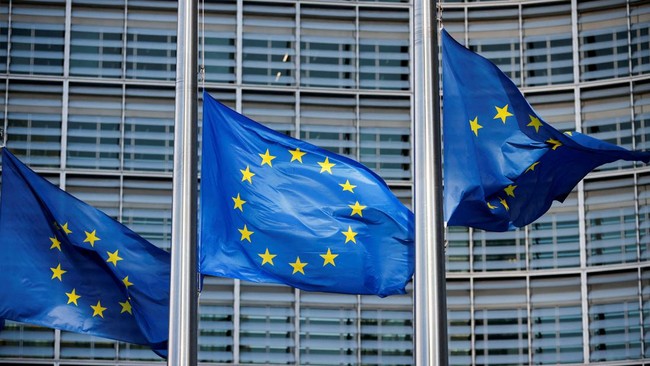
German Ambassador to Indonesia Ralf Beste is optimistic that the Indonesia-European Union Comprehensive Economic Partnership Agreement (IEU-CEPA) can soon enter the ratification stage and take effect in 2027.
According to Beste, support for the trade deal, which has been negotiated for years, is quite strong in both Europe and Indonesia. He therefore sees no major obstacles that could disrupt the ratification process.
"I am quite optimistic that the ratification process can proceed this year. Of course, that depends on the parliaments on both sides, namely the European Parliament and the Indonesian Parliament," Beste said during a press conference at the German Embassy in Jakarta on Friday (12/6/2026).
He added that unlike several other trade agreements that have sparked debate in Europe, IEU-CEPA has garnered broad support from various political groups within the European Union.
"There is a broad majority in Europe that supports a bilateral trade agreement with Indonesia. This is not a controversial agreement. I also see a lot of support from the Indonesian side, so there is nothing that worries me," he stated.
Beste said that if the ratification process goes according to plan, IEU-CEPA could take effect in 2027. The presence of the agreement is believed to be a new driver for increasing trade and investment between Indonesia and EU member states, including Germany.
One of the main benefits for businesses will be the elimination of most trade tariffs. According to him, around 98% of tariff lines will be gradually reduced to zero percent over a 10-year period after the agreement takes effect, with some exceptions to protect certain interests of both parties.
Furthermore, Beste assessed that the greatest impact of IEU-CEPA could come from increased investment flows. Regulatory certainty and a clearer framework will encourage European companies to expand their businesses in Indonesia, while also opening greater opportunities for Indonesian investors to enter the European market.
"What we are doing now is informing the business community about the opportunities that will open up. This is not just about trade, but also investment," he said.
He added that the agreement will also facilitate cross-border business activities, including access to financial services and financing needed by investors.
"We want to attract more Indonesian investors to Germany and also encourage more German companies to come to Indonesia. This agreement gives greater confidence to business actors to invest and trade," he stated.
Beste noted that there are already hundreds of German companies operating in Indonesia, with some even making the country a production base to serve the Southeast Asian market.
With the implementation of IEU-CEPA, Germany hopes Indonesia will become increasingly attractive as a regional investment destination while strengthening the position of both regions as strategic economic partners.
"We hope IEU-CEPA will be a further step to build more trust and certainty that Indonesia is a good place to do business," Beste said.