
Gerindra Says Prabowo Cannot Dismiss Vice-President, Citing Constitutional Powers
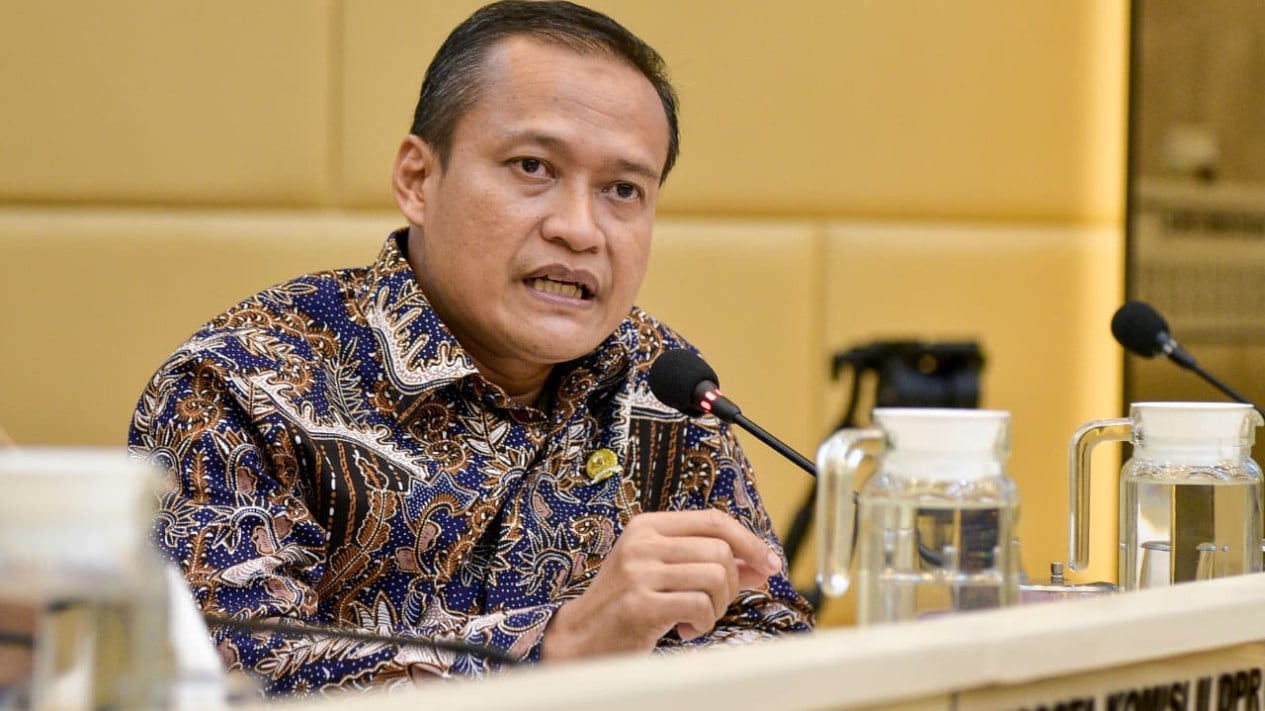
Jakarta — Azis Subekti, a member of Commission II of the House of Representatives (DPR) from the Gerindra Party faction, stressed that President Prabowo Subianto has no authority to dismiss Vice-President Gibran Rakabuming Raka unilaterally.
He cautioned against framing political demands for the Vice-President’s removal as though they constituted a constitutional obligation for the President.
Azis made the statement in response to controversy over a Constitutional Court (MK) ruling on Gibran’s educational qualifications, which has recently prompted calls for his impeachment.
One such demand came from constitutional law expert Denny Indrayana, who warned that President Prabowo could be forced from office if the issue concerning Gibran was not resolved.
“The President has no authority to dismiss the Vice-President unilaterally,” Azis wrote in his opinion piece, titled “Democracy”.
A process and a timetable
Azis explained that the Constitution sets out a specific mechanism for dismissing the President or Vice-President under Articles 7A and 7B of the 1945 Constitution.
The process must begin in the DPR, followed by the Constitutional Court’s examination and ruling on the DPR’s opinion, before the People’s Consultative Assembly (MPR) makes the final decision in accordance with constitutional requirements.
Azis therefore said calls for President Prabowo to mobilise the political party coalition to begin impeachment proceedings against Gibran should be understood as political demands, not as legal obligations that arise automatically.
“The President cannot be held constitutionally at fault merely because he has not complied with their wishes,” he said.
Azis also discussed Constitutional Court Decision No. 01/PHPU.PRES-XXIV/2026. In that case, the court declared the applicants’ petition inadmissible because they lacked legal standing.
He acknowledged that the court’s reasoning addressed questions concerning evidence of Gibran’s education. However, he said this should be distinguished from the operative part of the ruling, which neither annulled Gibran’s position nor ordered his dismissal.
“No one has the authority to add a dismissal order that the Court did not issue,” Azis wrote.
He emphasised that impeachment remains available as a mechanism for constitutional accountability, provided it is carried out on valid grounds, supported by evidence and follows the proper procedure.
“The impeachment route remains part of the Constitution, but its use requires the grounds and evidence stipulated by the Constitution. It must not be treated as an unlimited extension of electoral contestation,” he said.