
Gerindra Responds to Survey Evaluating Prabowo’s First Two Years
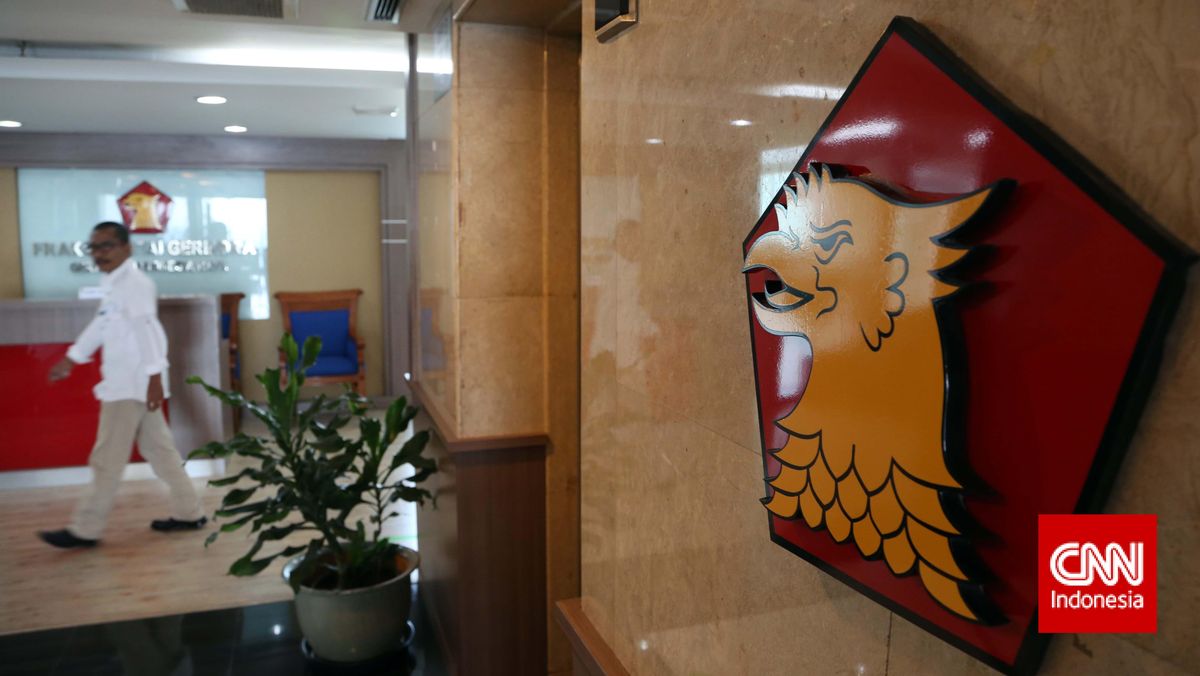
Gerindra Party spokesperson Sugiat Santoso has responded to a survey released by the Center of Economic and Law Studies (CELIOS) evaluating the first two years of Indonesian President Prabowo Subianto’s leadership.
Sugiat said the survey contained accusations that were not supported by evidence.
“Accusing the government of restricting civil liberties ignores the fact that democracy under Prabowo-Gibran remains open, with constructive criticism welcomed. The law must be enforced fairly and without discrimination against offenders. If this government were authoritarian, the CELIOS report could not have circulated in public debate,” Sugiat said in an official statement on Tuesday (13 October).
He said using survey findings and a report produced by a ‘Shadow Cabinet’ as the main measure of performance was a way of diverting attention from the government’s efforts to tackle people’s problems on the ground every day.
“President Prabowo was not elected by the people to please commentators, but to deliver real change that directly improves public welfare,” Sugiat said.
He added that criticism of Prabowo’s communication style and assertiveness showed that some people were not used to a leader who speaks and acts plainly in the national interest. Sugiat said Prabowo’s sincerity could be seen in his willingness to take significant political risks to uphold national sovereignty and public welfare.
Sugiat called the report’s claim that 75 per cent of respondents felt stressed by government policies an exaggeration that dramatised the economic transition and risked creating public panic. He said the government’s fiscal and economic policy adjustments were intended to protect the country’s long-term financial foundations.
Sugiat also addressed changes in ministerial positions. He said portraying ministerial reshuffles as a means of discrediting the President disregarded the head of state’s prerogative to ensure the government operated effectively.
“President Prabowo’s evaluation and reorganisation of officials are based solely on the need to accelerate national development targets, not on pressure from outside parties,” he said.
He added that portraying Prabowo’s defence policies and strategic engagement as misguided showed a lack of understanding of the importance of building a respected regional defence posture. Under Prabowo’s vision, Sugiat said, defence and self-reliance in military equipment were fundamental to ensuring Indonesia could not be easily pressured by foreign powers.
Sugiat said the report’s subjective assessments used a scoring format that reflected the opinions of particular groups rather than an objective measure of bureaucratic performance. He said Prabowo consistently evaluated policies according to the country’s real needs, rather than outside political pressure intended to discredit the Cabinet.
CELIOS recommends replacing conventional economic indicators with a happiness index and planetary boundaries. Sugiat said a drastic change to macroeconomic indicators that ignored real growth could leave the country relying on abstract measures that did not address people’s basic everyday needs.
The deputy chair of Commission XIII of the House of Representatives said the government remained committed to comprehensive, measurable development indicators combining economic growth, job creation and equitable improvements in welfare.
The report also proposes a 1–2 per cent wealth tax on the super-rich, estimating that it could raise up to Rp142.2 trillion. Sugiat said imposing an additional tax so aggressively during an economic transition risked capital flight and could undermine domestic investment intended to create jobs.
“The government has chosen to strengthen tax compliance proportionately and promote downstream industrial processing to broaden state revenue on a sound basis, rather than adopt reckless policies that frighten investors,” he said.
CELIOS also criticised cuts to Village Funds to finance the Merah Putih Village/Sub-district Cooperatives (KDMP). Sugiat said describing the cooperatives as a burden showed a lack of understanding of efforts to strengthen village economies. Financial independence at grassroots level, he said, required stronger local economic institutions rather than allowing them to stagnate.
The report also raised concerns about law enforcement and the Asset Forfeiture Bill, saying they could create opportunities for abuses of power. Sugiat said accusations that the government’s law-enforcement efforts were politically motivated reflected the panic of those affected by a sweeping clean-up of state institutions.
On forest and land fires, the report said 96 per cent of respondents considered the response ineffective and put losses at Rp123.1 trillion. Sugiat said claims that the government had failed completely ignored the work on the ground, including the deployment of thousands of personnel, weather-modification technology and firm law enforcement against companies responsible for environmental damage.
CELIOS also highlighted debt interest payments of Rp599.4 trillion, which it said exceeded health spending of Rp247.3 trillion. Sugiat said narrowly comparing interest costs with the health budget reflected a flawed understanding of long-term macroeconomic financing for strategic infrastructure development.
“Providing schoolchildren with adequate nutrition is a fundamental foundation for developing human resources,” he said.
The report also questioned the value of the President’s overseas visits. Sugiat said high-level diplomacy was essential to attracting global investment and securing strategic supplies for the Indonesian people.
It further criticised the placement of military figures in the presidential circle as excessive. Sugiat said this overlooked the President’s prerogative to build a cabinet management system that was swift, disciplined and responsive to crises.
“An artificially designed CELIOS survey by certain groups cannot erase the reality of work that people experience at grassroots level. How can the government’s two-year performance be judged by a Shadow Cabinet when public programmes such as Free Nutritious Meals (MBG) are already benefiting schoolchildren directly?” Sugiat said.