
Gerindra Rejects CELIOS Survey, Says Government Continues to Work for the People
The Gerindra Party has criticised a report card on the first two years of Prabowo-Gibran leadership published by the Center of Economic and Law Studies (CELIOS). Gerindra said the report contained allegations unsupported by evidence.
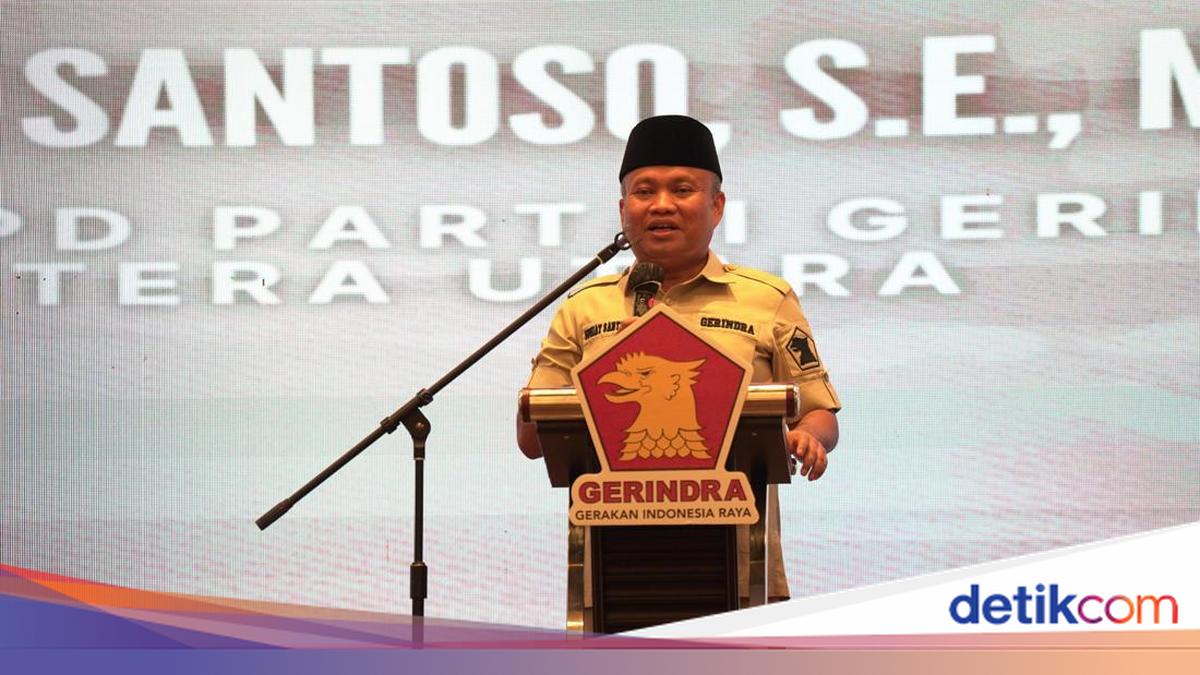
“Accusing the government of restricting civil liberties ignores the fact that democracy under Prabowo-Gibran remains open, with constructive criticism welcomed. The law must be enforced fairly and without discrimination against offenders. If this government were authoritarian, the CELIOS report could not have circulated in public debate,” Gerindra spokesman Sugiat Santoso said in a written statement on Tuesday (13 October 2026).
Sugiat said that relying on survey findings and a report drawn up by a ‘shadow cabinet’ as the main benchmark distracted attention from the government’s daily efforts on the ground to address people’s fundamental problems.
“President Prabowo was not elected by the people to please commentators, but to deliver real change that directly improves their welfare,” he said.
According to Sugiat, criticism of Prabowo’s communication style and assertiveness showed that some people were not accustomed to a leader who spoke and acted plainly in the national interest. He said Prabowo’s sincerity was evident in his willingness to take substantial political risks to uphold national sovereignty and improve public welfare.
“Claiming that 75 per cent of respondents feel stressed by government policies is an exaggeration that dramatises the economic transition and creates public panic. The adjustments to fiscal and economic policy are being made solely to safeguard the country’s long-term financial foundations,” he said.
Sugiat said using ministerial changes or shifting positions to discredit the President disregarded the head of state’s prerogative to ensure the government operated effectively.
“President Prabowo’s evaluation and reshuffling of officials are based purely on the need to accelerate national development targets, not on pressure from outside parties,” he said.
He also addressed criticism of Prabowo’s defence policy. “Labelling the President’s defence policy and strategic engagement as misguided shows that commentators do not understand the importance of building a defence posture that commands respect in the region. Under President Prabowo’s vision, defence and self-reliance in military equipment are fundamental, so Indonesia cannot be pressured by any foreign power,” he said.
Sugiat said the report’s subjective assessments and scoring system reflected the opinions of particular groups rather than objective measures of bureaucratic performance. He said Prabowo’s evaluations were based on the country’s practical needs, not political pressure from outside groups seeking to discredit the Cabinet.
CELIOS’s report recommended replacing conventional economic indicators with a happiness index and planetary boundaries. Sugiat said that radically changing macroeconomic indicators while disregarding real growth risked trapping the country in abstract measures that did not address people’s everyday basic needs.
He said the government remained committed to comprehensive, measurable development indicators combining economic growth, job creation and tangible improvements in the distribution of prosperity.
CELIOS’s report also called for a 1–2 per cent wealth tax on the ultra-rich, estimating that it could raise Rp142.2 trillion. Sugiat said imposing an additional, steep tax during an economic transition risked triggering capital flight and dampening domestic investment, which the government was seeking to build up to create jobs.
He said the government had instead chosen to improve tax compliance proportionately and promote industrial downstreaming to broaden state revenue on a sound basis, rather than adopt rash policies that could deter investors.
The CELIOS report also raised concerns about cuts to village funds to finance the Merah Putih Village/Urban Ward Cooperatives (KDMP). Sugiat said describing the cooperatives as a burden showed a lack of understanding of the importance of strengthening the village economy. Grassroots financial independence, he argued, required stronger local economic institutions rather than allowing them to stagnate.
The report also discussed law enforcement and the Asset Forfeiture Bill, arguing that it could create openings for abuse of power. Sugiat said accusations that the government’s law-enforcement measures were politically motivated reflected panic among those unsettled by an ongoing crackdown on state officials, which he said was being carried out without discrimination.
The report said 96 per cent of respondents considered the handling of forest and land fires ineffective and put the resulting losses at up to Rp123.1 trillion. Sugiat rejected claims that the government had failed completely, saying they ignored the work being done on the ground, including the deployment of thousands of personnel, weather-modification technology and firm legal action against corporations responsible for environmental damage.
CELIOS also highlighted debt interest payments of Rp599.4 trillion, which it said exceeded health spending of Rp247.3 trillion. Sugiat said comparing debt interest narrowly with the health budget showed a failure to understand the structure of long-term macroeconomic financing for strategic infrastructure development.
He described providing schoolchildren with adequate nutrition as a foundation for human-resource development. “We cannot produce an intelligent generation that can compete globally if Indonesian children continue to face nutritional and health problems while they are growing up,” he said.
Sugiat said CELIOS’s criticism of the President’s overseas visits was unhelpful. High-level diplomacy, he argued, was crucial to attracting global investment and securing strategic supplies for the benefit of Indonesians.
“It is regrettable that certain parties are portraying adjustments to economic policy during this transition as making the whole population stressed, when most people remain optimistic about the future. The government understands the pressures people face, which is precisely why social protection programmes, well-targeted subsidies and job creation are being stepped up every day,” he said.
Sugiat said excessive criticism of the appointment of military figures to the presidential palace ignored the President’s prerogative to establish a Cabinet management system that was swift, disciplined and responsive to crises.
He added that a survey he described as artificially designed by certain groups could not erase the reality of work experienced by people at the grassroots. He cited the Free Nutritious Meals (MBG) programme as an example, saying schoolchildren were already benefiting from it.
Sugiat also responded to CELIOS’s criticism of the MBG programme. “When the CELIOS report openly says the Free Nutritious Meals programme should be stopped, the question for the people is simple: would they really want our children to return to school hungry and without proper nutrition?” he said.
Sugiat concluded that Prabowo’s decisive and disciplined leadership was often negatively labelled militaristic, although, he said, the speed and firmness of his approach were what people needed as the country faced food insecurity and disasters.
Source: jawawa.id (https://jawawa.id/newsitem/gerindra-rejects-celios-survey-says-government-continues-to-work-for-the-people-1791874403)
Originally published by detikcom (https://news.detik.com/berita/d-8704695/gerindra-bantah-survei-celios-sebut-pemerintah-terus-bekerja-untuk-rakyat), translated from Indonesian