
Gerindra: Prabowo’s Two Years in Office Have Kept National Self-Reliance and Welfare on a Stable Course
The Gerindra Party says the two years of President Prabowo Subianto’s administration have brought progress in maintaining economic stability, strengthening national self-reliance and improving public welfare.
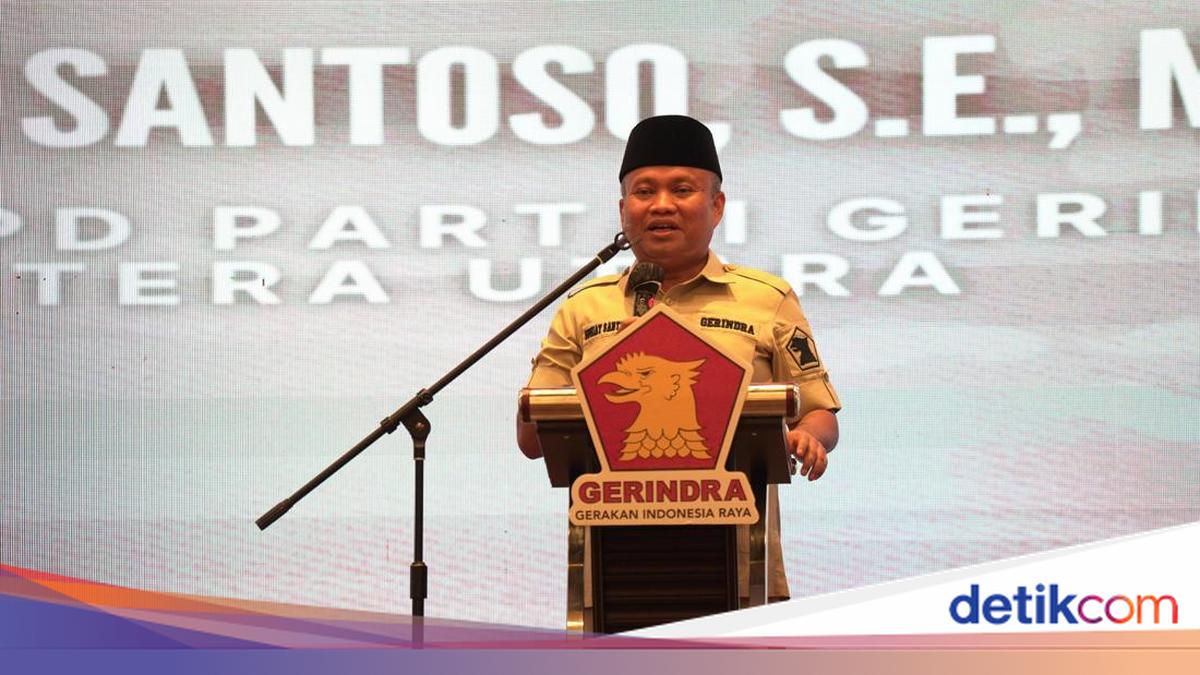
“Two years of the Prabowo-Gibran administration have seen progress in strengthening national self-reliance and public welfare. This is reflected in stable economic fundamentals amid global volatility, stronger food production, wider access to education and healthcare, and accelerated downstream processing,” Gerindra spokesperson Sugiat Santoso said in a statement on Monday (19 October 2026).
Sugiat said achievements should be recognised while acknowledging the challenges that remain. He said assessments and improvements should focus on distributing benefits more evenly, targeting programmes accurately, improving implementation quality and ensuring public spending is effective.
“The continuation of President Prabowo’s priority programmes should therefore be measured not only by implementation results, but also by their impact on public welfare,” he said.
Sugiat added that national economic stability was an important asset for the government in dealing with global uncertainty.
The deputy chair of Commission XIII of the House of Representatives said Indonesia’s economy grew by 5.29% year on year in the second quarter of 2026. The national poverty rate fell from 8.25% in September 2025 to 8.07% in March 2026, with the number of people in poverty declining by about 430,000.
“These achievements deserve recognition, but the remaining challenges must also be acknowledged. Assessments and improvements should focus on an equitable distribution of benefits, accurate targeting, programme implementation quality and the effectiveness of public spending,” he said.
Sugiat said strengthening the food sector was also an important part of the national self-reliance agenda. The government has reported achieving self-sufficiency in eight strategic food commodities: rice, maize, large chillies, bird’s-eye chillies, sugar for consumption, chicken meat, chicken eggs and shallots.
He added that the government had simplified 145 fertiliser distribution rules and cut the maximum retail price of subsidised fertiliser by 20% from October 2025. The farmer terms-of-trade index reached 131.11 in September 2026, up 1.49% from the previous month.
“Food self-reliance must be accompanied by price stability that people across all regions can feel. Food distribution, fertiliser availability and preparations for supply disruptions must also continue to be strengthened,” Sugiat said.
In education and healthcare, Sugiat said the free health screening programme had reportedly reached 99.1 million people, while the Free Nutritious Meals programme covered about 57 million beneficiaries as of August 2026.
The People’s Schools programme was also operating at 182 locations, with about 44,000 pupils, he said. The expansion of social programmes, in his view, must be accompanied by oversight and better service quality.
Sugiat stressed the need to ensure assistance reaches those who need it, while safeguarding food safety and the quality of programme delivery.
“The success of priority programmes cannot be measured simply by the number of beneficiaries. Service quality, accurate targeting and a tangible impact on improving public welfare are just as important,” he said.
In downstream processing, Sugiat said the government, through Danantara, had recorded 26 strategic projects worth Rp225 trillion, expected to employ 37,833 people. The government also reported that 6.22 million hectares of forest area had been brought back under state control by 6 October 2026 through the Forest Area Enforcement Task Force.
Sugiat said strengthening domestic industry and reorganising state assets must deliver measurable economic benefits. The policies’ success, he said, should be assessed through realised investment, job creation, increased state revenue and benefits for producing regions.
“Natural resources and state assets must be managed transparently and accountably. Downstream processing must also create added value domestically, generate jobs and take environmental sustainability into account,” he said.
Sugiat said Gerindra welcomed the Prabowo-Gibran administration’s achievements while calling for continuous improvements to programmes that were not yet performing optimally. Equitable welfare, budget effectiveness and the impact of policies on people’s lives, he said, should be the main measures of the government’s success.
“Ultimately, development success is not just about growth figures or the number of programmes under way, but about the extent to which people feel their benefits. That is why equitable development and improving public welfare must remain priorities,” Sugiat said.
Tuesday (20 October) marks two years since President Prabowo Subianto took office. He was sworn in as president on 20 October 2024.
Source: jawawa.id (https://jawawa.id/newsitem/gerindra-prabowos-two-years-in-office-have-kept-national-self-reliance-and-welfare-on-a-stable-course-1792414248)
Originally published by detikcom (https://news.detik.com/berita/d-8714474/gerindra-2-tahun-prabowo-kemandirian-nasional-kesejahteraan-tetap-stabil), translated from Indonesian