
Gerindra Outlines Its Assessment of Two Years of the Prabowo-Gibran Government
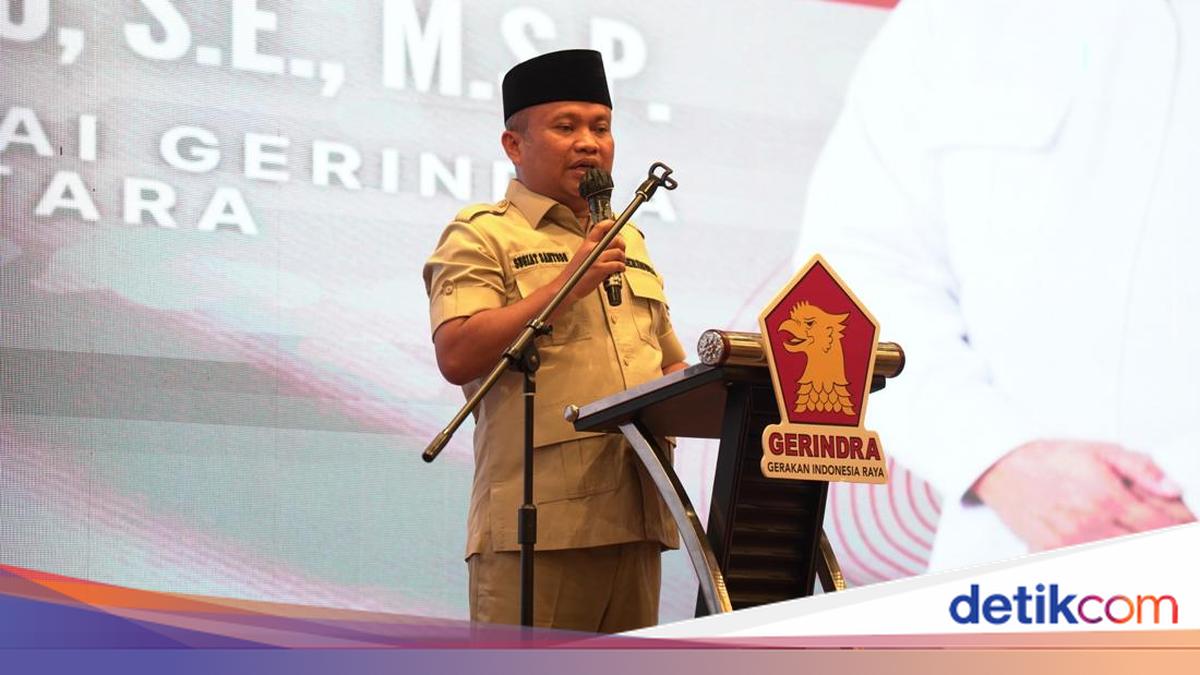
The Gerindra Party says the two years of President Prabowo Subianto and Vice-President Gibran Rakabuming Raka’s administration have brought progress in maintaining economic stability, strengthening food security and widening access to education and healthcare.
“Two years of the Prabowo-Gibran government have seen progress in strengthening national self-reliance and public welfare. This is reflected in stable economic fundamentals amid global volatility, increased food production, wider access to education and healthcare, and faster downstream processing,” Gerindra spokesperson Sugiat Santoso said in a statement on Monday, 19 October 2026.
Sugiat stressed the importance of recognising achievements while acknowledging challenges that remain. He said evaluation and improvements should focus on sharing benefits more equitably, better targeting, implementation quality and the effectiveness of state spending.
He said the continuation of President Prabowo’s priority programmes should be measured not only by implementation, but also by their impact on people’s welfare.
Sugiat also described national economic stability as an important asset for the government in confronting global uncertainty.
The deputy chair of Commission XIII of the House of Representatives said Indonesia’s economy grew by 5.29 per cent year on year in the second quarter of 2026. The national poverty rate fell from 8.25 per cent in September 2025 to 8.07 per cent in March 2026, with the number of people living in poverty down by around 430,000.
“These achievements deserve recognition, but the remaining challenges must also be acknowledged. Evaluation and improvements should focus on equitable benefits, accurate targeting, programme implementation quality and the effectiveness of state spending,” he said.
Sugiat said strengthening the food sector was also an important part of the national self-reliance agenda. The government has reported achieving self-sufficiency in eight strategic food commodities: rice, maize, large chillies, bird’s-eye chillies, household sugar, chicken meat, eggs and shallots.
He added that the government had simplified 145 rules governing fertiliser distribution and cut the retail ceiling price of subsidised fertiliser by 20 per cent from October 2025. The Farmer Exchange Rate stood at 131.11 in September 2026, up 1.49 per cent from the previous month.
“Food self-sufficiency must go hand in hand with price stability that people across all regions can feel. Food distribution, fertiliser availability and preparations for supply disruptions must also continue to be strengthened,” Sugiat said.
In education and healthcare, the Free Health Check programme (CKG) has reportedly reached 99.1 million people, while the Free Nutritious Meals programme (MBG) had around 57 million beneficiaries as of August 2026.
The People’s Schools programme is operating at 182 sites, with around 44,000 pupils. Sugiat said the expansion of social programmes must be accompanied by oversight and improved service quality.
He emphasised the need to ensure assistance reaches those who need it, and to guarantee food safety and the quality of programme delivery.
“The success of priority programmes cannot be measured simply by the number of beneficiaries. Service quality, accurate targeting and a tangible impact on people’s welfare are just as important,” he said.
In downstream industries, the government, through Danantara, has recorded 26 strategic projects worth Rp225 trillion, which are projected to create 37,833 jobs. The government also reported regaining control of 6.22 million hectares of forest area by 6 October 2026 through the Task Force for the Regulation of Forest Areas.
Sugiat said stronger national industry and the reorganisation of state assets must deliver measurable economic benefits. He said the policies’ success should be assessed through realised investment, jobs created, increased state revenue and benefits for producing regions.
“Natural resources and state assets must be managed transparently and accountably. Downstream processing must also create added value domestically, generate jobs and take environmental sustainability into account,” he said.
Sugiat said Gerindra welcomed the Prabowo-Gibran administration’s achievements while calling for continued improvements to programmes that were not yet performing optimally.
He said equitable prosperity, budget effectiveness and the impact of policies on people’s lives should be the principal measures of the government’s success.
“Ultimately, development is not just about growth figures or the number of programmes under way, but about the extent to which people feel the benefits. That is why equitable development and improving public welfare must remain priorities,” Sugiat said.
Source: jawawa.id (https://jawawa.id/newsitem/gerindra-outlines-its-assessment-of-two-years-of-the-prabowo-gibran-government-1792417860)
Originally published by detikcom (https://news.detik.com/berita/d-8714563/gerindra-ungkap-catatan-dua-tahun-pemerintahan-prabowo-gibran), translated from Indonesian