
Gerindra Legislator Pushes Local Cattle as Key to National Milk Self-Sufficiency
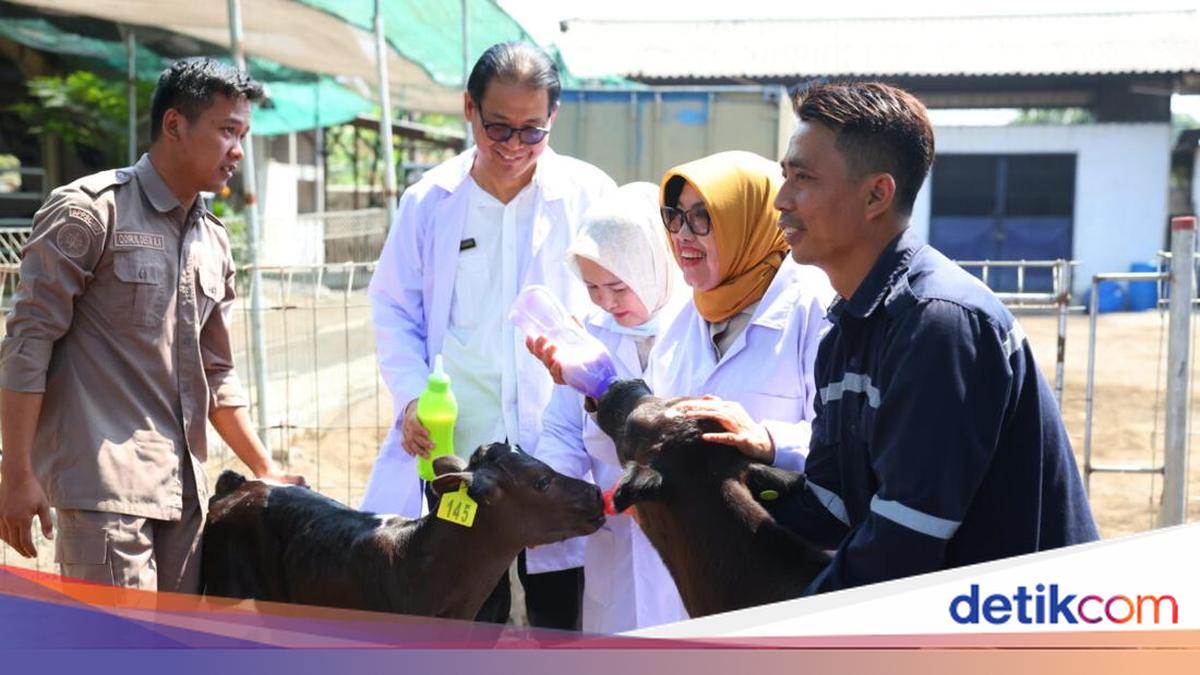
Endang Setyrolawati Thohari, a member of Commission IV of the DPR from the Gerindra Party faction, is pushing for the optimisation of local cattle potential and the strengthening of livestock cooperatives as a step towards increasing domestic milk production. This effort is considered vital for achieving national milk self-sufficiency, reducing dependence on imported products, and simultaneously improving the welfare of local farmers.
Endang stated that the development of local cattle must be carried out comprehensively, ranging from the protection of genetic resources and the use of reproductive technology to the strengthening of regulations and the expansion of access to financing for farmers.
According to Endang, local cattle that have successfully adapted to Indonesia’s climate and environment are national assets that must be protected and developed. Endang recalled a programme for securing the genetic resources of local cattle that she pioneered in the 1990s.
“I remember how I once pioneered a programme to secure the potential of local cattle. Genetic resources that have already adapted to the environment must be secured because they are assets and part of our food sovereignty,” said Endang following a working visit to the Suka Makmur Livestock Farmer Cooperative (KUTT) in Pasuruan, East Java, on Wednesday (30/09/2026).
As a member of the Gerindra party, led by President Prabowo Subianto, Endang believes that strengthening national livestock farming must be directed towards building food self-sufficiency. Domestic milk production needs to be increased by positioning local farmers and cooperatives as the primary actors.
Endang emphasised that the protection of local cattle genetic resources must be strengthened through regulation. One of the steps being encouraged is the drafting of a Genetic Resources Bill.
According to her, the Quarantine Agency also plays a crucial role in preventing Indonesian genetic resources from being taken abroad without adequate protection.
“We must re-draft the Law on Genetic Resources. Our genetics must be secured. The Quarantine Agency also has an important role in ensuring that our genetic resources do not escape to foreign countries,” she asserted.
Endang also requested that the government provide more specific support for the development of local cattle that have proven capable of adapting to the environment and producing milk. Endang reminded that assistance patterns should not be standardised, as every region has different environmental conditions and livestock potential.
“Government assistance must be specialised for local cattle or potential that has adapted well. It should not be uniform, because this is our biodiversity advantage that needs to be maintained and developed,” she explained.
In addition to genetic protection and government assistance, Endang highlighted the importance of developing artificial insemination technology. This technology is needed to improve both genetic quality and the productivity of local livestock.
Access to capital must also be expanded so that farmers can develop their businesses sustainably. Without adequate financial support, according to Endang, the great potential of local livestock farming will be difficult to develop optimally.
Endang also encouraged the provision of awards to researchers and farmers who have maintained and developed the genetic resources of local cattle, including the Grati cattle. One mechanism for recognition that could be considered is the provision of royalties.
“Attention must also be paid to royalties for the researchers and farmers who have secured and developed the genetics of Grati cattle. They must receive recognition for their contributions. Furthermore, access to capital for farmers also needs to be addressed,” she said.
In achieving national milk self-sufficiency, Endang emphasised that the production results of domestic farmers must be the priority. Milk import policies should be managed carefully so as not to weaken the position of local farmers or milk cooperatives.
“We must not continue to import milk. What we must prioritise is the output from our local cattle. We have spent almost 50 years adapting imported cattle to our environment. We must not give up so easily. If it is truly necessary, we should import the cattle, not the milk,” she added.
Source: jawawa.id (https://jawawa.id/newsitem/gerindra-legislator-pushes-local-cattle-as-key-to-national-milk-self-sufficiency-1790766184)
Originally published by detikcom (https://news.detik.com/berita/d-8686321/legislator-gerindra-dorong-sapi-lokal-jadi-andalan-kemandirian-susu-nasional), translated from Indonesian