
Geography is Destiny, Connectivity is a Choice
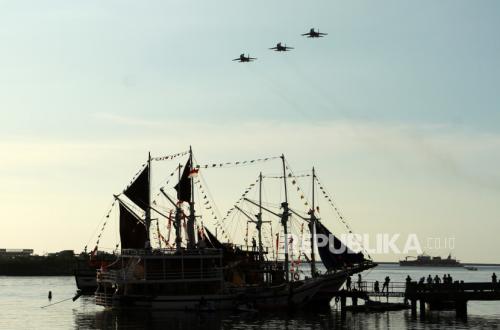
“Geography is destiny.” This expression, often associated with geopolitical thought, remains relevant today. When the media reports on conflicts in the Middle East, the South China Sea, Ukraine, or the Indo-Pacific region, the public is often presented with narratives of democracy, ideology, human rights, or battles between political systems. All these factors certainly play a role. However, if we delve deeper, a nearly repetitive pattern emerges: the struggle for control over strategic trade routes and the resources that sustain modern life.
History proves that great powers never merely build military strength. They build ports, naval fleets, logistics networks, bases, canals, and trade corridors. Because whoever controls the distribution routes will ultimately possess influence over economy, diplomacy, and even international politics.
This line of thinking was long explained by Alfred Thayer Mahan through his monumental work, The Influence of Sea Power upon History (1890). According to Mahan, the glory of great nations—from Athens, Venice, and the Netherlands to Britain—was not determined solely by territorial expanse or population size, but by the ability to master the seas, build strong fleets, control ports, and protect international trade routes. For Mahan, the sea is not merely an expanse of water; the sea is the world’s economic highway.
On the other hand, a different view emerged from Halford Mackinder through the Heartland theory. In his famous paper, The Geographical Pivot of History (1904), Mackinder argued that the interior of Eurasia is the