
Genetic Study of Chickens Leads to Youngest Doctoral Graduate at UGM at Age 34
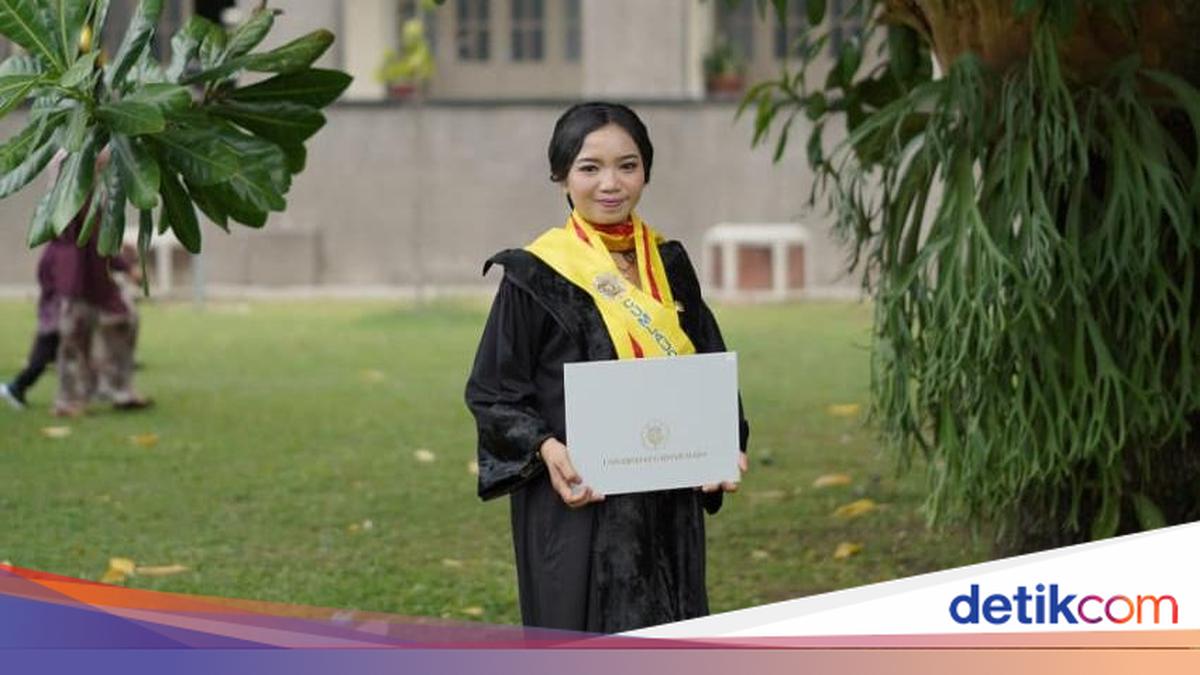
Yesita Vera Saraswati has become the youngest doctoral graduate of the fourth postgraduate commencement period, graduating with a near-perfect GPA of 3.99.
The young woman from Klaten completed her doctoral studies in Animal Science with a Cum Laude distinction at the age of 34 years, 6 months and 28 days. She was named the youngest graduate at UGM’s postgraduate commencement ceremony held on Wednesday (23/7/2026) at Grha Sabha Pramana. The average age of the 90 doctoral graduates at UGM, including foreign nationals, together with 19 graduates from the previous period, is 42 years, 6 months and 16 days.
She admitted that completing her studies consumed a great deal of emotion, energy and effort, meaning the struggle was far from easy.
“It feels extraordinary. There is a sense of relief now that everything that once felt so heavy has finally paid off after graduating,” said Sita, as she is affectionately known, quoted from a UGM press release on Tuesday (28/7/2026).
Sita explained that her dissertation research had to be carried out in the field, and she managed around 70-80 undergraduate and master’s students from the time she first joined the team until now.
“The dynamics were not only about myself, but also about how I managed teams across various laboratories, whilst at the same time I still had to write my dissertation for my own studies,” she explained.
Sita pursued her doctorate through the PMDSU programme, an accelerated Master’s-to-Doctorate scheme for outstanding bachelor’s graduates. She had never initially considered continuing her studies through this programme, as it was during the pandemic.
“Honestly, it never crossed my mind beforehand because that was still during COVID. Eventually I pursued my master’s and doctorate through the PMDSU programme at the UGM Faculty of Animal Science,” she said.
Sita completed her studies in 3 years, 9 months and 10 days with a dissertation entitled “A Study of the Exterior Characteristics and Genetics of Local Chickens and Their Crossbreeds”. Her research focused on developing a new local chicken strain called Galur Baru.
In this research, Sita and her team examined the genetic potential of Indonesia’s local chickens, which currently occupy a distinct market segment that can be exploited. As one source of animal protein compared to other meats, the research could help support government programmes to meet Indonesia’s animal protein needs.
“So we worked on improving the genetic quality of local chickens through crossbreeding and selection, and we have now reached the fifth generation,” she explained.
She hopes her research can eventually be commercialised for the public. Sita acknowledged the research was no easy feat, involving vast amounts of data as well as numerous trials and errors.
She described the lengthy data collection process. Sita and her team had to mate and crossbreed chickens, rear them to around 32 weeks of age, then mate them again for the next generation.
The process from egg to adult chicken was carried out up to the second generation for data purposes. Another challenge was managing a team with diverse interests, including meat, eggs, dairy and nutrition, each of which required data collection.
“So I learned how to manage my time and the people in the team, whilst also maintaining relationships and seeking funding and so on,” Sita said.
During her doctoral studies, Sita did not confine herself to coursework. She remained active in research and social activities, including campus organisations. Beyond that, she also produced publications and copyrights in poster form, and took part in artistic activities such as karawitan during her time as a postgraduate student.
“For me, alongside study, we must maintain good social relationships with others and balance it with enjoyment so that life remains balanced,” she said.
Sita revealed she had aspired to become an academic or lecturer since senior high school. That talent was apparent from childhood, as she enjoyed gathering friends her own age to study together.
Sita hopes that after obtaining her doctorate, she can become a better person, maintain integrity and loyalty when applying to become a lecturer, and continue to make a positive impact on her surroundings.
“For me, learning never stops, even after completing the doctoral level,” she concluded.
Source: jawawa.id (https://jawawa.id/newsitem/genetic-study-of-chickens-leads-to-youngest-doctoral-graduate-at-ugm-at-age-34-1785232348)
Originally published by detikJogja (https://www.detik.com/jogja/kota-pelajar/d-8594034/kisah-sita-teliti-genetik-ayam-jadi-wisudawan-s3-termuda-ugm-di-usia-34-tahun), translated from Indonesian