
Generational Renewal, Transition and the Demographic Dividend
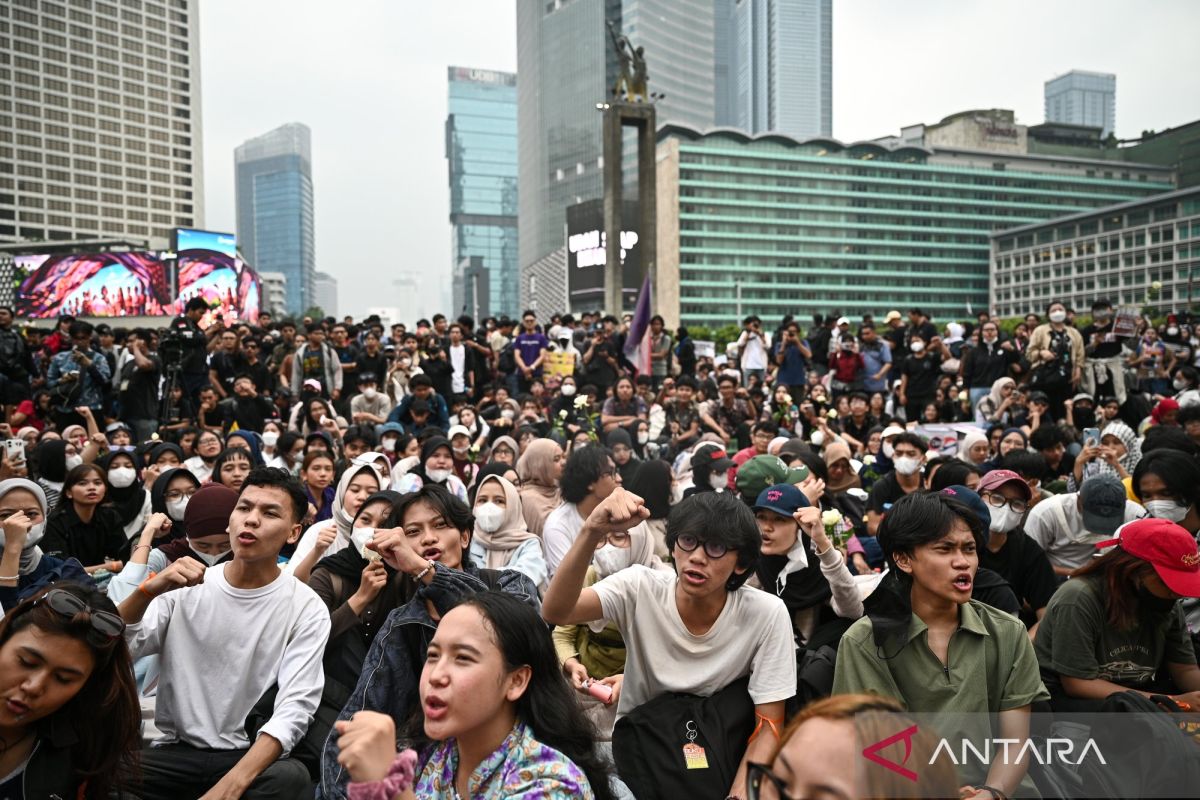
A demographic dividend is not an automatic guarantee of a nation’s progress, but an opportunity that must be harnessed through education, active participation and open political institutions.
Jakarta (ANTARA) – In football, generational renewal is vital to a team’s long-term prospects.
Take Barcelona, which agreed to part ways with its living legend Lionel Messi in 2021 because of financial difficulties and LaLiga’s salary-cap rules.
The departure of La Pulga did not leave El Barca at a loss. With a new policy of gradual renewal, drawing on young players from the La Masia academy, Barcelona has slowly returned to competing for titles.
The policy has also brought through players who are now world-class stars, including Lamine Yamal, Pau Cubarsi, Gerard Martin, Marc Bernal and, most recently, Xavi Espart.
Under a policy initiated by club president Joan Laporta, Barcelona has been able to cut its wage bill sharply by replacing highly paid senior players with young academy talent.
The move also created room to register new contracts. Barcelona’s transition has proved successful, with the Blaugrana continuing to collect honours in recent seasons.
Barcelona’s record during the transition from 2021 to 2026 is impressive. El Barca won three LaLiga titles, three Spanish Super Cups and one Copa del Rey.
If a country were likened to a football club, electoral politics, too, would seem to need generational renewal and a leadership transition.
But are countries ready to transfer the reins of leadership to young people, who now make up the global majority as part of the demographic dividend—in particular, Generation Z?
That seems a distant prospect.
Political landscape
On 25 October, the second round of Brazil’s presidential election declared 81-year-old incumbent Lula da Silva the winner. Lula secured a dramatic victory over Senator Flavio Bolsonaro, who had led in the first round.
Lula won 64.2 million votes, or 51.79 per cent, compared with Flavio Bolsonaro’s 59.8 million.
The result made Brazilian electoral history: for the first time, a presidential candidate who had lost in the first round managed to turn the contest around and win in the second.