
Gen Z's Dilemma: Buying a House and Risking Default vs. Maintaining Financial Stability
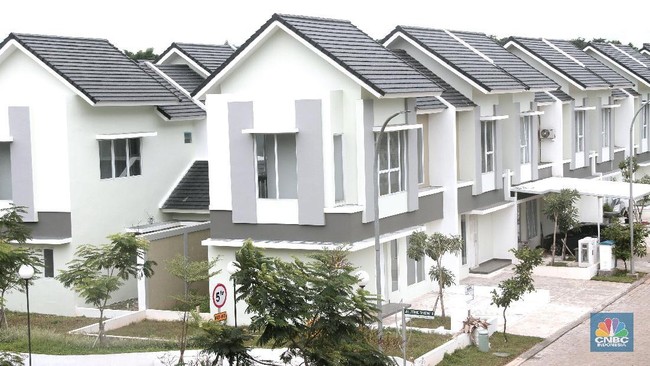
Generation Z faces a dilemma when attempting to achieve homeownership. On one hand, a house remains a necessity and a key part of long-term life planning. On the other hand, taking out a mortgage means being prepared to lock away a portion of one’s income for instalments spanning many years.
This situation has come under scrutiny amidst the realisation that the distribution of subsidised housing remains far below government targets. As of the end of the third quarter of 2026, the Housing Financing Liquidity Facility (FLPP) has only distributed 160,070 units, representing just 45.73% of the 350,000-unit target.
Ferry Salanto, Head of Research at Colliers Indonesia, believes it is inaccurate to directly link this condition to the assumption that Gen Z prefers spending money on holidays or experiences over buying property. “One must be careful when concluding that the decrease in subsidised housing numbers is because Gen Z prefers a holiday lifestyle over buying a house. In my view, it is not that simple. The more fundamental issues are affordability and bankability—namely, their ability to pay and whether they are deemed creditworthy by banks,” Salanto stated during a Colliers press conference on Wednesday (7/10/2026).
For the younger demographic, the issue is not merely finding a house at an appropriate price. They must also calculate their ability to provide a down payment and transaction costs, while ensuring that monthly instalments do not place excessive pressure on their daily finances.
“Everyone certainly desires to own a home, but the problem is that entering the housing market is becoming increasingly difficult and heavy. It is not just about the price of the house, but also the ability to provide the down payment and transaction costs, and whether they can consistently make monthly instalments, and most importantly, whether they are deemed eligible by the bank,” said Salanto.
The dilemma is even more pronounced for those newly entering the workforce. Income is often still in its early growth stages, while the cost of living continues to rise, and daily necessities cannot be paused simply because someone wishes to pursue homeownership.
“For the young consumer group, the problem is more palpable because many are still in the early stages of their careers. Their income growth is not necessarily in line with the rising cost of living. Because they are at the start of their careers, the issues of bankability or bank eligibility become much heavier,” Salanto added.
In these circumstances, maintaining financial stability becomes a crucial consideration before taking out a mortgage. Financing issues are determined not only by the ability to pay the first instalment but also by the ability to sustain payments over the long term.
Financial history can also determine the chances of Gen Z securing a mortgage. Consumptive loans and online loans (pinjol) can be factored into bank assessments and have the potential to affect a prospective debtor’s eligibility.
Nevertheless, the desire to own a home has not disappeared. The younger generation simply needs to rearrange their priorities between current living needs and the long-term financial commitment required for future homeownership.
“Fundamentally, any person who has plans to start a family and improve their life will need housing. Therefore, I do not believe it means they are uninterested in buying houses, but they must adjust their priorities because buying a house requires a much larger and long-term financial commitment,” concluded Salanto.
Source: jawawa.id (https://jawawa.id/newsitem/gen-zs-dilemma-buying-a-house-and-risking-default-vs-maintaining-financial-stability-1791363365)
Originally published by CNBC Indonesia (https://www.cnbcindonesia.com/news/20261007135832-4-774090/simalakama-gen-z-beli-rumah-gagal-bayar-cicilan-vs-kantong-tak-bolong), translated from Indonesian