
Gen Z urged to take concrete action in environmental conservation
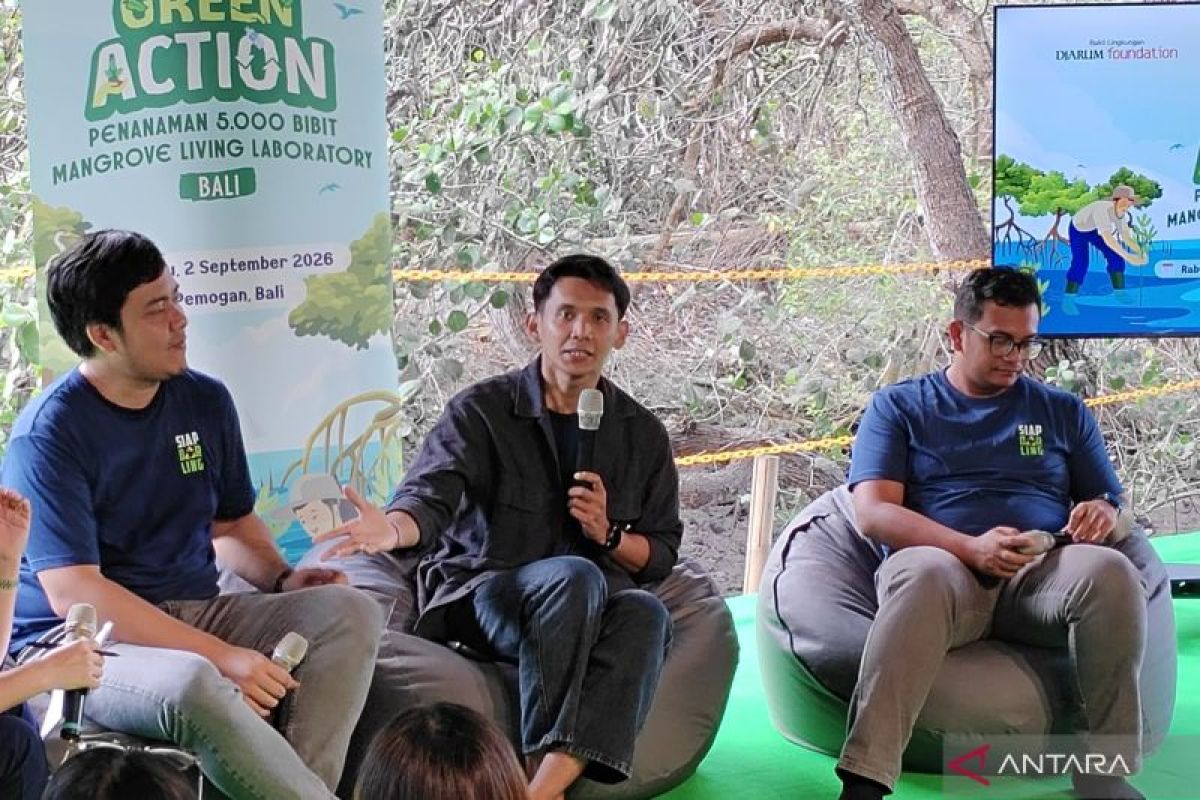
Denpasar (ANTARA) - Generation Z (Gen Z) is being encouraged to transform sympathy into concrete action (empathy) in nature conservation, notably through mangrove planting activities organised by the Bakti Lingkiungan Djarum Foundation (BLDF) at the Ngurah Rai Forest Park (Tahura) in Pemogan, South Denpasar, Bali, on Wednesday.
This was stated by environmental activist and youth representative, I Komang Triska Ananda Dilivianugraha Priantara, also known as Ananda Priantara, before 50 participants consisting of students from Udayana University.
“For a long time, Gen Z has often been criticised with the term ‘strawberry generation’, which is considered soft and seeking instant results. In reality, this generation is actually very aware of and cares about environmental issues,” he said.
He cited research from the international consulting firm McKinsey, which stated that 83 per cent of young people today consider the environmental impact produced by a company when choosing their field of study or career path.
Although awareness has been built massively on social media, the greatest challenge is changing sympathy into empathy. According to him, sympathy is merely a feeling of pity, whereas empathy demands the courage to take direct action in the field.
On this occasion, Ananda also shared his experience of planting mangroves five years ago, which he described as a form of mitigation and an urgent necessity for protecting coastal areas.
Planting mangroves, he said, is not merely about planting trees, but about building a sense of ownership towards nature.
He also linked the action to Balinese local wisdom, specifically the Tri Hita Karana philosophy, so that it does not remain just a mnemonic slogan but is implemented in real life.
“When friends plant (mangroves) in a certain place, it will foster a sense of ownership. For the Balinese people, it feels as if ‘taksu’ or one’s very essence is planted there, and this is what distinguishes our movement,” he remarked.
He expressed hope that the mangrove planting activity could produce agents of change from among the students and young researchers of Udayana University.
“It does not need to be many; we only need one, two, five, or ten people to act as triggers; that is already massive enough to mobilise our youth to undertake environmental action,” he said.