
Gen Z Flocks to KUA Weddings, Impact Felt by Wedding Organiser Businesses
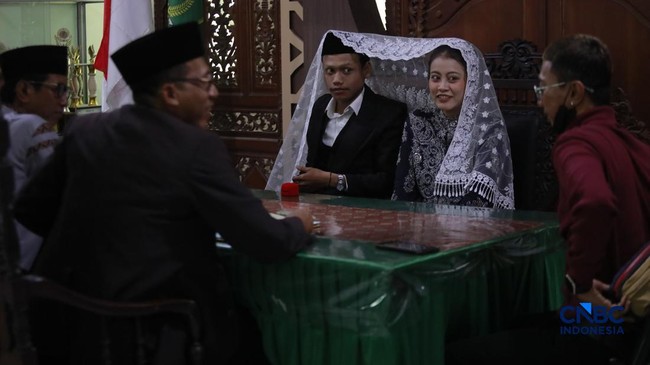
The growing number of Gen Z couples choosing to marry at the Religious Affairs Office (KUA) or hold intimate weddings is beginning to reshape the map of the wedding industry. On one hand, this trend is seen as a form of efficiency for young couples reluctant to squander funds on a large party. On the other, businesses such as wedding organisers (WO), decorators, and caterers are forced to pivot their strategies to survive the shift in market tastes.
The Chairman of the Indonesian Decorators Association (Aspedi) for DKI Jakarta and owner of Garda Dekorasi, Warsono, said a slowdown in the wedding business is indeed being felt compared to the post-pandemic recovery period of 2022-2023. According to him, prospective brides and grooms are now more selective, tightening their budgets, and making decisions within a much shorter timeframe.
“Compared to last year, the decline in demand is in the range of 25%-35%, across almost all wedding industries. Only this is not a definite figure,” Warsono told CNBC Indonesia. He noted the decline is most pronounced in the upper-middle segment, particularly for large parties with 800-1,000 guests or more. Conversely, intimate weddings are actually growing.
Adi Rahzalafna, owner of SatSet Wedding Organiser, observed similar symptoms. He said the trend of marrying at the KUA and intimate weddings has altered demand across various wedding business lines. Some sectors have declined, while others have remained stable or even strengthened. “The decline in orders generally occurs for large-scale events and in fields such as decoration, catering, MCs, and on-the-day WO crews. But it tends to remain steady for photographers, videographers, and make-up artists. And there has been an increase in supporting fields, which are newcomers, such as bridal assistant services and modern snack stalls,” Adi said.
According to him, the shift does not mean the wedding industry has lost its market entirely. Demand still exists, only the form and quantity of orders have changed. Amid these changes, he noted that the documentation sector, such as photography and videography, has remained relatively resilient. “New-style photographers or videographers are continuing to develop, with orders tending to remain steady. They can offer bundled packages for pre-wedding, the solemnisation, and the reception, making it more economical,” he explained.
Warsono assessed that the shift cannot be separated from two simultaneous factors: economic pressure and a change in the character of the younger generation. He said that prospective brides and grooms, especially in the middle segment, are now choosing efficient packages and simpler venues. “This is very true, regardless of whether they are at the KUA or a small venue, they are now prioritising efficiency to reduce the budget, and the players in that segment are increasingly numerous. Conversely, the upper-middle segment is very impacted,” Warsono said.
He also stressed that this trend is not merely a temporary effect. In the short term, the phenomenon is due to the economy and declining public purchasing power. But in the long term, there has been a change in the mindset of Generation Z. “We admit that Gen Z has changed, they prioritise social media and see efficiency as more important than luxury. So we as industry players must be adaptive and creative. Those who don’t want to keep up with developments will find it quite tough,” he said.
Meanwhile, wedding organiser staff member Arini offered a more moderate view. She acknowledged a slight decline in orders over the past two years but could not confirm it was solely triggered by the KUA wedding trend. “Indeed, compared to a few years ago, there is a slight decrease, but it cannot be confirmed whether the cause is people choosing to marry at the KUA or other factors,” Arini said. She also noted that booking rates this year are weaker compared to last year. “If I look at it, it’s a bit down compared to last year especially. If given a scale of 1-10, this year could be called a 7, whereas last year was an 8,” she added.
Arini also observed that the trend of couples choosing a simple solemnisation or intimate wedding is becoming more apparent. “In my opinion, many still choose to hold an intimate wedding as a solution, where they can still have a party but with a minimum number of guests and a more budget-friendly cost. But indeed, looking at the overall trend in the field, there appears to be a shift so that more couples are choosing to just marry at the KUA,” Arini said. She noted that funds originally prepared for a large reception are often reallocated to other needs, such as an overseas honeymoon, buying a house, or other things for their future marriage.
Regarding employment, not all businesses have resorted to layoffs. Adi admitted his business has actually added workers. Meanwhile, Warsono mentioned that efficiency is being carried out through other means.