
Gen-Z Finalists Compete to Convince Panelists for Village Tourism Service
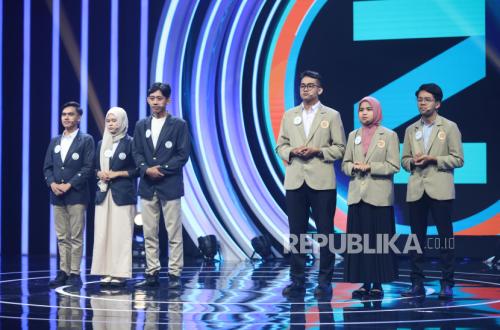
Genera-Z Berbakti 2026 has arrived with a new judging format. Participants are preparing for the competition by referencing the 2025 programme edition.
This change in the judging format requires the eight finalists to devise the best strategies to perform optimally and convince the panelists that the ideas proposed for their target tourism villages can be implemented effectively and achieve maximum impact.
Finalists of Genera-Z Berbakti 2026 must pass three very strict stages to advance and win the opportunity to implement programmes at their target locations. These stages are conducted before three panelists: Nicholas Saputra, the BCA Bakti Ambassador; Cinta Laura Kiehl, known as an entertainer and sociopreneur; and Tri Mumpuni, a scientist and social entrepreneur.
The first stage of this BCA Bakti call for proposals is the ‘Idea Pitch’. In this round, each finalist is given 10 minutes to present their best programme design. The next stage is the ‘Think Tank’, where finalists are given 60 seconds to answer questions from the panelists. If the panelists respond to an answer, the finalist may provide a follow-up response of up to 30 seconds.
The final round is ‘Head to Head’, where finalists can debate, ask questions, answer, and defend their respective ideas, simultaneously testing the strength of their programmes.
However, unlike last year, Genera-Z Berbakti has implemented one new rule. Under this rule, for every stage (Idea Pitch, Think Tank, and Head to Head), finalists may only be represented by one different person. This means every individual within a team has an equal opportunity to perform before the panelists and their opponents.
This regulation surprised many finalists, including Tessa from the DESA HIDUP team representing UIN Sunan Gunung Djette Bandung. “Initially, I felt very unsettled and nervous. However, I tried my best to smile. The proudest moment was when I could speak, answer the panelists’ questions, and integrate the answers that I felt were good,” said Tessa.
Similar testimonials were shared by the Laskar Selasik team from Gadjah Mada University. “To be honest, I was quite nervous from the start and even thought about asking if I could be replaced. I eventually stopped worrying about being right or wrong, and focused on the most important thing: presenting the content of the presentation,” said Faruq, a member of the team.
Behind the tension and adrenaline felt by the finalists, there is a larger goal to be achieved through this competition. BCA Bakti hopes that Genera-Z Berbakti 2026 can assist students in producing innovative ideas that are ready for implementation in daily life within each target village.
“We are confident that the eight selected finalists possess extraordinary potential. Now, it is time for them to prove it. We are optimistic that the new final stage format of Genera-Z Berbakti 2026 can help finalists unleash their great potential, which can then be developed to implement their ideas at the activity locations,” said Hera F. Haryn, EVP of Corporate Communication & Social Responsibility at BCA.
Four of the eight finalists will receive the opportunity to implement their ideas in four tourism villages. These villages are the Terong Creative Tourism Village in Belitung Regency; the Gunung Padang Site Tourism Village in Cianjur Regency; the Patakbanteng Tourism Village in Wonosobo; and the Kakaskasen Dua Tourism Village in Tomohon City.
“My advice to the universities that have reached the finals is to keep their proposals simple. It is better to solve problems gradually and slowly rather than attempting to do everything at once, only to produce a system that is unrealistic and unsustainable,” advised entertainer and sociopreneur Cinta Laura Kiehl.