
Gecko Abilities Inspire Satellite Technology to Capture Space Debris
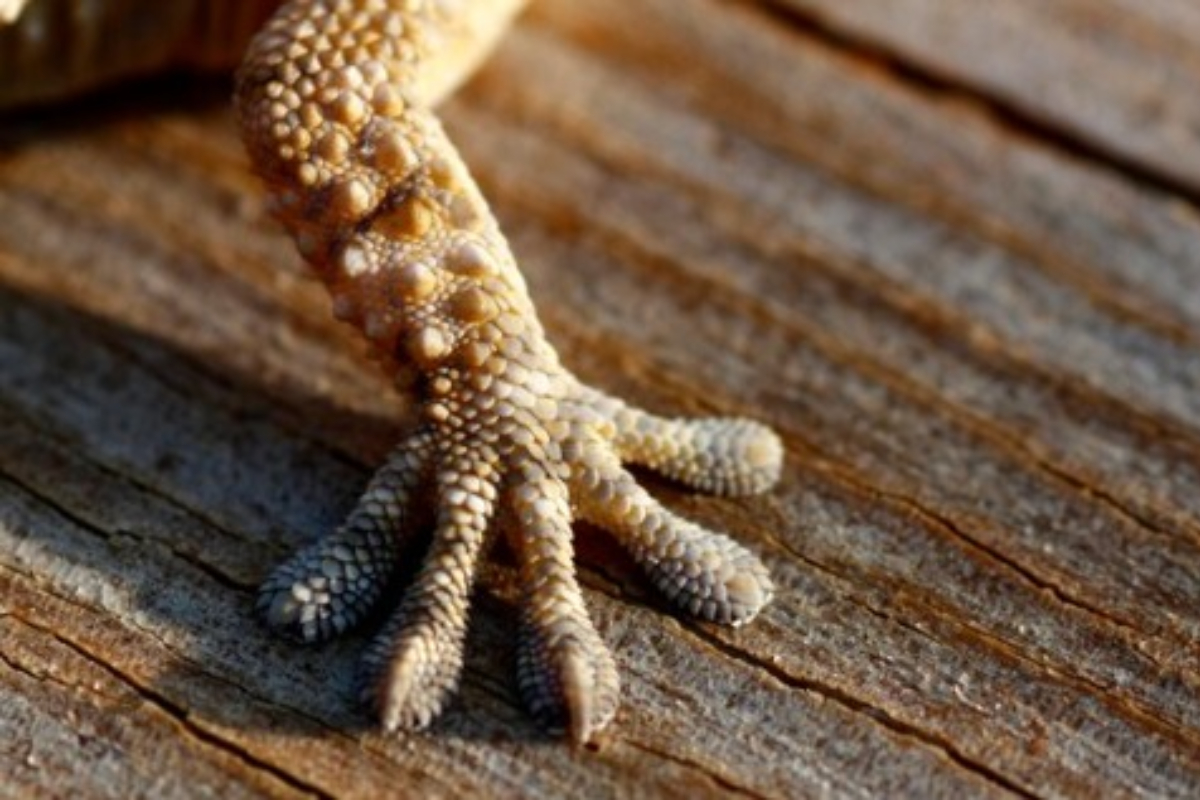
What if the gecko’s ability to stick to walls could inspire technology to clean up space debris? Researchers are now mimicking this capability in a satellite development project designed to capture defunct objects in orbit.
The gEICko project involves researchers from Julius-Maximilians-Universität Würzburg (JMU) and several international institutions. According to JMU, the project has received European Union funding through the EIC Pathfinder programme amounting to 4 million euros, with nearly 700,000 euros allocated for research in Würzburg.
Space debris consists of disused satellites, rocket parts, and fragments resulting from explosions and collisions. According to JMU, there are more than 50,000 objects measuring at least 10 centimetres in space.
The presence of these objects can endanger satellites that are still operational. The International Space Station (ISS) has even had to manoeuvre on several occasions.
The problem is that cleaning up space debris is not a simple task. Satellites that can no longer be controlled or were not designed for docking are difficult for other satellites to capture.
The researchers have therefore developed a special surface inspired by gecko feet. The surface uses silicone with specific microstructures that can adhere to smooth surfaces when contact occurs at the right speed and angle.
This capability mimics the way geckos stick to walls or ceilings. According to JMU, the mechanism exploits van der Waals forces, which are attractive forces at the molecular level.
The technology will eventually be installed on a chaser satellite. Once it successfully attaches to a disused satellite, the chaser satellite will help alter the object’s orbit so that it can re-enter the atmosphere and burn up, or be moved to a graveyard orbit.
The Würzburg team is not only developing a material that resembles the capabilities of gecko feet. They are also working on guidance, navigation and control systems so that the satellite can locate, approach and attach to objects that are moving and spinning without control.
According to JMU, the researchers are also considering using the material on a tether if direct docking is not possible.
The tether could be used to establish a connection with the target object.
This technology still requires further development. At the end of the three-year funding period, the team aims to have a functioning docking mechanism prototype available. JMU estimates that satellites using this technology will only be operational in about 10 years.