
GCC and EU Agree to Pursue Diplomatic Efforts on Iran Issue
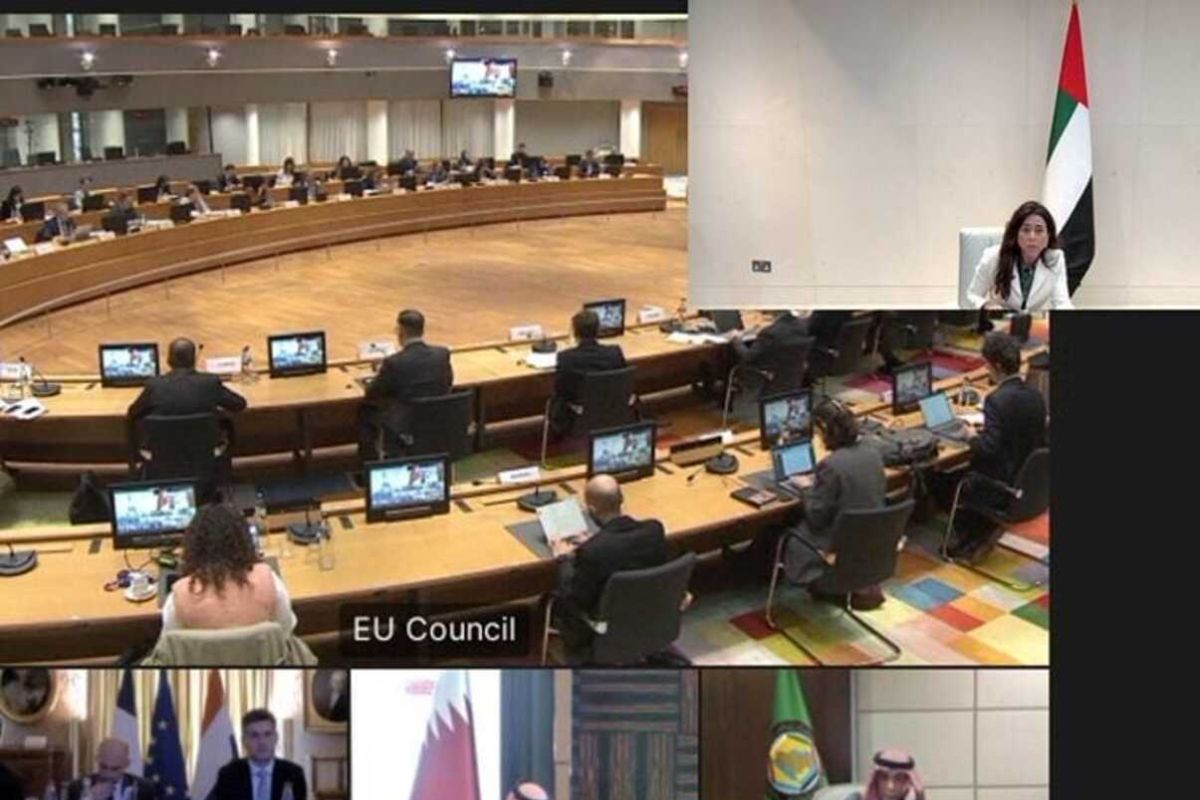
The Gulf Cooperation Council (GCC) and the European Union (EU) have agreed to pursue joint diplomatic efforts to achieve a lasting solution that prevents Iran from acquiring and developing technology that could threaten regional and global security. According to a press release from the Embassy of the United Arab Emirates (UAE) in Jakarta, issued on Saturday, the statement was made at the ministerial meeting between the GCC and the EU regarding Iran’s attacks against GCC member states, released on Thursday (5/3).
“The ministers agreed to pursue joint diplomatic efforts to achieve a lasting solution that prevents Iran from obtaining nuclear weapons, stops the production and deployment of Iran’s ballistic missiles, drones, and other technology that threatens regional and global security,” the statement read.
According to the statement, the GCC and the EU strongly condemn Iran’s attacks against GCC countries, which are regarded as a real threat to regional and international security, and demand that Iran halt the attacks immediately and unconditionally. The ministers also affirmed the right of GCC nations, under Article 51 of the UN Charter, to defend themselves individually or collectively from Iran’s attacks, and to take the necessary steps to safeguard security, protect territory and citizens, and restore international peace.
The ministers also call on Iran to stop activities that disturb stability in the region and in Europe, and ultimately allow the Iranian people to determine their own future. They note the GCC countries’ commitment not to permit their territory to be used as a launch base against Iran and reaffirm a strong commitment to dialogue and diplomacy to resolve the crisis.
The statement again emphasises the importance of maintaining regional air security and sea lanes as well as freedom of navigation, including in the Hormuz Strait and Bab el-Mandeb Strait, and ensuring the security of supply chains and the stability of global energy markets.
“The ministers stressed that security and stability in the Gulf region are two essential pillars for global economic stability, and highlighted the close link between Gulf security and Europe’s and the world’s security,” the statement quoted.
In this context, the statement continues, the ministers recognised the importance of the European Union’s maritime defence operation “Aspides” and the operation “Atalanta” in securing vital waterways and reducing disruptions to supply chains. They also called for increased coordination to support these operations, and stressed the need to safeguard regional airspace and sea routes while ensuring energy security and nuclear safety.
The GCC comprises six member states: Saudi Arabia, the United Arab Emirates (UAE), Bahrain, Oman, Qatar, and Kuwait.
On 28 February, the US and Israel attacked Iran, resulting in the death of Iran’s Supreme Leader Ayatollah Ali Khamenei and nearly a thousand others. Iran retaliated by launching missiles at US military bases in the Middle East.
Saudi Arabia, the United Arab Emirates, Bahrain, Qatar, and Kuwait are GCC members that host American military bases.