
Gaza Under Israeli Fire Despite Ceasefire: ‘People Are Killed Every Day’
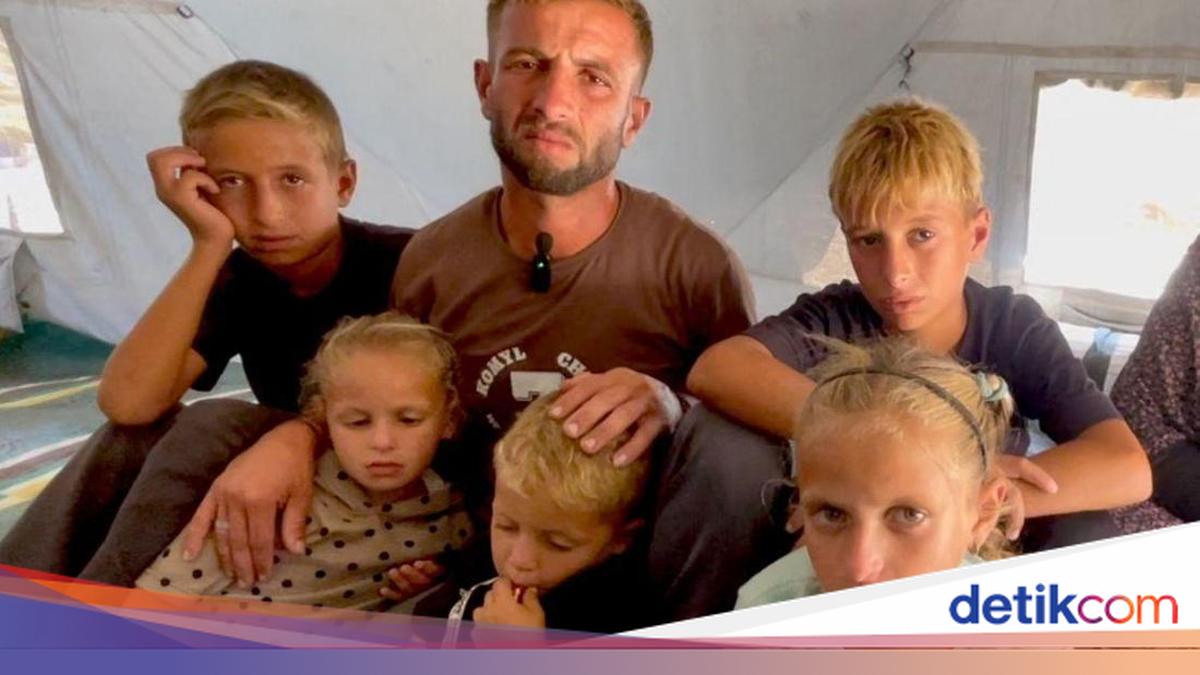
One morning last September, Fida al-Toutah, a 31-year-old mother of five, was combing her daughter’s hair inside their tent in Gaza when gunfire erupted.
“My mother shouted at us to get down,” her son Ezz said, crying as he recalled what happened.
Ezz realised his mother had been shot only when he saw his younger sister’s hands covered in blood. She had been clinging to her mother as a burst of bullets tore into their displacement tent.
“Our mother was so kind and generous. What had she done wrong?” Ezz said.
Fida died on 21 September 2026 after being shot in the head.
She was one of more than 1,400 people killed in Israeli attacks in Gaza since the ceasefire was announced on 10 October 2025.
The death toll was compiled by Gaza’s Hamas-run Ministry of Health, whose figures are considered credible by the UN.
Fida’s husband and children keep a photograph of her.
The October 2025 ceasefire was accompanied by the release of thousands of Palestinians held by Israel. Hamas, in turn, released 48 Israelis it had taken hostage.
Beyond the hostage issue, the agreement was intended to bring the war to an end.
Under its terms, Israel’s large-scale bombardment of Gaza was supposed to stop. The ceasefire brought great relief to Gaza’s residents and allowed them greater access to humanitarian aid and medical care.
In reality, however, Israel has continued to carry out attacks in Gaza almost every day, even during the ceasefire.
In late September and early October alone, more than 30 people were killed, according to Gaza’s Ministry of Health.
Israel says, as it has consistently maintained, that it targets Hamas militants. It also accuses Hamas of repeatedly violating the ceasefire.
“The ceasefire is all a lie. There is gunfire every day. Every day there are killings and death hanging over us,” said Fida’s husband, Ahed.
The BBC submitted the family’s account of Fida’s death to the Israel Defense Forces (IDF). The military said it had no record of the incident.
Since October 2023, more than 74,000 people have been killed in Israeli attacks, according to Gaza’s Ministry of Health.
Outside the displacement tent, Fida’s brother Ibrahim pointed to holes he said were caused by bursts of fire from Israeli forces.
“This tent is just a sheet of fabric. Imagine a military vehicle coming here and firing a burst of bullets,” he said.
“There is also fire coming from the sky, from above, from quadcopters, aimed at unarmed civilians,” he added.
Fida was the fourth of Ibrahim’s siblings to be killed since the conflict escalated in October 2023.
“We left our home in Zeitoun to survive, but death keeps following us,” he said. The family has moved seven times, but safety remains elusive.
Most of Gaza’s 2.1 million people have been displaced repeatedly by the war, according to the UN. Many have been forced to live in tents and unsafe buildings.
On the same day Fida was killed, 14-year-old Ismail al-Bardawil was also shot dead. He was killed in the al-Mawasi area of Rafah, in southern Gaza.
His family told the BBC that Israeli forces shot Ismail as he and his siblings were fishing in the Mediterranean Sea, about 20 metres (66 feet) from the shore.
Ismail was among more than 300 children killed since the ceasefire began, according to Gaza’s Ministry of Health.
The IDF said it had no information about Ismail’s death either.
Over the past year, the IDF has released videos of operations in Gaza targeting Hamas and other groups. At least seven Israeli soldiers have been killed in Gaza since the ceasefire began.
Both Fida and Ismail lived near what is known as the Yellow Line, which separates the areas occupied by the Israeli military in Gaza from those controlled by Hamas to the west.
The area around the line is considered particularly dangerous because Israeli forces often fire into it. But Gaza’s residents have few options for moving around, given the severely limited space available.
The strip was densely populated even before mass displacement began. Its population is now crowded into less than 40% of its territory, which is controlled by Hamas.
In those areas, the group maintains a tight grip, cracks down on dissent and continues to recruit fighters.
In May 2026, Israeli Prime Minister Benjamin Netanyahu said he had directed the IDF to expand the area of Gaza under Israeli control to 70%.
A year after the ceasefire took effect, reconstruction has yet to begin in Gaza.
Architect Amal Alabadla, who lived in a comfortable apartment before the war, now lives in a tent by the coast.
“Whenever it rains, this place floods. I feel very afraid when the wind is strong because our tent could be damaged or destroyed,” she said.
Amal has had to raise her two sons, Mohammed and Noah, alone.
Her husband was outside Gaza when the conflict intensified, and they have not been reunited in three years.
Three of Amal’s brothers, who helped her care for the boys, were killed in separate attacks before the ceasefire began.
Amal Alabadla says she is struggling to raise her sons alone in a tent on the Gaza coast.
“During winter, my son suffers epileptic seizures because of the cold. Sometimes it is very difficult to keep him dry and warm,” Amal said.
“Before the war, I had a job, a home and an ordinary life, but then everything changed drastically.”
“Now we have no hope, nothing. The most important thing is to survive from day to day, to keep my children alive, clean, healthy and fed,” she said.
Some displacement sites further inland in Gaza are even built below sea level, making them more vulnerable to flooding.
The October 2025 peace agreement was supposed to pave the way for reconstruction in Gaza, but rebuilding has not begun because of a deadlock over the agreement’s second phase.
Israel strictly controls which materials and machinery are allowed into Gaza, saying it does so for its own security.
In early 2026, US President Donald Trump proposed a plan to disarm Hamas. But last August Netanyahu rejected the plan, saying Israeli forces would not withdraw until Hamas had been fully disarmed.
Hamas says it will hand over its heavy weapons only if Israel ends “all forms of aggression” and withdraws its forces from Gaza.
Meanwhile, Trump’s Board of Peace has proposed a $2.45 billion plan for Gaza’s recovery.
But a year after the ceasefire, many people like Amal are deeply sceptical that meaningful change will come.
“We are struggling and are not being allowed to rebuild,” she said.
“I don’t think they are telling the truth about allowing us to build a safe future for our children,” Amal said.
Source: jawawa.id (https://jawawa.id/newsitem/gaza-under-israeli-fire-despite-ceasefire-people-are-killed-every-day-1791777192)
Originally published by detikcom (https://news.detik.com/bbc-world/d-8702817/gaza-digempur-israel-saat-gencatan-senjata-setiap-hari-terjadi-pembunuhan), translated from Indonesian