
Gauging the Direction of Nationalism and the Role of Youth in the Digital Era
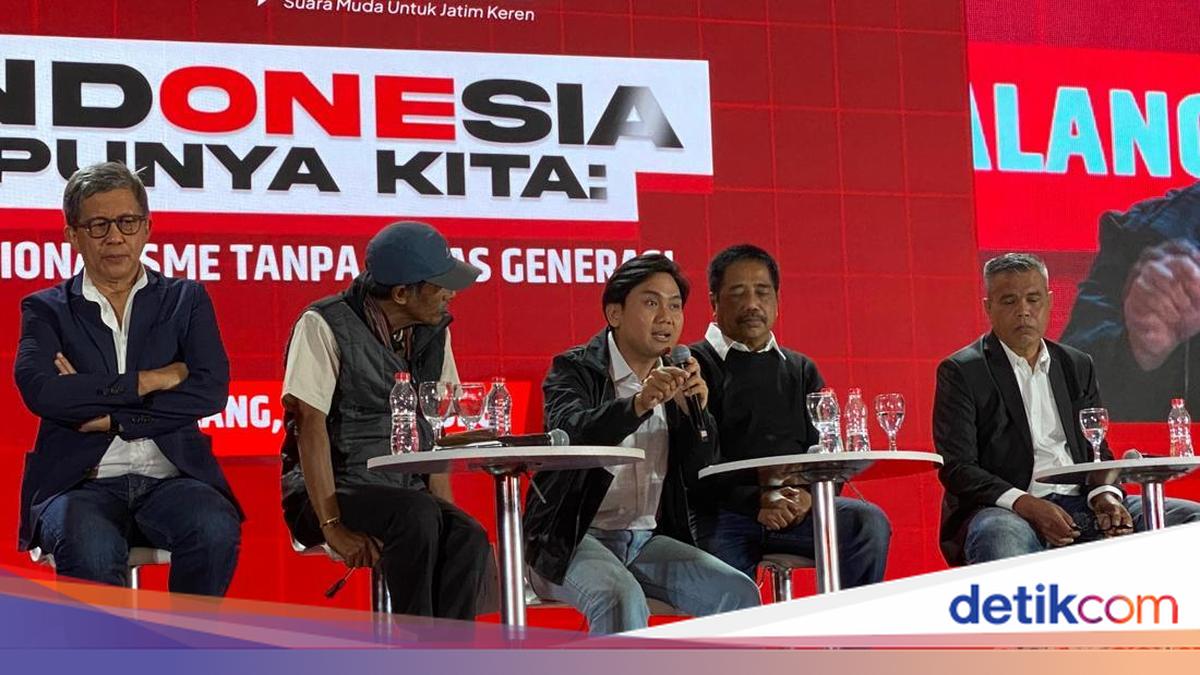
A RedTalks forum titled ‘Indonesia Punya Kita’ became a platform to discuss the dynamics of the relationship between the younger generation, political parties, and the idea of nationalism in the digital era. The discussion, themed ‘Young People and Political Parties: Still Trusting or Already Losing Hope?’, brought together a mix of perspectives from academics, activists, and comedians to dissect the reasons behind youth scepticism towards modern politics.
Academic Suko Widodo opened the discussion by highlighting a shift in values regarding how society interacts following technological disruption and the pandemic. He argued that political parties need to reflect on their roots to avoid losing touch with the grassroots. ‘Today, many people talk to each other but do not communicate. Many people meet, but do not encounter one another,’ Suko Widodo said. He stressed the importance of political parties re-embracing the lower classes, or ‘marhaen’. ‘The PDI-P was once famous for representing the common people, but today they have all become big. The call to return to the marhaen should be an entry point for the PDI-P to get back on the right path,’ he added.
Cultural observer Dwi Cahyono acknowledged the scepticism and distance between young people and political parties, citing the Malang Raya area with its hundreds of thousands of students as an example. He saw a significant potential that has not been effectively accommodated within the formal political system. ‘Do young people lack concern for politics? They care deeply. The question is whether they choose to channel that political concern through political parties or not, and so far, they haven’t,’ Dwi Cahyono explained. He considered the younger generation’s scepticism as a reasonable form of evaluation. ‘Scepticism as an attitude is necessary because by taking a distance, evaluation can occur, including evaluation of political parties,’ he concluded.
Representing the youth perspective, Chairman of the Indonesian Islamic Student Movement (PMII) Malang City branch, Benny Miftahul Arifin, highlighted the need for education and more tangible spaces from political parties down to the grassroots level. ‘Looking ahead, my peers have to think twice, even many times, before joining a party. So, they tend to lay low and focus on individual pursuits,’ Benny said. He emphasised that discussion forums like RedTalks must reach the lower levels of society. ‘If possible, don’t just hold it here; it should reach the grassroots, because the problems are there, not at the top,’ he stressed.
From a communications and social media perspective, comedian Dewangga underscored the importance of visual approaches and branding for political messages to be accepted by the current generation. ‘The role of young people today is on social media. We have to be good at branding so that people will pay attention to us,’ Dewangga explained. He gave examples of how humour and simple keywords on social media can stick firmly in the public memory. ‘Political parties must be literate in branding, and they must understand what works on social media now and in the future,’ he continued.
Echoing this sentiment, activist Alif Firdaus from the Indonesian National Student Movement (GMNI) asserted that light and relevant delivery methods are far more effective at capturing young people’s attention than formal five-yearly political agendas. ‘When you convey something through jokes, young people remember it more. The role of young people today, including on social media, is very central. Whether we make videos about our future direction or what our branding looks like, it will definitely be noticed,’ he said.
Meanwhile, senior comedian Abdel Achrian offered a critical note on how political parties package their messages so they do not appear rigid in the eyes of young people. ‘Packaging is important nowadays. When a young person enters a political party, their vocabulary immediately changes; it is no longer the vocabulary of young people, but rather the vocabulary of bureaucrats,’ Abdel remarked with a humorous yet sharp tone.
Political observer Rocky Gerung stressed that the political struggle for young people must not stop at mere sentiment or cosmetic commodification, but must be based on strong arguments and ideology. ‘If you only produce feelings of envy or annoyance, that means you are only producing sentiment. What we need is argument,’ Rocky asserted. He encouraged the younger generation to dare to challenge the ideas of political parties with intellectual thinking. ‘Let us argue with arguments and ideological direction. Only through that can this nation be rebuilt. Go ahead and date, but don’t forget to think,’ he advised.
RedTalks 2026 carries the theme ‘Indonesia Milik Kita: Nasionalisme Tanpa Batas Generasi’ (Indonesia is Ours: Nationalism Without Generational Boundaries). The forum is designed as an open dialogue space bringing together students, activists, academics, cultural observers, and youth leaders to exchange ideas, deliver criticism, and engage in constructive self-critique. Through this theme, the organisers aim to assert that the future of Indonesia is the responsibility of all generations. Young people are seen as having a strategic role as drivers of change towards a democratic, independent, and socially just Indonesia. The event featured two main discussions: the first on youth scepticism towards political parties, leadership regeneration, and criticism of current political practices; and the second on entrepreneurship, the creative economy, upskilling, reskilling, and the state’s role in creating opportunities for the younger generation.
Source: jawawa.id (https://jawawa.id/newsitem/gauging-the-direction-of-nationalism-and-the-role-of-youth-in-the-digital-era-1784965942)
Originally published by detikcom (https://news.detik.com/berita/d-8589707/menakar-arah-nasionalisme-dan-peran-anak-muda-di-era-digital), translated from Indonesian