
Gas Is Back: Indonesia's Momentum to Become a Global Energy Player
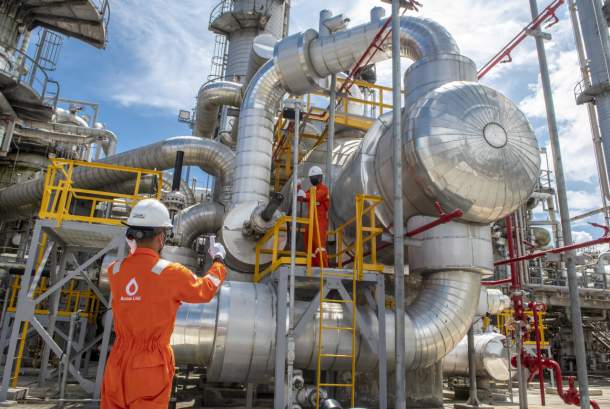
Walking from one pavilion to another at Gastech 2026 in Bangkok, I picked up one increasingly clear message: the world is not abandoning gas, but rather redefining its role.
Gastech 2026, held on 14–17 September in Bangkok, brought together governments, energy companies, investors, traders, technology firms and industry players from many countries. Natural gas and LNG remained at the heart of the gathering, but the conversation has now become far broader, encompassing geopolitics, energy security, electrification and industrialisation, investment, artificial intelligence (AI), low-carbon technology, hydrogen, and supply chain resilience.
This shift matters because in recent years the energy transition discourse has often been simplified into a contest between fossil fuels and renewables. Yet what I saw in Bangkok points to an increasingly pragmatic approach. The world’s question is no longer simply how fast we can abandon fossil fuels, but how to provide energy that is sufficient, affordable, secure and increasingly low-carbon to sustain economic growth.
Asia and the return of energy security
The choice of Bangkok as host of Gastech also carries its own significance, because Asia is becoming one of the centres of gravity of global energy demand growth. Economic growth, urbanisation, industrialisation, electrification and digitalisation mean this region faces different challenges from much of the developed world.
Developing countries must pursue two major agendas simultaneously: expanding energy supply to pursue economic growth whilst transitioning towards an increasingly low-carbon energy system. For developing countries, therefore, the energy transition cannot simply be translated as swapping one energy source for another.
We need a balance between three things: energy security, affordability and sustainability. Energy must be available at competitive prices, whilst emissions are continuously reduced. Gas sits at the intersection of these three interests.
Interestingly, one of this year’s strategic Gastech agendas even used the term “the new LNG order”. LNG is positioned as an enabler of economic growth, power system reliability, and industrial competitiveness as the world faces geopolitical tensions, shifting trade routes, carbon policies, and surging electricity demand.
This shows one thing: energy security is back at the main table of decision-making. The cheapest energy is not necessarily the most secure, so countries must begin to calculate availability, reliability, diversification and resilience.
Gas and the future of Indonesia’s energy
One of the most interesting issues I encountered at this year’s Gastech actually came from outside the traditional gas industry: artificial intelligence. AI may operate in the digital world, but its infrastructure is highly physical, because data centres need electricity, whilst hyperscale computing requires very large quantities of power that must be available 24 hours a day.
The Gastech agenda specifically addressed the relationship between AI, semiconductors, computing infrastructure, hyperscale data centres, energy availability and electricity grid capacity. It is therefore increasingly clear that the AI race is also becoming an energy race.
This offers an important lesson for Indonesia. We want to attract investment in data centres, the digital industry, the semiconductor ecosystem, advanced manufacturing and various industries of the future, but investors will not only ask about fiscal incentives, land or internet connectivity. They will also ask whether electricity is available, whether it is reliable, what it costs, and how low its emissions are.
Future investment competition will increasingly be determined by a country’s ability to provide reliable, affordable and increasingly clean power. In this context, we should stop pitting gas against renewables. The future of the energy system is not gas versus renewables, but gas plus renewables plus storage plus grid plus digital technology, each with its own function in building a reliable energy system.
However, the phrase “gas is back” must not be misinterpreted as a return to business as usual. Indeed, demands on the gas industry are rising, because the gas of the future must be cleaner gas. Methane emission reduction, production efficiency, CCUS, digital monitoring and lower carbon intensity will increasingly determine gas’s competitiveness.
Gastech itself spoke not only of natural gas and LNG, but also of low-carbon solutions, AI, hydrogen and various technologies for transforming the energy system. So the question is no longer merely how much gas we can produce, but also how competitive and how low-emission the gas we produce is. That is what will ultimately help determine investment, financing and market access.
Here lies Indonesia’s greatest point of reflection. We possess substantial gas resources, a domestic market, fertiliser and petrochemical industries, power plants, smelters, industrial estates, and the potential for data centre growth. Indonesia’s geography also places it right in the middle of a region whose energy needs keep growing.
But having resources alone is not enough. The real challenge is how quickly we can turn resource into reserve, then production, infrastructure, market, and ultimately industrialisation. Indonesia must not be content with being a country rich in gas underground but slow to convert it into economic activity above ground.
Every delay in monetising gas fields means not only lost production potential, but also an opportunity cost in the form of postponed investment, state revenue, industrial activity, technology transfer and jobs. That is why accelerating gas projects must be positioned as part of a national industrialisation strategy.
Indonesia’s problem is not only production. As an archipelagic nation, gas sources are not always located where demand lies, so Indonesia can experience a surplus in one region whilst another region actually needs supply.
That is why we need national gas connectivity. Pipelines, LNG terminals, FSRUs, small-scale LNG, virtual pipelines, CNG and gas networks must not proceed as stand-alone projects, but must form one system. Gas must be able to move from where it is available to where the economy needs it, because without connectivity, resources do not automatically become energy security.
The next issue is price. Not all of Indonesia’s gas sources have the same cost structure, because mature fields have different economics from offshore, deepwater or LNG. On the other hand, industry needs competitive gas prices so that Indonesian products can compete.
Indonesia therefore needs to get more serious about developing cocktail pricing or price aggregation mechanisms. Gas from various sources with different economic structures can be combined to produce a price that still gives producers their economics yet remains competitive for consumers.
We must not fall into two extremes: prices too low so upstream projects become uneconomic, or prices too high so downstream industry loses competitiveness. Achieving this balance requires supply aggregation, infrastructure, contract certainty, transparent pricing mechanisms and strong governance.
Ultimately, Indonesia must not view gas merely as a commodity. Every additional unit of gas production should raise the question: what industries can we build from that gas?
Fertilisers, petrochemicals, methanol, ammonia, power plants, smelters, industrial estates and data centres can generate a multiplier effect far greater than simply selling gas molecules.
The success of gas policy must not be measured only by production or lifting. We must also measure it by how much investment is created, how many new industries grow, how much import substitution is achieved, how much value-added export is generated, and how many jobs are created. Gas must become an instrument of industrialisation.
Time for Indonesian companies to go global
There is, however, another reflection that grew stronger after seeing first-hand the map of global energy players at Gastech Bangkok. Indonesia’s energy security cannot be built merely by managing domestic resources; our national companies must also dare to venture abroad.
For years we have talked much about attracting foreign investment into Indonesia. That is important and must continue, but now is the time to pose the reverse question: how many Indonesian companies dare to go out, invest, acquire strategic assets, build partnerships, and become regional or even global energy players?
Indonesia cannot forever be only an investment destination. We must also become an investment origin.
In this context, I applaud the steps taken by MedcoEnergi and other national companies that have dared to build business footprints outside Indonesia. The presence of Indonesian companies on global stages such as Gastech is not merely a matter of visibility or planting the Red-and-White flag at an exhibition.
More strategically, forums like this are where one builds networks, reads market changes, seeks technology, matches capital with opportunity, finds partners, and opens up possibilities for investment or acquisition. The same must continue to be strengthened by Pertamina and other state-owned enterprises as well as national private companies, each according to their competence and mandate.
We need more Indonesian companies to move up a class, from national champion to regional champion, and then from regional champion to global player.
This paradigm matters because modern energy security does not simply mean that all energy reserves must lie within a country’s territory. Resilience can also be strengthened through ownership, access, long-term contracts, strategic partnerships, trading capability, shipping capability, and control of energy assets abroad.
Many of the world’s great energy companies grew into global players because they dared to build cross-border portfolios, and Indonesia needs to do the same. National companies must become more aggressive in pursuing opportunities for participating interests in oil and gas blocks abroad, LNG portfolios, trading, shipping, renewable projects, critical minerals, and partnerships and joint ventures with global energy companies.
International expansion, of course, must not merely chase asset size. Every investment must have strategic value for Indonesia: healthy returns, improved energy security, market access, technology acquisition, capability building, or supply chain security.
To do this, national companies cannot walk alone. A supportive ecosystem is needed, in which SOEs, national private firms, banks, financing institutions, government, and Danantara Indonesia can play roles in building the financial firepower for Indonesian companies to compete when strategic world-class assets become available.
This does not mean the state must finance every corporate expansion. On the contrary, investment decisions must still be based on governance, commercial viability, risk management and clear returns.
But for assets of strategic value to the nation, we need the ability to decide and execute opportunities quickly. Because in the global energy industry, good assets do not wait forever. When quality assets become available, it is the player with capital, technology, networks and speed of decision-making that will win them.
So after seeing developments in Bangkok, I believe Indonesia needs to run two strategies simultaneously. Domestically, we need to move from resource to reserve, production, infrastructure, industrialisation and ultimately prosperity; internationally, the strategy needs to move from access to partnership, investment, ownership and energy security.
The two are not alternatives but must proceed hand in hand. Indonesia must remain an attractive place for global energy investment, but at the same time Indonesian companies must dare to become global energy investors.
We need inbound investment to accelerate the development of resources and infrastructure, but we also need outbound investment to acquire resources, markets, technology, strategic assets and global experience. That is one path towards more mature energy security.
Momentum will not wait for Indonesia
From Gastech Bangkok, I am increasingly optimistic about the future of Indonesia’s gas and energy industry. But optimism must be accompanied by a sense of urgency.
Other countries are securing LNG contracts, building terminals, strengthening power grids, developing low-carbon technology, reinforcing supply chains, and racing to attract new industrial investment. The Gastech agenda itself shows how geopolitics, supply-chain resilience, LNG, AI and infrastructure capacity needs have now merged into a single strategic issue.
Indonesia has substantial gas resources, a broad market, increasingly competitive national companies, and a strategic geographic position amid the region’s growing energy needs. What is required is to connect all these assets into a consistent energy and industrialisation strategy.
Because in the end, the future of energy will not be won by the country that merely has the largest resources. It will be won by the country best able to master resources, infrastructure, technology, capital and markets, both at home and abroad.
Gastech Bangkok reminds us that gas still has a long journey ahead in the global energy system. For Indonesia, the question is no longer whether gas has a future, but whether Indonesia is fast enough to seize that momentum.
Indonesia has the gas, the market and companies able to compete. Now is the time to ensure our gas wealth is not merely stored underground or stops at being a commodity, and at the same time Indonesian companies need to be more confident in stepping out of the comfort zone of the domestic market to take positions on the world energy stage.
The “Literasi Umat” movement is an endeavour to make information more accessible to the public. A joint movement to spread healthy information to the wider community, because healthy information will shape a healthy society.
Source: jawawa.id (https://jawawa.id/newsitem/gas-is-back-indonesias-momentum-to-become-a-global-energy-player-1789447822)
Originally published by republika.id (https://www.republika.id/posts/60488/gas-is-back-momentum-indonesia-jadi-pemain-energi-global), translated from Indonesian