
Garut Regency Builds School Using Recycled Plastic Bricks
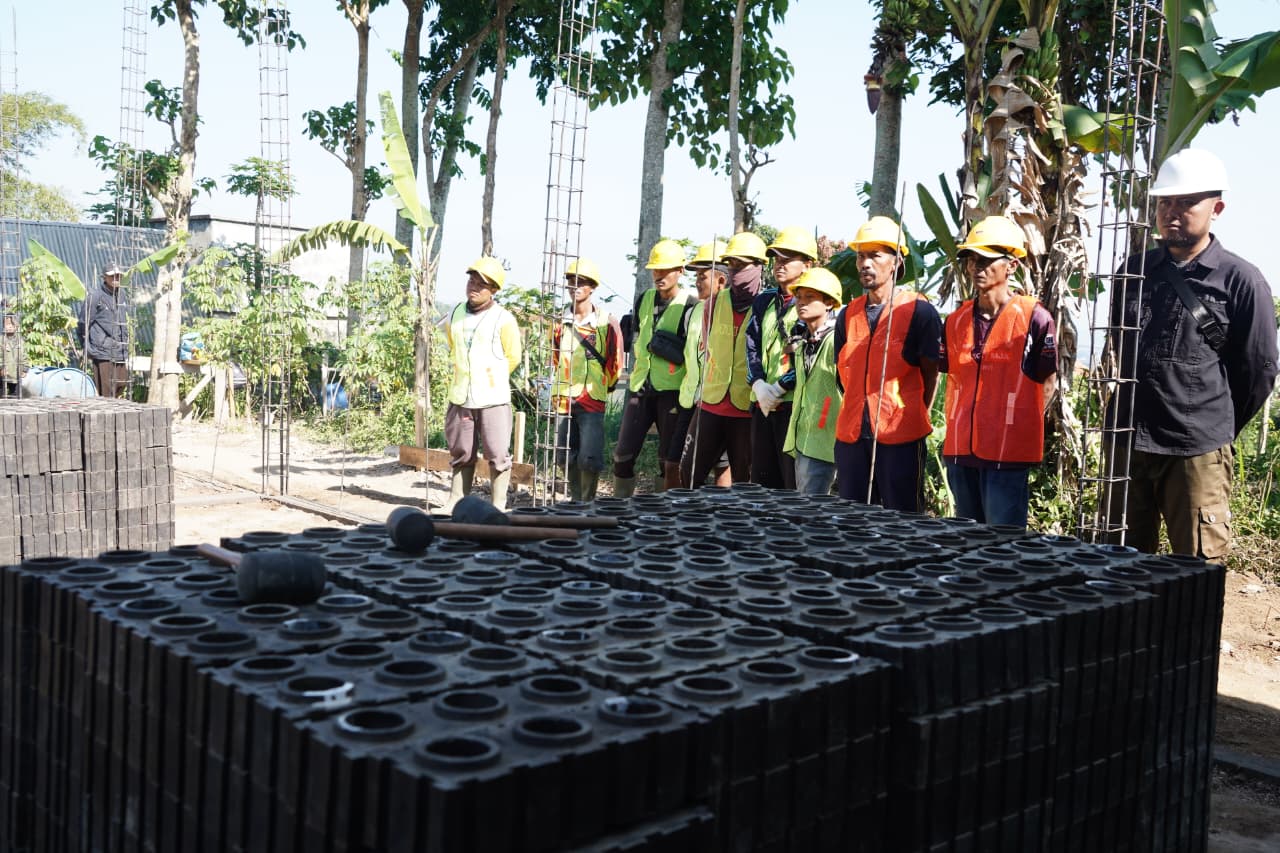
The Garut Regency Government, together with the Bakti Barito Foundation, has constructed two new classrooms and toilet facilities at SDN 3 Sukanegla, located in Sukanegla, Garut Kota District, using recycled plastic bricks. This development is the first in Garut Regency to utilise environmentally friendly materials for educational infrastructure.
The Regent of Garut, Abdusy Syakur Amin, stated that the construction of new facilities at SDN 3 Sukanegla is the result of a collaboration between the local government and the Bakti Barito Foundation to promote development based on a circular and sustainable economy.
“The construction of new facilities at SDN 3 Sukanegla received support from the Bakti Barito Foundation, and we appreciate this collaboration. The concept of development based on a circular economy aligns with the vision of the Garut Regency Government in promoting sustainable development, particularly in the field of education,” said Abdusy Syakur Amin on Thursday (11/06/2026).
According to him, the new classrooms were built using wall panels made from plastic waste that has been recycled through modern processes. This innovation is expected not only to improve the quality of educational facilities but also to serve as an educational medium for the community regarding the importance of waste management.
“I hope the breakthrough initiated by the Bakti Barito Foundation will have a significant impact on education and serve as a real example for the people of Garut regarding the importance of waste management and environmental preservation. I hope such cooperation can be applied in more locations,” he added.
The Executive Director of the Bakti Barito Foundation, Fifi Pangestu, explained that the construction of SDN 3 Sukanegla carries a strong mission to support environmental preservation by utilising residual plastic waste, which is typically difficult to process using conventional methods.
“The SDN 3 Sukanegla building utilises materials from recycled residual plastic waste, which is the type of waste that generally accumulates in landfills because it is difficult to recycle. Almost all building components, from wall panels replacing conventional bricks to ceilings and water piping systems, use recycled materials,” said Fifi.
She added that the project proves that waste, which has long been considered worthless, can be processed into useful construction materials while providing a solution to reduce waste accumulation.
“Utilising residual waste is part of the solution to reduce waste volume while providing better infrastructure and educational facilities for future generations,” she said.
The construction of SDN 3 Sukanegla is expected to serve as a model for implementing the circular economy concept in the education sector and to encourage the use of eco-friendly materials in the construction of public facilities. In addition to supporting the improvement of learning facilities, this innovation is also expected to increase public awareness of the importance of waste management and sustainable environmental preservation.