
Garut Regency and National Energy Council Accelerate Geothermal Development for Public Benefit
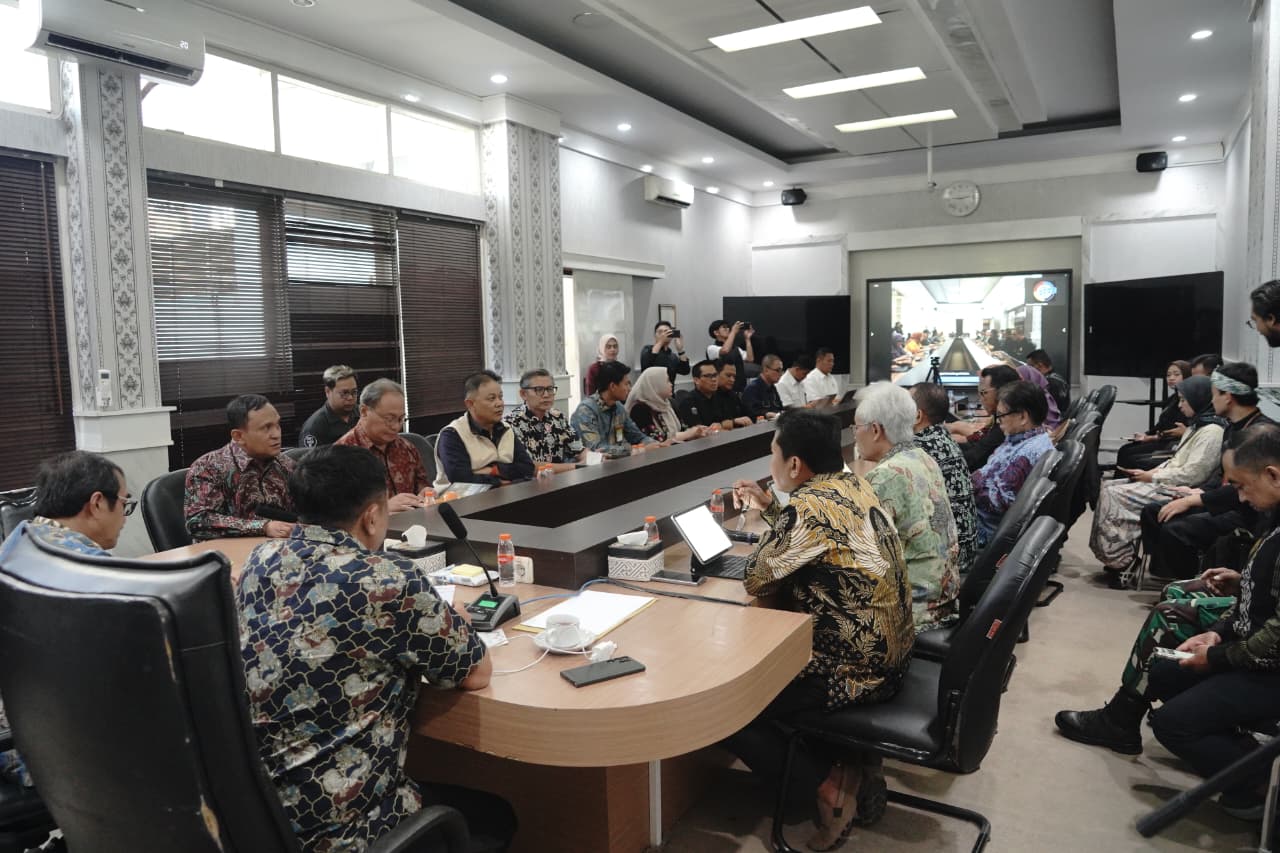
The Garut Regency administration, together with the National Energy Council (DEN), is pushing for the acceleration of geothermal energy development in the West Java region. The initiative aims to strengthen the electricity supply while supporting the utilisation of clean and renewable energy. Garut Regent Abdusy Syakur Amin stated that geothermal potential is one of the region’s key advantages and must be continuously optimised. “Alhamdulillah, the atmosphere was very cordial and highly supportive of achieving productive outcomes. We thank the representatives from the Ministry of Energy and Mineral Resources, the Directorate General of New, Renewable Energy and Energy Conservation, the West Java Provincial Energy and Mineral Resources Office, and PT Pertamina Geothermal Energy for their continued commitment and synergy,” he said on Friday. Meanwhile, DEN member Mohammad Fadhil Hasan noted that the installed geothermal power plant capacity in Garut has already met the local electricity demand. “The electricity consumed by the people of Garut Regency is 126 MW, but the installed PLTP capacity is 270 MW, meaning it has been fully met. Garut Regency deserves an award as a 100% green electricity electrification region,” he said. According to Fadhil, geothermal development in Garut will be carried out in stages. In the short term, Star Energy Geothermal is working on optimisation by increasing production capacity, while in the medium term, PT PGE is exploring expansion and gradual capacity additions. “We also ask for support from all parties to accelerate this process and hope that geothermal development will not only meet energy needs but also provide broader benefits for regional development, such as increasing locally-generated revenue, creating jobs, and providing energy to support the modernisation of the community’s agricultural sector,” he concluded.