
Garut Inmate: 'Official Who Feels Like a Friend' the Genesis of Paskopi
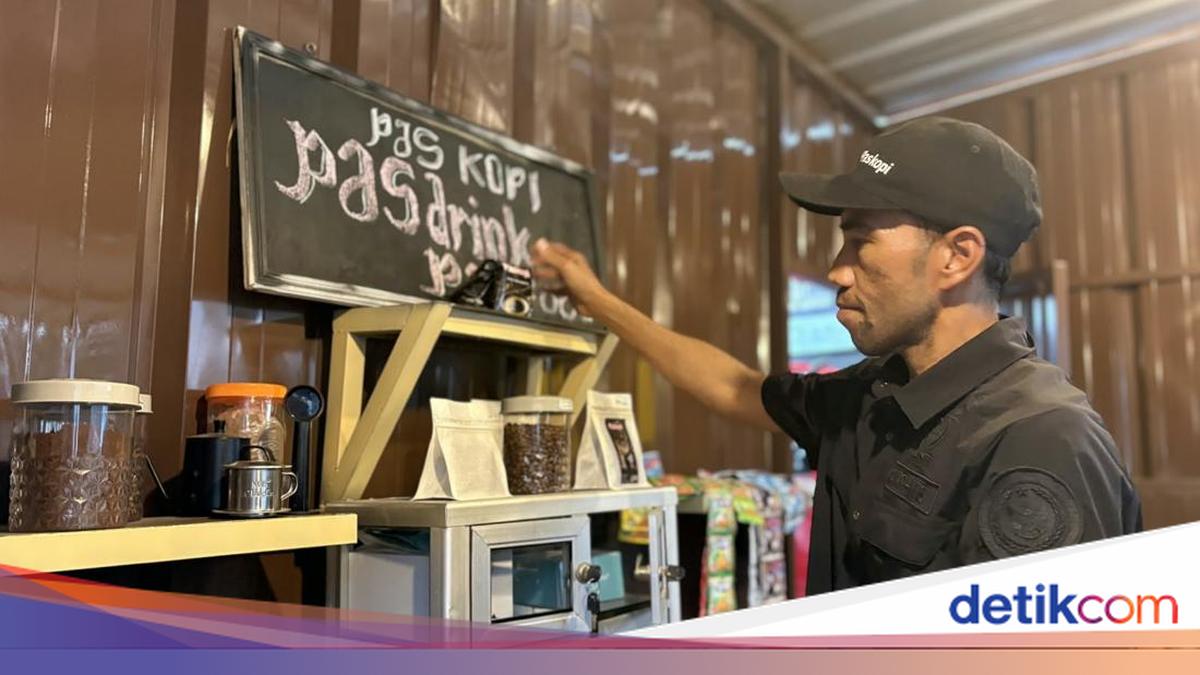
Amir (48), an inmate serving a sentence for human trafficking, is one of the pioneers behind Paskopi, a packaged coffee brand produced at Garut Class IIA Prison. He was entrusted by prison warden Rusdedy to develop the prison’s micro, small, and medium enterprise (UMKM) potential, drawing on his background as a coffee exporter.
“When I first arrived here, the warden asked me about my case. I told him I was arrested by the National Police’s Criminal Investigation Unit at Soekarno-Hatta Airport. I had just returned from an event in Egypt; I was a coffee exporter,” Amir told detikcom at Garut Prison on Wednesday (19/8/2026).
Amir said coffee is an everyday beverage, including in prison. If coffee bean processing were made into a work guidance programme, it would offer two benefits: more options for inmate self-sufficiency activities and a business opportunity capable of generating premiums for inmates.
“We see our friends here drinking coffee every day. Coffee has become a daily drink for all groups, including inmates. Rather than buying coffee from outside, it is better to help buy coffee beans from farmers and process them ourselves,” Amir explained.
“The benefit of this coffee processing work guidance programme is that, at the same price as market brands—indeed our price is even lower—the quality is guaranteed to be better. It also adds to the variety of work training programmes that can generate premiums,” he continued.
For Amir, processing coffee was something new. Previously he had only dealt with purchasing and shipping documents for coffee beans; inside prison he had to learn all stages of processing and blending until the coffee tasted good.
“Honestly, I had never produced coffee before. Before coming here, I already had a team, including roasting and blending experts. In the end, I invited them all here to meet the warden and train inmates until they could roast and pack, resulting in Paskopi,” Amir recounted.
Amir felt that producing and developing Paskopi brought him quite close to Rusdedy. Communication between him and the warden was direct; he even described Rusdedy as an ‘official who feels like a friend’.
Discussions about the coffee UMKM potential and the warden’s trust in him gave Amir encouragement. Gradually, he admitted, his fear of life behind bars disappeared.
“What I truly feel here is that between me and the warden, it is not like an inmate and an official. What I feel is like an official who feels like a friend. Alhamdulillah, that is how it is,” Amir said.
In the early stages, Amir said the product sold around 1,500 sachets in a week. The raw material uses robusta coffee from Garut.
Currently, sales at the Garut Prison canteen reach about 500 sachets per month. In addition, around 400–500 sachets per month are marketed at Garut Detention Centre.
“It is proven by our success over the past year in producing Paskopi, which we started from zero. Now there are buyers from outside, such as mobile coffee traders using bicycles,” he added.
Amir admitted that developing Paskopi production was not without obstacles. After successfully training himself and other inmates, equipment became the next challenge.
Amir said that in the early stages, a grinding machine and mixer were already available. However, the prison’s packaging machine turned out to be broken.
“During a video call with the technician, I gave directions and was assisted by inmates who had no mechanical background at all. All of this was done only through video calls, and alhamdulillah, within a week it could be used. By the second week we were already producing,” Amir said.
The packaging machine repair was done online for a reason. Limited funds made bringing in a technician difficult. They were given the opportunity to make calls using a prison officer’s mobile phone.
To keep costs down, the technician only diagnosed the cause of the damage remotely. Amir and the inmates followed the repair instructions step by step from the technician, who was based in Yogyakarta. The purchase of damaged machine parts came from Rusdedy’s own pocket.
Today, in addition to packaged coffee, Amir—who has improved his skills as a barista—has developed a number of beverage blends. One of his specialties is ice coffee beer.
There is also Kopi Stamina, made from coffee and spices such as red ginger, ginseng, pasak bumi, and cardamom. Another variant is coconut coffee latte made with fresh coconut milk.
Amir already has plans to develop Paskopi after his release, including opening an outlet. He hopes other inmates who have learned in the Paskopi kitchen will do the same after they are released.
“I always encourage fellow inmates. When I get out and open an outlet, I want them to open outlets too after their release. Insyaallah,” he said.
Paskopi is not the first product Rusdedy has developed with inmates. His principle of improving people through self-sufficiency has been held since the beginning of his career in corrections. Rusdedy said the programmes of Minister of Immigration and Corrections Agus Andrianto, which prioritise inmate self-sufficiency, have made him even more enthusiastic about exploring inmates’ potential.
Rusdedy, who has been a corrections officer for 26 years, said his interest in self-sufficiency training emerged when he enrolled at the Corrections Academy (AKIP). At that time he already had printing skills because he had worked in that field since junior high school.
“Since I registered at AKIP, I already had an idea of wanting to train inmates so they would have skills. Because I had worked in printing since junior high, I already had skills. I thought that if I became a prison officer, I could teach inmates the skills I had,” he said.
Source: jawawa.id (https://jawawa.id/newsitem/garut-inmate-official-who-feels-like-a-friend-the-genesis-of-paskopi-1787590326)
Originally published by detikcom (https://news.detik.com/berita/d-8633311/napi-di-garut-kalapas-rasa-sahabat-cikal-bakal-lahirnya-paskopi), translated from Indonesian