
Garut Entrepreneurs Employ Prisoners: Quick Learners, No Need for Repeated Instructions
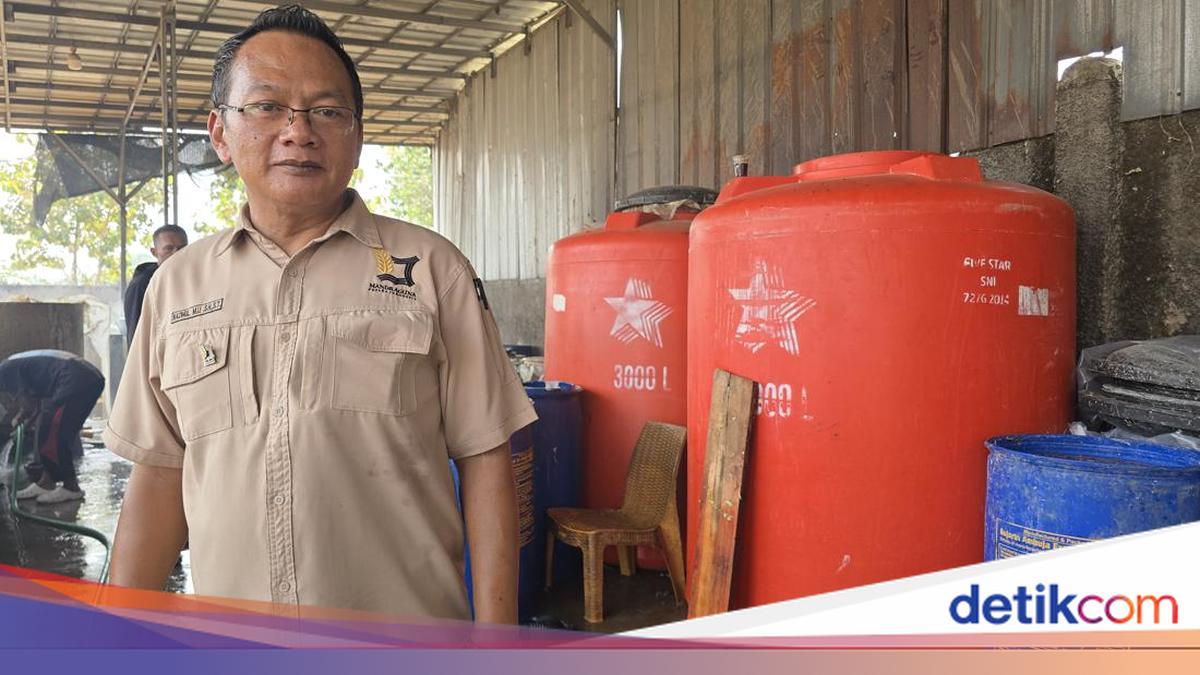
Operational Director and HRD of PT Mandraguna Pusaka Indonesia, Nazmul, initially gave instructions one by one to nine inmates from Garut Class IIA Prison working at a liquid organic fertiliser production facility. They were assigned to production, packaging, warehouse, and material washing sections.
“Initially in the morning I gave them jobs, for example in the production section. They quickly understood their tasks. Now there is no need to tell or direct them again, they already know what their job descriptions are,” Nazmul told detikcom at the Amino Acid Fertiliser Factory in Karangpawitan, Garut, West Java on Thursday (20/8/2026).
The cooperative and adaptive attitude of the nine inmates gradually eliminated the distance between them and the company.
“There is no worry about employing inmates. Alhamdulillah, we have started to get close to them, started joking around. There is no awkwardness because of their criminal background or anything,” he said.
The nine inmates are undergoing assimilation from Garut Class IIA Prison. Every day they are involved in the production process of liquid organic fertiliser made from leather waste. While working at the factory outside the prison area, they are under the supervision of two officers.
The cooperation between the prison and the company is an example of how inmates’ skills are tested not only in training activities, but when they are faced with real work, production targets, and company quality standards.
Production Increases Fourfold
Nazmul recalled the beginning when the inmates were in the learning stage of producing liquid fertiliser. Production capacity at that time was around 3,000 litres.
As they became more accustomed to the work process, capacity increased to 6,000 litres and now reaches 12,000 litres. The facility has three main work sections: production, warehouse, and washing.
The production section includes material processing and packaging. The process begins with washing leather waste materials, then boiling and mixing. After the waste produces fat, the material enters the formulation and fermentation stages before finally being packaged. The entire production process involves the inmates, and PT Mandraguna takes on the role of legality, marketing, and product quality control.
“Initially our relationship with the prison was from friendship. We met often, discussed fertiliser in the community. Then there was a shared vision and finally we established cooperation,” said Nazmul.
The cooperation was only explored about three months ago and production has been running for about the last two months.
Solution to Garut’s Long-standing Problem
The presence of amino acid fertiliser products produced by the inmates is motivated by a much older problem. Garut is known as one of the leather industry centres, but its waste has been an environmental problem for years.
Owner of PT Mandraguna Pusaka Indonesia, Rian, said the problem is not simple because the leather industry has become part of the community’s economic activities and supports many SMEs.
“The leather industry issue in Garut Regency is classic because it is related to culture and tradition from the past. Even today many SMEs depend on it,” Rian explained.
According to him, the large volume of waste means handling it requires the involvement of many parties. From this problem, Mandraguna developed a formula to process cow and sheep leather waste into amino acid-based liquid organic fertiliser, so that what was previously an environmental problem now has economic value.
“Imagine for decades this waste problem was never resolved, now it has become beneficial not only for the environment but also for the circular economy,” said Rian.
Rian claims the product can help improve fertiliser efficiency while increasing agricultural productivity. Before being marketed widely, the product has been used for corn crops in the Gunung Mas food estate area, Central Kalimantan.
Demand of 2 Million Litres per Year
Head of Garut Class IIA Prison, Rusdedy, said demand from Trubus reaches about two million litres per year. This means the average production requirement is around 5,000 litres per day.
The production capacity currently achieved, according to Rusdedy, reaches 12,000 litres.
“This is only online marketing,” said Rusdedy.
The prison also plans to develop offline marketing targeting farmers using a brand developed by the prison. However, the current scale of waste processing is still relatively small compared to the leather industry waste problem in Garut.
Rusdedy estimates the existing facility can only absorb about two percent of waste from leather craftsmen. The next target is to increase capacity to accommodate about 20 percent.
“We are ready to process waste from all of Garut if the regional government facilitates it,” he said.
Responding to Rusdedy, Rian also hopes the model will not stop in Garut. Leather industry waste problems, according to him, are also found in several industrial centres in other regions, from Rancaekek, Cianjur, Banten, Solo, Magelang, Yogyakarta to several areas in East Java.
“We make this liquid organic fertiliser product have economic value and benefits for farmers. We created this product until we became the sole pioneer of organic fertiliser made from cow and sheep leather waste in Indonesia. Organic fertiliser so far has been created from leaves and animal manure,” Rian hoped.
Finally, Rian claims three advantages of amino acid fertiliser made from cow and sheep leather waste. First, it provides efficiency in fertiliser use for farmers. Second, it increases agricultural productivity by 30-100 percent. Third, it creates healthier food because it is organic-based.
“Because before being sold to the public, we gave it to the food estate in Gunung Mas, Central Kalimantan for corn crops. Imagine for decades this waste problem was never resolved, now it has become beneficial not only…”