
Garnet Discovery in Martian Meteorite Opens New Chapter in Understanding Mars' Geology
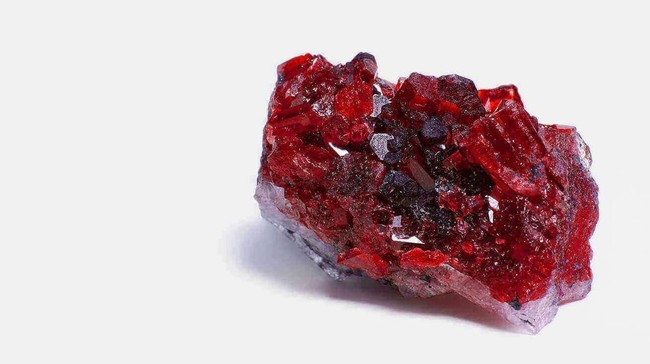
An unexpected discovery has emerged after scientists split open a Martian meteorite that fell to Earth. Inside the rock fragments, they found grains of garnet, a mineral that had never before been identified in any sample originating from the Red Planet. The meteorite, named NWA 8171 and currently housed at the Ontario Museum in Canada, is classified as a basaltic breccia, a type of rock formed when magma cools and hardens around other mineral fragments. Its unique composition has long attracted researchers aiming to understand Mars’ geological history. The garnet discovery was almost missed. Unlike the fiery red garnets commonly known on Earth, the variant found in the meteorite is an iron-rich type called andradite. Its yellowish-green, olive-like colour closely resembles pyroxene, a mineral common in celestial bodies, making it inconspicuous at first glance. The team initially thought the section was pyroxene, but further analysis revealed it to be a tiny garnet grain measuring only 0.8 by 0.5 millimetres. On Earth, garnet typically forms under conditions involving extreme heat, high pressure, or significant chemical alteration. Until now, scientists had not identified such conditions on Mars capable of producing this mineral. This raises important questions: Did the garnet form on the Martian surface or crust, and if so, what geological process created it and when? Alternatively, could the mineral have originated elsewhere, been transported to Mars, and then incorporated into the meteorite’s structure? ‘This discovery will expand our understanding of what geological processes are possible on this planet,’ said planetary geologist Tanya Kizovski from Brock University in Canada. ‘This new rock type containing garnet could provide clues about how Mars changed throughout its history and offer new insights into the ancient environments that may have formed this mineral and others associated with it.’ Garnet is known as an excellent recorder of past events. It can preserve records of the temperature and pressure conditions at the time of its formation, be used to determine when those processes occurred, and often contains traces of other elements that reveal the composition of its formative environment. Researchers suspect the garnet could have formed through one of two processes: either from a previously unknown type of magma on Mars, or through metamorphosis when existing rock was transformed by exposure to extraordinary heat and pressure. Such heat and pressure could have resulted from an impact event on the Martian surface or from magma flows rising into the planet’s crust. Although most chemical data from the rock fragment indicates a Martian origin, the team has not entirely ruled out other possibilities. Because NWA 8171 is a breccia composed of various materials, there is a small chance the garnet grain formed elsewhere, fell onto Mars, and was later incorporated into the meteorite’s structure before being ejected into space and eventually landing on Earth. The next research step involves examining the isotope ratios within the mineral. If the composition matches other minerals known to be from Mars, it will confirm the garnet formed there, providing a new picture of the Red Planet’s geological history. ‘This finding adds an exciting new dimension to our understanding of Mars’ geology and opens new avenues for examining how our neighbouring planet evolved,’ said planetary expert James Darling from the University of Portsmouth in the UK. The research has been published in the journal Geochemical Perspectives Letters.