
Garment Entrepreneurs Urge Government Not to Arbitrarily Open Import Channels
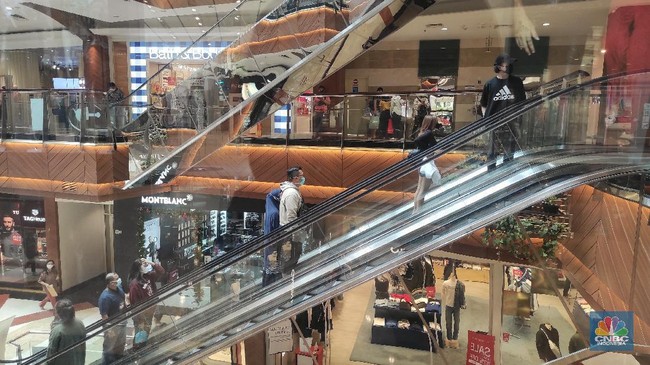
Textile entrepreneurs are requesting that the government does not use the issue of thinning retail stock as a justification to reopen the floodgates for finished textile imports.
This request follows statements by the Coordinating Minister for Economic Affairs, Airlangga Hartarto, regarding complaints from retailers about dwindling stocks, particularly for products that rely on foreign supply chains. Airlangga previously noted that the government needs to encourage distribution and stock availability to ensure domestic consumer spending continues, expressing hope that more supplies could originate from within the country.
Responding to this, the Chairman of the Association of Creative Garment Entrepreneurs (IPKB), Nandi Herdiaman, warned that stock issues should not lead to the re-entry of cheap imported goods that could suppress the national garment industry. “We must ensure that the reason of thinning stocks does not become a gateway for a flood of cheap imports back into the domestic market,” N Lack, told CNBC Indonesia on Monday (31/8/26).
The condition of garment SMEs (IKM) in various regions is currently in a survival phase. An increase in orders has not yet been significant, meaning production capacities are not yet fully utilised. “The fact on the ground is that cheap goods are still rampant, both on online platforms and in offline markets. This means the problem is not availability, but competitiveness and support,” he said.
Retail supply issues should ideally serve as an opportunity for domestic industries, especially garment SMEs, to meet market needs. This is particularly relevant as the government has previously issued regulations through the Ministry of Trade and the Ministry of Industry regarding restrictions on finished textile imports.
IPKB is asking the government to assess supply conditions at the producer level before determining import policies. This is because there is still available production capacity, labour, and local product stock ready for use. “Our data shows that much of the production capacity of garment SMEs remains idle. Sewing workers are still in need of orders. SME warehouses are still filled with domestic products ready for supply,” he explained.
Consequently, Nandi is urging the government to link retail needs with the production capacity of domestic SMEs. He believes the curation and facilitation process needs to be accelerated so that available local products can enter the market immediately.
Furthermore, supervision of illegal imports and second-hand goods needs to be strengthened. Such steps are necessary to prevent cheap imports from flooding the domestic market and further pressuring local businesses. The sustainability of the domestic market is not only about product availability for consumers but also concerns the preservation of jobs.
“The garment SME sector employs over 3 to 4 million workers. Protecting the domestic market means protecting jobs and the economic resilience of the people. The garment SME sector will rise on its own if we protect our domestic market,” Nandi concluded.
Previously, Coordinating Minister for Economic Affairs Airlangga Hartarto revealed complaints from retailers regarding thinning stocks, particularly for products dependent on foreign supply chains. Airlangga stated that issues regarding stock and distribution need to be addressed to ensure domestic shopping activities continue. “Several things that need to be encouraged are distribution and stock. I have received much input that stocks are thinning, especially those involving foreign goods flows. However, we certainly hope that goods flows can also be driven from within the country,” Airlangga said during his presentation at the Indonesia Retail Summit and Expo in Jakarta.