
Gapki: Worker Protection Contributes Positively to Palm Oil Industry
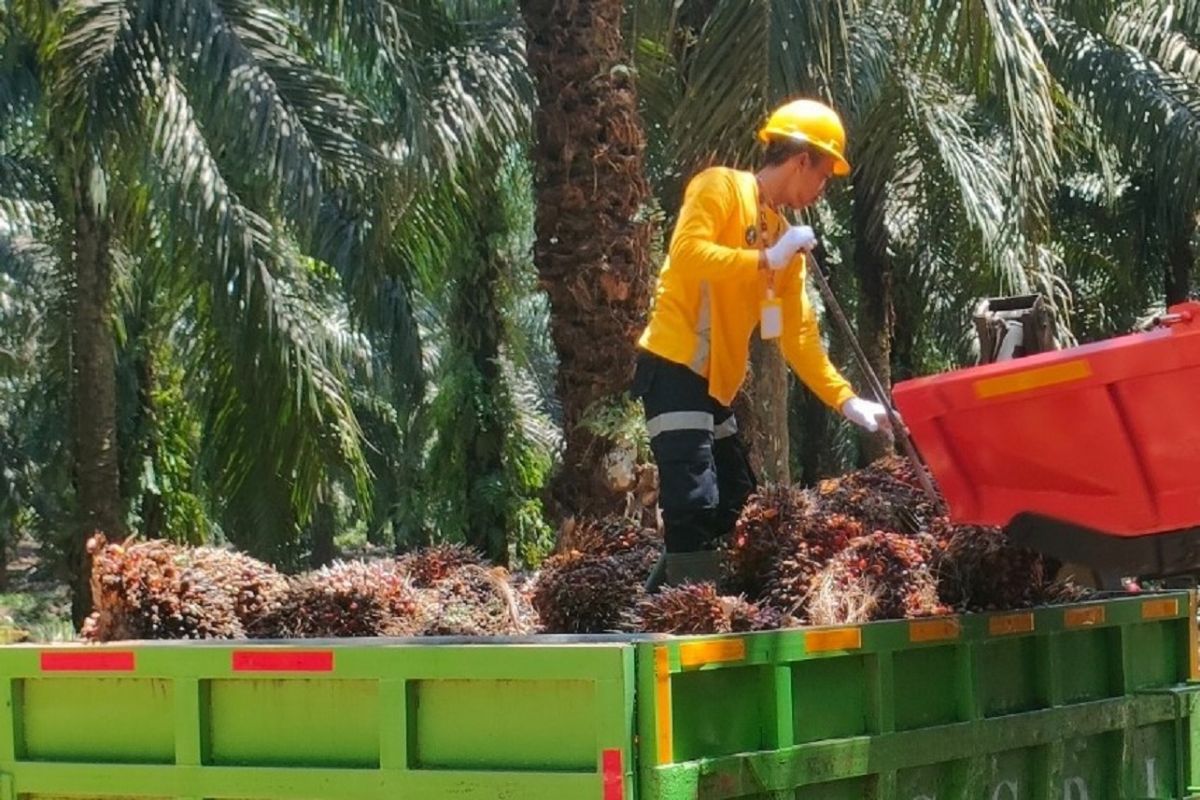
Various efforts to improve worker safety and health are considered to have a positive contribution to increasing productivity and strengthening the competitiveness of the national palm oil industry.
Sumarjono Saragih, Head of Human Resources Development at the Indonesian Palm Oil Association (Gapki), said the implementation of occupational health and safety (K3) standards in palm oil plantations and mills is a strategic investment for the sustainability of the industry.
“Worker protection will provide many benefits to the national palm oil industry,” he said in a statement in Jakarta on Thursday.
Several positive benefits of implementing K3 range from protecting workers’ health, increasing productivity, to supporting sustainability practices.
“Specifically in the palm oil sector, the K3 aspect has actually become part of sustainability standards,” he said.
Sumarjono emphasised that K3 implementation must be applied comprehensively across the entire palm oil industry chain, from plantations to processing mills, including those in remote areas.
He expressed hope that worker protection would not only reach workers in corporations but also farmers and workers on smallholder plantations.
He added that the government, through the Plantation Fund Management Agency (BPDP), has continued to encourage improvements in worker safety and health in the palm oil sector.
In addition, BPDP has actively improved the quality of human resources in the national palm oil industry, one of which is through a training programme for palm oil plantation human resources development.
The training programme aims to improve workforce competence while strengthening the K3 culture within the industry.
“K3 must continue to be a concern and become part of the business process,” Sumarjono added.
He confirmed that worker safety and health in the palm oil industry has been adopted into various regulations and certification schemes, from the national Indonesian Sustainable Palm Oil (ISPO) standard to the international Roundtable on Sustainable Palm Oil (RSPO) standard.
The implementation of K3, he continued, is not only mandatory but also an important indicator in realising a sustainable and globally competitive palm oil industry.
“If we dare to say sustainable palm oil, then we must also ask, what about the protection of workers? Because that is a right that must be fulfilled, including the right to social security and occupational safety,” he stressed.
Meanwhile, Tungkot Sipayung, Executive Director of the Palm Oil Agribusiness Strategic Policy Institute (PASPI), stated that K3 implementation is one of the important aspects in fulfilling ISPO and RSPO certification standards.
According to him, K3 implementation is not merely about fulfilling administrative requirements but is part of efforts to improve the quality of human resources in the palm oil industry.
Consistent K3 implementation will be able to improve worker welfare, strengthen workforce loyalty, and create a safer and more productive work environment.
“If K3 is implemented properly, worker loyalty to remain with the company will occur and productivity will increase. All of this will contribute to business and social sustainability,” he said.
Therefore, Tungkot encouraged K3 implementation to be carried out consistently at the operational level so that positive impacts are realised on company productivity as well as the reputation of the national palm oil industry.
“ISPO and RSPO standards already exist. The government’s role in conditioning K3 implementation also already exists, namely legislation related to labour. So, what remains is implementation in company operations,” he said.
Source: jawawa.id (https://jawawa.id/newsitem/gapki-worker-protection-contributes-positively-to-palm-oil-industry-1786596890)
Originally published by Antara (Indonesian) (https://www.antaranews.com/berita/5692124/gapki-perlindungan-pekerja-berkontribusi-positif-bagi-industri-sawit), translated from Indonesian