
GAPKI Urges Technology Adoption in Palm Oil Industry
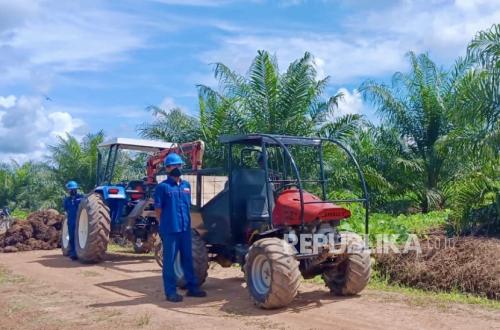
Seruyan — The national palm oil industry is expanding technology use to boost productivity and efficiency. The move addresses sustainability demands, labour shortages, and global traceability requirements.
The initiative was discussed at the GAPKI (Indonesian Palm Oil Association) Mechanisation, Digitalisation & Automation (MDO) Consortium event held at PT Binasawit Abadipratama’s plantation in Seruyan Regency, Central Kalimantan. The forum brought industry players together to share experiences, benchmark practices, and observe on-ground technology applications.
GAPKI Research and Development Head Dwi Asmono said technology transformation is essential for the palm oil industry to maintain competitiveness in global markets. “When it comes to technology and innovation, there’s the saying ‘innovate or die’. The competition in this industry is fierce,” he said in a press release on Tuesday, 25 May 2026.
According to him, productivity enhancement is the top priority for the upstream palm oil sector. Therefore, GAPKI is pushing for cross-company consortia, including genetic resource, Ganoderma, and mechanisation, digitalisation, and automation consortia.
He believes shared learning models between companies are needed to accelerate technology adoption in palm oil plantations. “The industry needs shared learning, benchmarking, joint pilot projects, and the courage to try new technologies,” he added.
Attendees also observed several on-ground innovations, including PT Binasawit Abadipratama’s ‘rorak’ replanting method.
Benny Yusuf Setiawan, CEO of PT Binasawit Abadipratama, said mechanisation and automation have improved fieldwork efficiency previously done manually.
According to him, the company’s replanting method could boost early harvest productivity. “Previously, the target was around 10 tonnes at 31–42 months after planting; now we can increase it to 15, even up to 20 tonnes per hectare for first harvest yield,” he said.
GAPKI Central Kalimantan branch chair Rizki Djaya said productivity improvement is crucial for sustaining the national palm oil industry. “Today’s event aims to increase palm oil productivity through various strategies, mechanisation, and accelerated production to maintain sustainable palm oil,” he added.
He noted Indonesia remains the world’s largest palm oil producer, contributing around 40% of global demand.
Through the MDO Consortium, GAPKI aims to develop technology pilot projects, industry best practices, and a more tech-adaptive palm oil workforce.
Source: jawawa.id (https://jawawa.id/newsitem/gapki-urges-technology-adoption-in-palm-oil-industry-1780086224)
Originally published by Republika (https://ekonomi.republika.co.id/berita/tfmne8416/gapki-dorong-adopsi-teknologi-industri-sawit), translated from Indonesian