
Gapki: Strengthening productive and sustainable palm oil industry is essential
Jakarta (ANTARA) - The Indonesian Palm Oil Association (Gapki) has stated that, given the limitations on land expansion, it is essential to strengthen productivity, human resource quality, technological innovation, and policy integration from upstream to downstream.
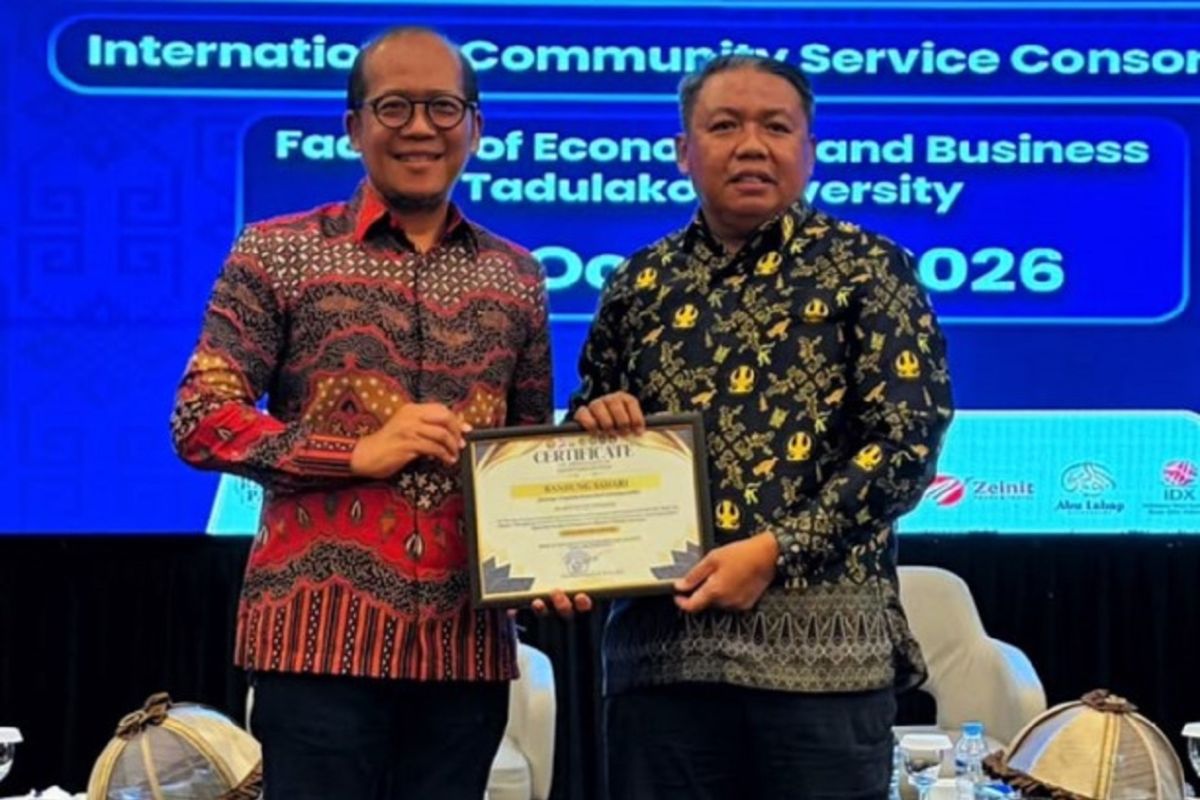
According to Gapki’s Head of Communications, Bandung Sahari, these steps are necessary to ensure the nation’s palm oil industry remains capable of meeting domestic and global needs while providing added value to the national economy.
“The palm oil plantation industry holds a strategic position in driving sustainable economic transformation in the country. This aligns with the government’s efforts to achieve Indonesia Emas 2045,” he said in a statement in Jakarta on Thursday.
The position of the palm oil industry in Indonesia’s economy is quite significant, he added, noting that several derivative products from this industry are used in sectors ranging from food to energy.
Furthermore, this industry contributes significantly to the global energy supply. Out of a global palm oil supply of 85 million metric tons (MT), Indonesia contributes approximately 49 million MT, or about 58% of the total global supply.
“This places Indonesia in a significant position regarding the balance of global energy supply and demand, considering that 22 percent of the world’s total vegetable oil supply originates from Indonesia,” he said.
Bandung stated that to meet future demand, focus must be placed on both sustainability and productivity. Given Indonesia’s vital role, sustainability regarding land use or expansion and productivity must be primary concerns.
He assessed that with Indonesia’s growing population, and in a scenario where palm oil production does not grow significantly, Indonesia will face a supply deficit of 27 million metric tons (MT) to meet both domestic and export needs.
Since the implementation of the moratorium on palm oil plantation expansion by the private sector, Gapki has noted a decline in land expansion growth. According to him, if planted areas do not grow, domestic CPO must achieve a yield of approximately 5 MT/ha per year to meet requirements.
Amidst these challenges and the high demand for the industry, Bandung believes it is important to increase productivity, ensure controlled land conversion, and develop maritime agriculture to ensure food security and farmer welfare.
In other words, strict control over land-use conversion is required so that productive areas are not eroded by non-agricultural conversion.
Additionally, the availability of agricultural education centres and technological innovation is seen as a strategic foundation for achieving the Indonesia Eemas 2045 vision. Through the adoption of appropriate technology, operational efficiency can be significantly increased.
“Policy integration from upstream to downstream, as well as connectivity between the agricultural, industrial, and service sectors, is also required to create maximum added value for the national economy,” he added.
Bandung also assessed that there is a need to improve the quality of farmers and human resources in the agricultural field, as well as increasing the capacity of institutions and farmer entrepreneurship to drive sustainable economic transformation in this sector.
Furthermore, increased investment and supporting infrastructure for the agricultural sector are needed to encourage more maximal utilisation of this sector.
In recent years, much attention and investment have been directed towards the downstream sector, he added, but there is one fundamental thing we must not forget, which is supply.
No matter how great the innovation in the downstream sector, it will all lose meaning if there is not enough raw material supply to support that growth.
“The challenge for the palm oil industry moving forward is no longer solely about increasing productivity, but about maintaining supply availability through increased productivity without sacrificing the principles of sustainability,” he said.
Source: jawawa.id (https://jawawa.id/newsitem/gapki-strengthening-productive-and-sustainable-palm-oil-industry-is-essential-1791431696)
Originally published by Antara (Indonesian) (https://www.antaranews.com/berita/5776197/gapki-perlu-penguatan-industri-sawit-yang-produktif-dan-berkelanjutan), translated from Indonesian