
Gapki: Palm oil export oversight needs stronger law enforcement
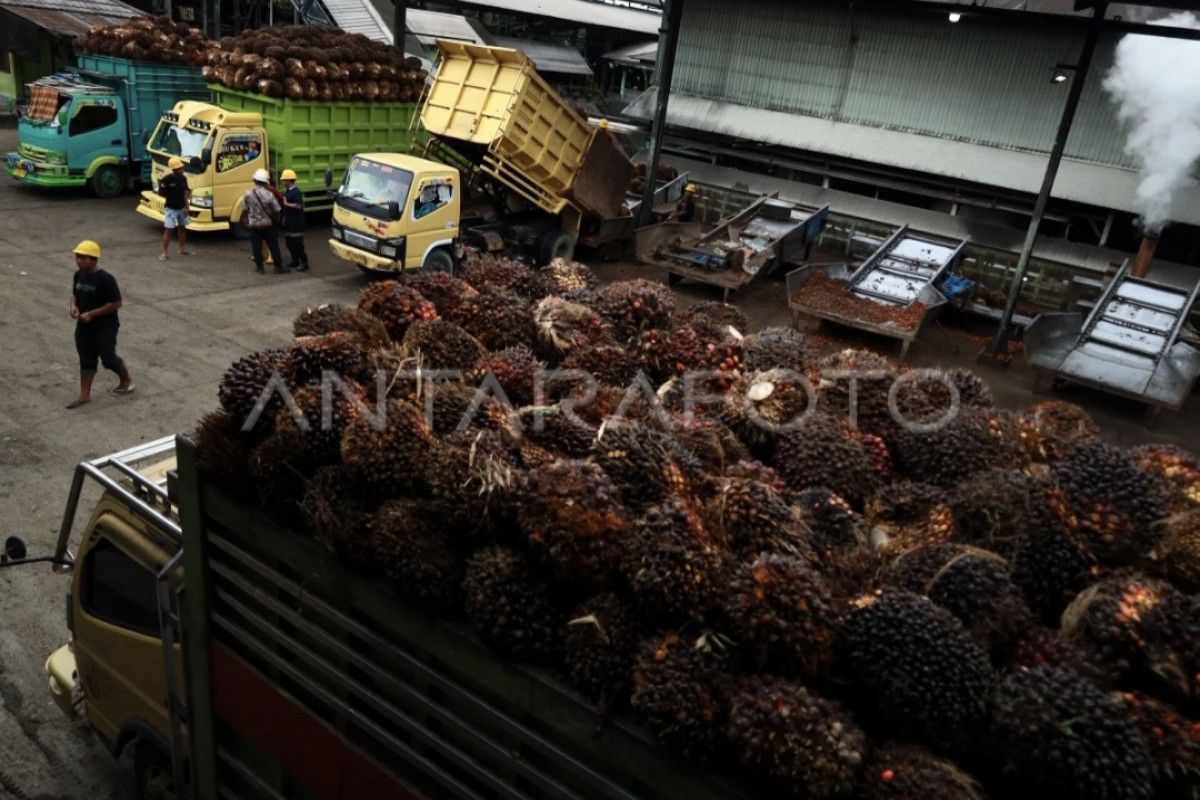
Jakarta (ANTARA) - The Indonesian Palm Oil Association (GapSK) believes that while the palm oil export supervision mechanism in Indonesia is already very strict, it needs to be further reinforced through strengthened law enforcement against violators, such as those engaging in under-invoicing, which disrupts contributions to state revenue.
“The existing system in Indonesia is already very good. What needs to be done is law enforcement. The supervision mechanism is already available, and Gapki always encourages all members to comply with taxation regulations,” said Yustinus Lambang Setyo Putro, Head of Taxation and Fiscal Affairs at Gapki, in a statement in Jakarta on Saturday.
He noted that under-invoicing has come under scrutiny following the government’s issuance of Government Regulation Number 24 of 2026 regarding the Export Governance of Strategic Natural Resource Commodities.
Furthermore, the government has established PT Danantara Sumberdaya Indonesia (DSI) as a State-Owned Enterprise (SOE) to act as the sole intermediary for the export of three strategic commodities—palm oil, coal, and ferroalloy—to increase transparency and close loopholes used for under-invoicing practices.
Yustinus explained that export supervision is conducted through multiple layers, ranging from the licensing process via the Indonesia National Single Window (INSW), the Customs and Excise Directorate General’s CEISA system, and physical inspections of goods, to the monitoring of export proceeds by Bank Indonesia and tax audits regarding the fairness of transaction values.
Additionally, Yustinus reminded that transfer pricing should not be directly equated with under-invoicing. He stated that transfer pricing is a common business practice in transactions between affiliated companies.
“A violation only occurs if there is mispricing, namely the manipulation of price, volume, or type of goods to obtain undue profits,” he said.
He explained that assessing under-invoicing cannot be done solely by comparing selling prices. In the case of palm oil commodities, for instance, Indonesia does not yet have a single national reference price that is fully accepted by all business players.
The government’s reference price itself is a combination of various international sources, including those from the Netherlands and Malaysia. Furthermore, export prices are influenced by many commercial factors, such as the type of product (CPO, kernel, or derivatives), quality and certification such as ISPO or RSPO, the delivery location which affects logistics costs, transaction timing, and the type of contract used.
Nevertheless, Yustinus emphasised that companies proven to be selling far below fair market prices without justifiable commercial grounds can still be categorised as engaging in under-invoicing.
“Gapki always encourages all its members to comply with every applicable taxation and trade regulation. If any party is proven to have committed a violation, they must certainly be processed in accordance with the prevailing law,” he concluded.