
Gapasdap: TBB pattern on Ketapang-Gilimanuk route needs evaluation
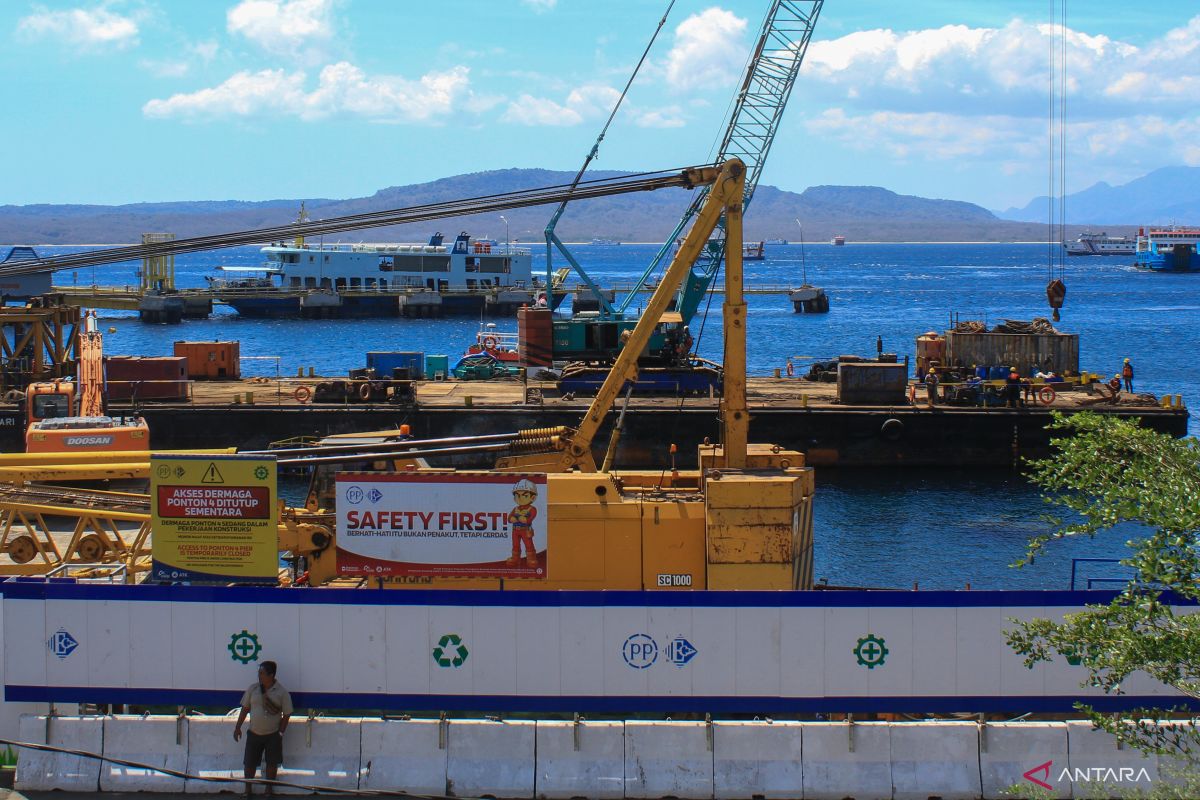
The chairman of the Indonesian River, Lake and Ferry Transport Operators Association (Gapasdap), Khoiri Soetomo, has stated that the application of the arrive-unload-depart (TBB) pattern to ease queues of logistics trucks on the Ketapang (Banyuwangi, East Java)-Gilimanuk (Bali) crossing needs to be evaluated.
“We understand that the TBB pattern is intended as a quick response so that vessels can promptly return to serve queues at Ketapang Port, but based on operators’ experience, the effectiveness of TBB is very limited,” he said in a statement received in Banyuwangi, East Java, on Monday.
Khoiri said that ASDP is currently applying the TBB mechanism, whereby a ship carries vehicles and passengers from Ketapang Port to Gilimanuk, and after unloading its cargo at Gilimanuk, the ship returns directly to Ketapang empty.
He explained that the TBB pattern does not add berth capacity and does not automatically increase the number of sailings. Sailing time and loading time from Ketapang remain the same, whilst ships still have to use the same berths as regular vessels.
Even after returning, he said, a ship may not be able to dock immediately because there is still a queue of vessels at sea. The time saving of around 15 minutes from not loading at Gilimanuk has not produced additional trips because slots and berth capacity remain limited.
At the same time, Khoiri continued, vehicles and passengers who have been waiting at Gilimanuk Port cannot be carried and must wait for the next ship.
“The problem is not solved, but potentially only shifts to the other side, accompanied by additional safety risks due to increased vessel movements and queues in the limited waters of the Bali Strait,” Khoiri said.
He also noted that the TBB pattern might be worth considering during certain periods, such as the Eid homecoming or return flows, when transport demand is heavily dominant on one side and relatively low on the other.
“The current situation is different; congestion occurs on both sides, at both Ketapang Port and Gilimanuk. Vehicles at both ports equally need service. The question is, if both sides are equally busy, which side should TBB serve?” Khoiri said.
Cargo from both Ketapang and Gilimanuk, he said, must be carried proportionally, and if ships are returned empty from Gilimanuk, the available carrying capacity actually decreases.
Yet fuel costs, crew, maintenance and other operating costs still have to be borne, and operators only earn revenue from one direction whilst still covering the cost of round trips.
“So, if TBB is implemented as an extra trip without a dedicated berth, the pattern also has the potential to disrupt regular schedules, add to vessel queues and increase sailing safety risks,” Khoiri said.
Khoiri added that Gapasdap is pushing for the acceleration of work to increase the capacity of the MB II berth, which needs special attention so that it is completed on time, or even ahead of the set target.
In addition, plans for temporary operation during the Christmas 2026 and New Year 2027 period also need to be prepared early, whilst still meeting technical and safety requirements.
“The repair or replacement of two dolphin fender units also needs to be carried out immediately so that the Bulusan berth (Ketapang) can serve ships again, particularly heavy vehicles,” Khoiri said.