
Gapasdap proposes Ketapang-Gilimanuk route development be included in National Strategic Projects
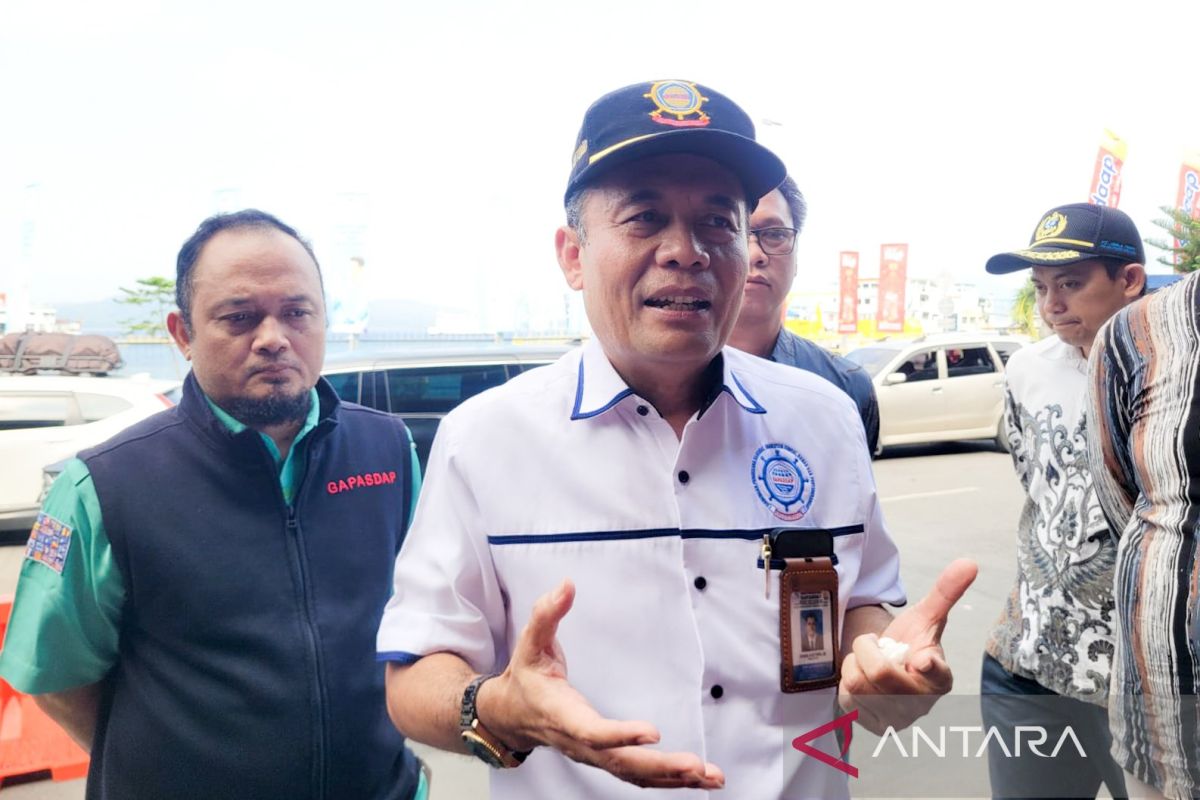
The issues surrounding the Ketapang-Gilimanuk route cannot be resolved simply by addressing queues as they arise; instead, a structural and long-term solution is required.
anyuwangi (ANTARA) - The Association of National Entrepreneurs of River, Lake, and Ferry Transport (Gapasdable) has proposed to President Prabowo Subianto that infrastructure development at the Ketapang (Banyuwangi)-Gilimanuk (Bali) crossing be considered for inclusion in the National Strategic Projects (PSN).
Gapasdap General Chairman Khoiri Soetomo stated that the proposal is based on the strategic position of the Ketapang-Gilimanuk route as a primary connectivity hub between Java and Bali, serving public mobility, logistics distribution, tourism, and inter-island economic activities.
“The issues at Ketapang-Gilimanuk cannot be sufficiently resolved every time a queue occurs; it requires a structural and long-term solution. Therefore, we are proposing to the President that the development of Ketapang-Gilimanuk ferry infrastructure be considered as part of the National Strategic Projects,” he said in a statement in Banyuwangi, East Java, on Thursday.
He continued that PSN status is expected to strengthen coordination across ministries, agencies, local governments, State-Owned Enterprises (SOEs), and all stakeholders, while providing certainty in planning and financial support for comprehensive infrastructure development.
According to Khoiri, the development planning for Ketapang-Gilimanuk must utilise long-term projections for vehicle growth, logistics, tourism, and the economy.
“Ketapang-Gilimanuk is the artery of Java-Bali connectivity, and its port infrastructure must be designed not just for today’s needs, but for the requirements 10, 20, or even 30 years into the future,” he said.
Khoiri emphasised that capacity issues on the Ketapang-Gilimanuk route cannot be solved merely by adding larger vessels, as relatively large ships already constitute more than half of the available fleet.
“The main challenge is actually how to provide adequate piers so that the existing vessels, both large and small, can operate optimally,” he noted.
He explained that the Ketapable-Gilimanuk route requires both large and small vessels, as both serve specific functions. The issue is not solely vessel size, but whether the available piers can accommodate them.
“The presence of ships with various capacities is actually necessary to provide flexibility in operational management. For example, during peak seasons, larger capacity ships can be optimised to transport surges in vehicles, whereas during off-peak periods, smaller capacity ships can be operated to match demand,” said Khoiri.
He believes that the growth in the number and capacity of vessels must be balanced with improvements in pier capacity, strength, and connectivity.
“The principle is simple: if the ships are available, the piers must also be ready. We must not allow the development of transport means to far outpace its infrastructure,” he added.
Khoiri also stated that the solution for Ketapang-Gilimanuk must operate across three horizons simultaneously: the short term to maintain operational smoothness, the medium term to increase pier capacity, and the long term through the construction of integrated and sustainable infrastructure.
“The current smooth conditions must be maintained together. We must not stop just because queues have decreased; rather, now is the time to carry out improvements so that for Christmas 2026, New Year 2027, the Eid al-Fitr transport period, and future increases in demand, we are far more prepared,” he concluded.