
GANNAS: Strengthening SAE rehabilitation can prevent repeat drug offences
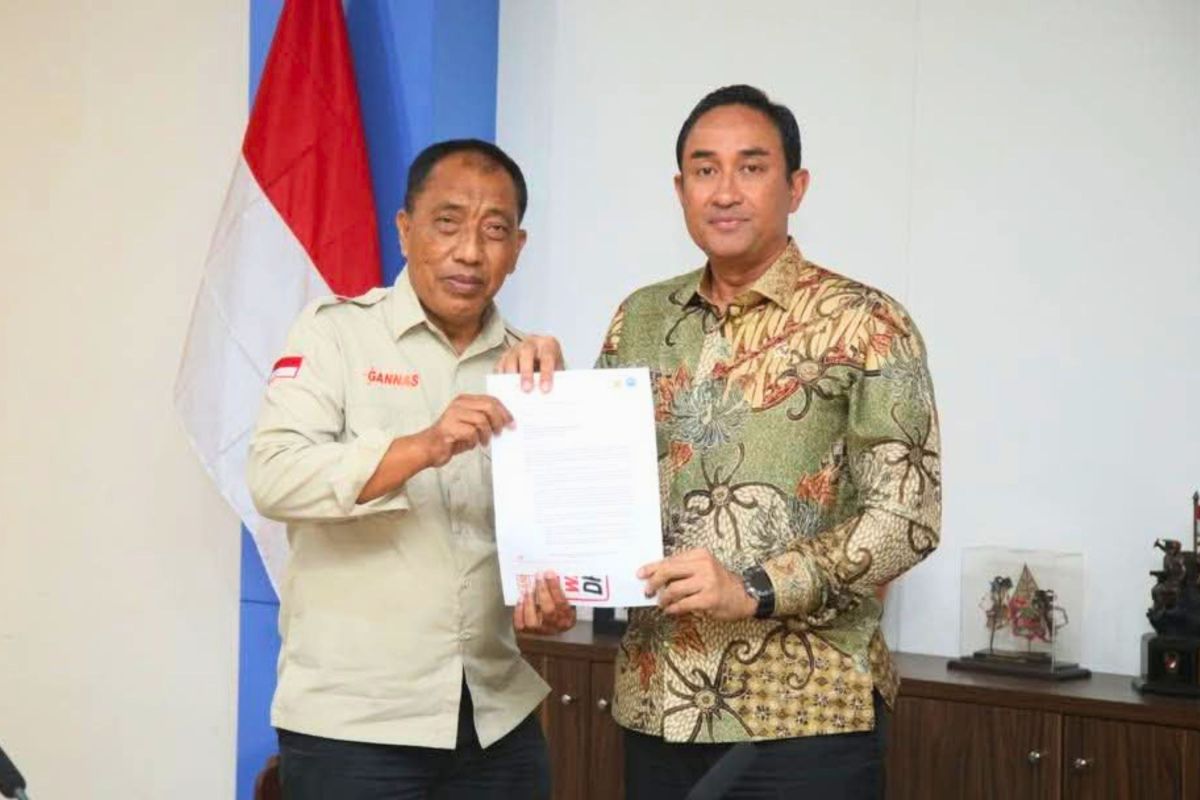
Jakarta (ANTARA) - The National Anti-Drugs Movement (GANNAS) says strengthening rehabilitation and guidance for people in custody in narcotics cases through Correctional Assimilation and Education Facilities (SAE) is a way to prevent repeat drug offences.
Rehabilitation for drug users through SAE is intended to support recovery, foster independence and prevent repeat narcotics offences through a more humane and educational correctional system.
GANNAS national executive chairman I Nyoman Adi Peri said in a statement received in Jakarta on Monday that the law should be humane and educational, rather than focused solely on deterrence. He said the handling of drug networks and dealers should be distinguished from the approach to people who misuse drugs and need recovery.
“Law enforcement must continue, but rehabilitation and education must also be an important part of efforts to protect society,” I Nyoman said.
He explained that strengthening rehabilitation was in line with Law No. 22 of 2022 on Corrections, which emphasises guidance, respect for human rights and social reintegration.
Meanwhile, Article 54 of Law No. 35 of 2009 on Narcotics stipulates that medical and social rehabilitation is mandatory for people dependent on narcotics and victims of narcotics abuse.
He added that rehabilitation services for detainees and people in custody are also regulated under Minister of Law and Human Rights Regulation No. 12 of 2017.
I Nyoman also backed an acceleration of the revision of the Narcotics Law with Commission III of the House of Representatives (DPR RI), so that updated regulations can address the handling of narcotics-related problems more comprehensively.
In his view, the revision should strengthen legal certainty, clarify the rehabilitation approach for those who need it, and ensure that law enforcement against illicit narcotics trafficking networks remains effective.
He said SAE programmes could provide productive guidance through farming, livestock, fisheries, job training and entrepreneurship activities.
However, he warned that implementation must be based on assessments, compliance with eligibility requirements, professional assistance and supervision in accordance with applicable rules.
He said rehabilitation should be measured, professional and sustained, so that after returning to society, people who have misused drugs are not left without direction or skills, or returned to environments that encourage narcotics abuse.
“That is why support after rehabilitation and guidance is so important,” he said.
He added that rehabilitation success could not be measured simply by the number of participants or whether activities had taken place. Evaluation should also cover participants’ progress, behavioural changes, skills development, access to employment and readiness to lead a better life.
He said the involvement of families, communities, government, rehabilitation institutions and businesses was important in supporting the process.
GANNAS therefore hopes that stronger SAE programmes and updated narcotics regulations will proceed in tandem, building a system that is tough on illicit narcotics trafficking while providing a route to recovery for those who need rehabilitation.
“With a humane, educational and results-oriented legal approach, efforts to prevent narcotics abuse and achieve social reintegration are expected to become more effective,” he said.
Meanwhile, Daun Teduh legal director Sherly Audina Catherine also voiced support for an idea put forward by Coordinating Minister for Law, Human Rights, Immigration and Corrections Yusril Ihza Mahendra to provide guidance for people in custody in narcotics cases on uninhabited islands through productive livestock activities.
She said the approach deserved consideration as an alternative form of guidance combining skills development, discipline and preparation for social reintegration.
“Guidance for people in custody in narcotics cases should focus on recovery and building independence,” Sherly said.
She said the proposal for livestock-based guidance on uninhabited islands could give people in custody an opportunity to learn, work and acquire useful skills.
With appropriate support, she added, the programme would not focus only on the period of incarceration but would also prepare them to return to society with better skills and prospects.
Nevertheless, Sherly stressed that the programme must take account of humanitarian considerations, the suitability of the location, the availability of healthcare and rehabilitation facilities, and support from professionals.
She said people in custody should be placed through an assessment process and in compliance with applicable laws.
“Productivity must not be the sole measure of success, because recovery, safety and the rights of people in custody must remain priorities,” she said.
Source: jawawa.id (https://jawawa.id/newsitem/gannas-strengthening-sae-rehabilitation-can-prevent-repeat-drug-offences-1791784515)
Originally published by Antara (Indonesian) (https://www.antaranews.com/berita/5781556/gannas-penguatan-rehabilitasi-sae-cegah-pengulangan-pidana-narkoba), translated from Indonesian