
Ganjar Views Proposal for Presidential Candidates to Undergo Party Cadre System as Difficult to Implement
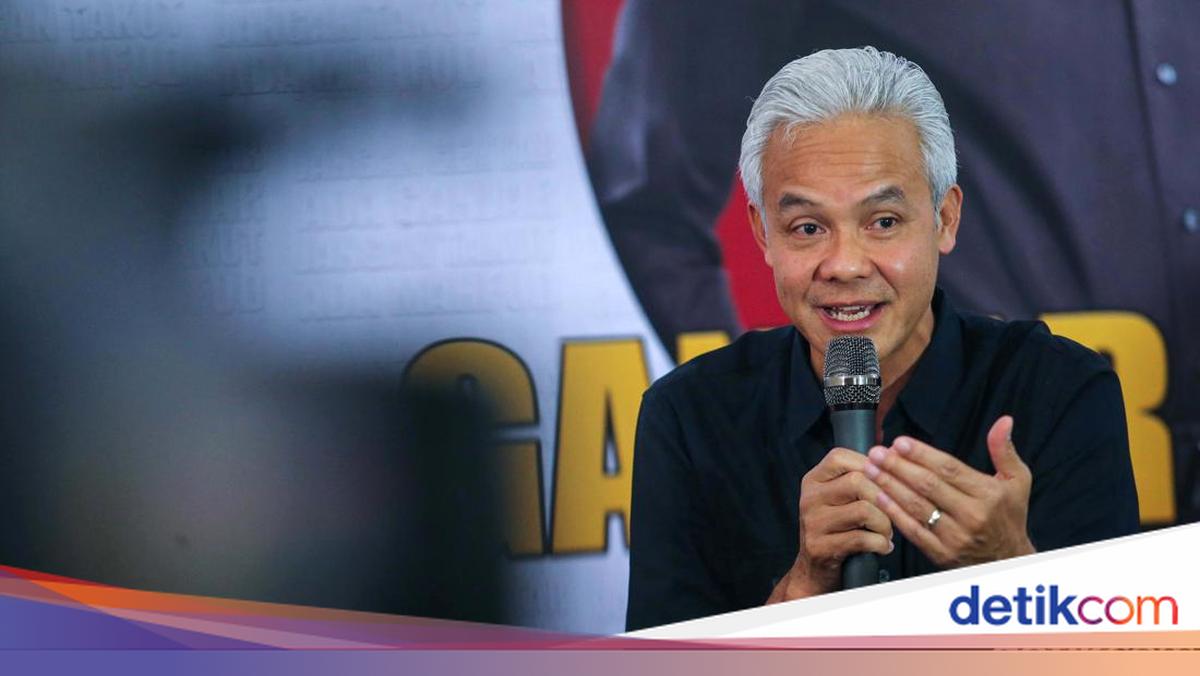
PDIP Central Executive Board Chairman Ganjar Pranowo has responded to the KPK’s proposal regarding the obligation for prospective presidential and vice-presidential candidates to undergo a cadre system. According to him, cadre development is important, but its implementation is not easy.
“Actually, the Political Parties Law already regulates the use of political assistance funds. 60% for political education and 40% for secretariat administration. Even the technical rules are detailed in the Government Regulation,” Ganjar told reporters on Thursday (23/4/2026).
“So in the context of public office candidates who will participate in elections, especially those from parties that function as a source of cadre recruitment, following cadre development becomes important. However, presidential candidates can come from outside the party,” he continued.
Therefore, the former Central Java Governor assesses that implementing cadre development for presidential candidates is not easy. Nevertheless, according to him, the public can assess from track records.
“So requiring candidates to undergo cadre development first seems not easy. However, the public should be able to see the capacity of candidates from track records, education, experience, and so on,” he stated.
Ganjar said that PDIP has long implemented a tiered cadre system. Among them, through the party’s Badiklat, starting from pratama, madya, utama to guru kader levels.
“Even at that time, special women’s cadre courses were created. To this day, we have a party school in Lenteng Agung,” he said.
It is known that the KPK has provided 16 points of recommendations from the study on political party governance. Regarding presidential candidates having to go through party cadre development, it is in point 5. Here are the 16 points of KPK recommendations:
The initiators of changes to Law No. 2 of 2011 (Ministry of Home Affairs and Ministry of Law and Human Rights) and the DPR (Commission II and Legislative Body) to complete Article 34 by adding a clause on the obligation to report political education activities covering activities, participants, objectives, and outputs carried out by political parties funded by government financial assistance.
The Ministry of Home Affairs to revise Minister of Home Affairs Regulation No. 36 of 2018 and 36 of 2010 to regulate the curriculum material for political education as a reference for political parties.
The Ministry of Home Affairs to prepare an integrated reporting system regarding the implementation of political education carried out by the government or political parties. This is in accordance with the duties and functions of the Ministry of Home Affairs as general guidance in the field of domestic politics and democracy (Article 117 Minister of Home Affairs Regulation No. 9 of 2025).
The preparation of curriculum material and integrated reporting system by the Ministry of Home Affairs becomes part of the Ministry of Home Affairs’ duties as a supervisor in accordance with the revision of Article 46 of Law No. 2 of 2008.
The need to add to the revision of Article 29 of Law No. 2 of 2011:
• Regarding political party membership in Article 29 Paragraph (1) letter a, add that political party members consist of young, intermediate, and advanced members.
• Requirements for cadres who become prospective DPR/DPRD candidates are clearly stated and tiered in the law Article 29 paragraph (1a). For example: prospective DPR from advanced cadres, prospective Provincial DPRD from intermediate cadres.
• Requirements for prospective presidential/vice-presidential/regional head/deputy regional head candidates, in addition to being democratic and open, add a clause that they come from the party cadre system.
• Add a minimum time requirement for joining the party to be nominated by the party.
The Ministry of Home Affairs to prepare standardisation and integrated political party cadre reporting system with the National Police.
Encourage political parties to implement the Constitutional Court Decision No. 60/PUU-XXII/2024 on the minimum threshold for regional elections through candidate recruitment based on cadre development.
To ensure the implementation of cadre development, regulation of the term limit for party general chairman to a maximum of 2 periods of management is needed.
The initiators of changes to Law No. 2 of 2011 (Ministry of Home Affairs and Ministry of Law and Human Rights) and the DPR (Commission II and Legislative Body) to complete Article 34 paragraph (1) letter a by implementing member dues with amounts based on cadre levels and recorded in political party financial reports.
Political parties to implement Article 34 paragraph (1) letter a by implementing member dues with amounts based on cadre levels and recorded in political party financial reports.
Political party financial reports disclose individual donations consisting of donations from executive/legislative political party members, ordinary members, and non-party members.
Eliminate sources of donations from business entities/companies. Donations from business entities/companies are recorded as donations from individuals (beneficial ownership of business entities) (implication: deletion of Article 35 paragraph (1) letter c).
The Ministry of Home Affairs to create an integrated political party financial reporting system with the National Police reporting system that can be accessed by the public.
Need to add to Article 39 in the revision of Law 2 of 2011:
The management of Political Party finances as referred to in paragraph (1) is audited by a public accountant every 1 (one) year and integrated into the political party financial reporting system managed by the government (Ministry of Home Affairs) periodically every year.
Need to add provisions for sanctions in Article 47 of Law 2 of 2011 regarding non-compliance of political parties in implementing Article 39 of Law 2 of 2011.
Revision of Article 46 of Law No. 2 of 2011 is completed with:
• The name of the institution given authority to supervise political parties.
• The scope of supervision covers party finances, cadre development, and political education.