
Gambir Station Set for Major Integration Upgrade, KAI to Strengthen Long-Distance, Commuter, and Monas Links
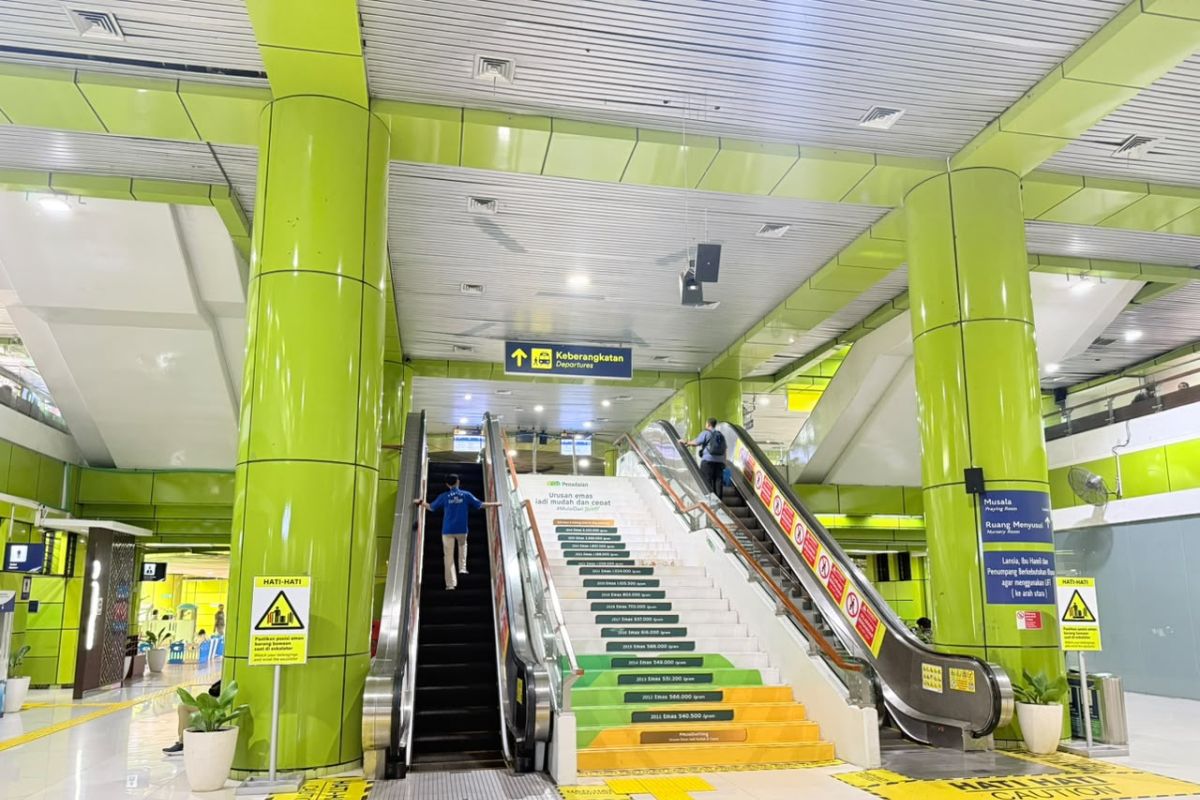
PT Kereta Api Indonesia (Persero) is preparing a development plan for Gambir Station aimed at making it more connected to customer needs and city life. After previously announcing Gambir’s development as a hospitality and leisure centre, the next phase focuses on integration, transforming the station into a hub that is easily accessible, comfortable, and linked to various transport modes in central Jakarta. Gambir has long been known as the gateway for long-distance train travel from the city centre. Its location near Monas, government offices, commercial districts, hotels, public spaces, and onward transport networks makes its development crucial for a seamless customer experience, from arrival and waiting to modal transfer and city activities.
Vice President of Corporate Communication at KAI, Anne Purba, stated that city-centre stations now play a broader role as meeting points for travel, public services, economic activity, dining, retail, culture, and urban space. Gambir’s development is guided by this ethos while maintaining its primary function as a long-distance train station. Currently, Gambir serves 34 regular long-distance trains daily, equating to roughly 78 boarding and alighting stops. The elevated track at Gambir is also traversed by 326 Bogor Line Commuter Line journeys each day on the Jakarta Kota–Bogor and Jakarta Kota–Nambo routes. However, these commuter trains do not yet stop at Gambir. Discussions regarding KRL integration are being treated as a phased process requiring infrastructure readiness, operational adjustments, safety protocols, track capacity, and regulatory coordination.
Anne explained that the goal is to ensure integration functions smoothly once all technical aspects are ready, prioritising easier access for customers alongside safety and operational reliability. The need for integration is underscored by commuter movement data, with Jabodetabek KRL volume rising from 217,964,892 journeys in 2022 to 344,621,825 in 2025, a 58.11% increase. The Bogor Line is the busiest, growing from 102 million passengers in 2022 to 155 million in 2025. Anne noted that if Gambir eventually serves commuter line boarding and alighting, it will provide Bogor Line passengers with closer access to Monas, government offices, and public spaces, while offering long-distance train passengers broader onward connectivity.
The development aligns with the strengthening of Manggarai Station, with both playing distinct but complementary roles in the Jabodetabek railway ecosystem. Manggarai remains the central station for large-scale inter-line transfers, while Gambir is reinforced as the long-distance gateway to the city centre, the Monas area, and a potential commuter integration point. A business optimisation study envisions Gambir as a Modern Station & Lifestyle Hub built on three pillars: mobility, culture, and lifestyle. The concept integrates transport with cultural spaces, customer services, commercial areas, and public spaces connected to the Medan Merdeka district, with future plans including links to Transjakarta, the MRT, pedestrian zones, retail, dining, lounges, and a rooftop park.
Source: jawawa.id (https://jawawa.id/newsitem/gambir-station-set-for-major-integration-upgrade-kai-to-strengthen-long-distance-commuter-and-monas-links-1783418224)
Originally published by Antara (Indonesian) (https://www.antaranews.com/berita/5638860/gambir-disiapkan-lebih-terhubung-kai-perkuat-akses-ka-jarak-jauh-krl-dan-kawasan-monas), translated from Indonesian