
GAMAS promotes stronger father-child bonds through school routine
Not long ago, a 34-year-old man identified by his initials MY sent a WhatsApp message containing a bomb threat to a teacher at public morning elementary school SDN Srengseng Sawah 15 Pagi.
The message threatened to bomb 11 locations at the school and warned the school not to report the matter to the police.
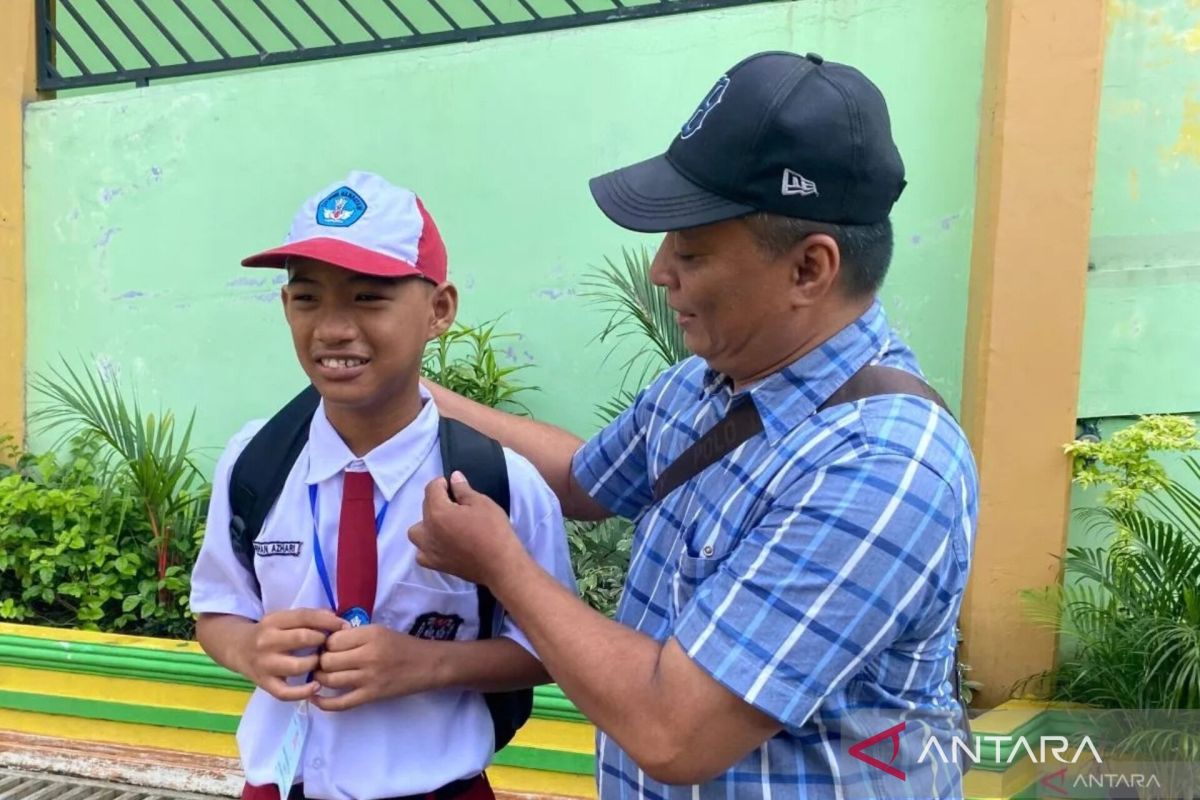
The incident occurred on the first day of the School Environment Orientation Period (MPLS), when many fathers were accompanying their children to school.
The threat prompted the police to deploy the Gegana bomb squad and K-9 units to search the school.
Although the man was arrested and no bomb was found, the children’s sense of security was completely shattered.
The presence of fathers that day was meant not only to help children adjust to a new school environment but also to strengthen emotional bonds between parent and child.
In the end, however, the perpetrator’s own child also suffered the consequences and had to leave the school.
According to child psychologist Gloria Siagian, the Father’s Movement to Accompany Children on the First Day of School (GAMAS) means more than just dropping children off at the school gate.
What matters more is that children genuinely feel their father’s presence, Siagian noted.
There are many opportunities for fathers to build closeness with their children, from listening to their stories and understanding their feelings about entering a new environment to providing a sense of security.
On the other hand, the meaning of that presence is entirely lost if a father is venting anger, glued to his phone, or ignoring his child.
Since fathers are often seen as symbols of family strength, she noted that their genuine involvement on the first day of school is what actually helps children feel confident entering a new environment.
She explained that when a father routinely loses his temper, the child learns to equate emotional expression with shouting and anger.
The psychologist explained that emotions, whether anger or sadness, are essentially neutral. What needs to be managed is behavior when those emotions arise.
“Expressing emotions is healthy and acceptable, but children should not be hurt in the process,” she said.
Support should therefore be provided not only to children but also to parents so that parenting patterns can become healthier.
Schools also have an important role in helping children reconnect with their environment through support from teachers, guidance and counseling counselors, and school principals.
Such support can help children regain their sense of security, rebuild trust in their school, their parents, and themselves.
This is reflected in the experience of Ridho, a father who wakes up at 5 a.m. every day to take his child to State Special School (SLBN) 02 Jakarta before heading to work.
For him, riding a motorcycle with his child to school is a way to build emotional closeness. Even the smallest conversations become meaningful when shared with someone who matters.
Ridho said he believes that as long as there is an opportunity for his child to receive a better education, it should be pursued so that his child, who has a disability, can eventually live independently.
His child, who has an intellectual disability, is now in grade 7. Ridho said he hopes the education his child receives will help develop valuable life skills.
Parents are children’s first teachers
Today, parents have many opportunities to learn about effective parenting. It is never too late for those willing to improve how they raise their children.
One such initiative is the Father’s Movement to Accompany Children on the First Day of School (GAMAS), launched by the Ministry of Population and Family Development (BKKBN) to strengthen emotional and psychological bonds between fathers and their children.
The ministry’s Circular Letter No. 17 of 2026 on the Father’s Movement to Collect Children’s Report Cards (GEMAR) and GAMAS is intended to be implemented continuously, including on the first day of school.
The government introduced the initiative in response to the challenge of limited father involvement in child-rearing, or fatherlessness, in Indonesia.
According to the 2025 Family Data Collection, about 25 percent of children experience limited involvement from a father figure.
The program is part of the government’s efforts to build quality families by strengthening communication and parenting practices within households.
Among the positive impacts of GAMAS are stronger character development, as children feel more cared for and emotionally supported by both parents.
GAMAS is also expected to enhance children’s safety during their commute to school while creating opportunities for meaningful conversations between fathers and their children along the way.
Ultimately, the Father’s Movement to Accompany Children to School is about far more than just who drops children off at the gate.
Its true meaning lies in the lifelong values that fathers instill in their children during these moments.
Related news: Fathers in Indonesia urged to support children at school
Related news: Jakarta supports fathers joining children’s school start