
GAMAS: More than just a father escorting his child
Jakarta (ANTARA) - Not long ago, a 34-year-old man with the initials MY sent a message containing a bomb threat to a teacher at SDN Srengseng Sawah 15 Pagi.
The WhatsApp message contained a threat from the perpetrator to detonate bombs at 11 points across the school and demanded that the school not report the matter to the police.
The incident coincided with the first day of the School Environment Introduction Period (MPLS) at the school, when many fathers were escorting their children to school.
The threat prompted the police to deploy the Gegana unit and K-9 tracker dogs to sweep the school. The man was arrested and no bomb was found. However, something else truly exploded: a child’s sense of security.
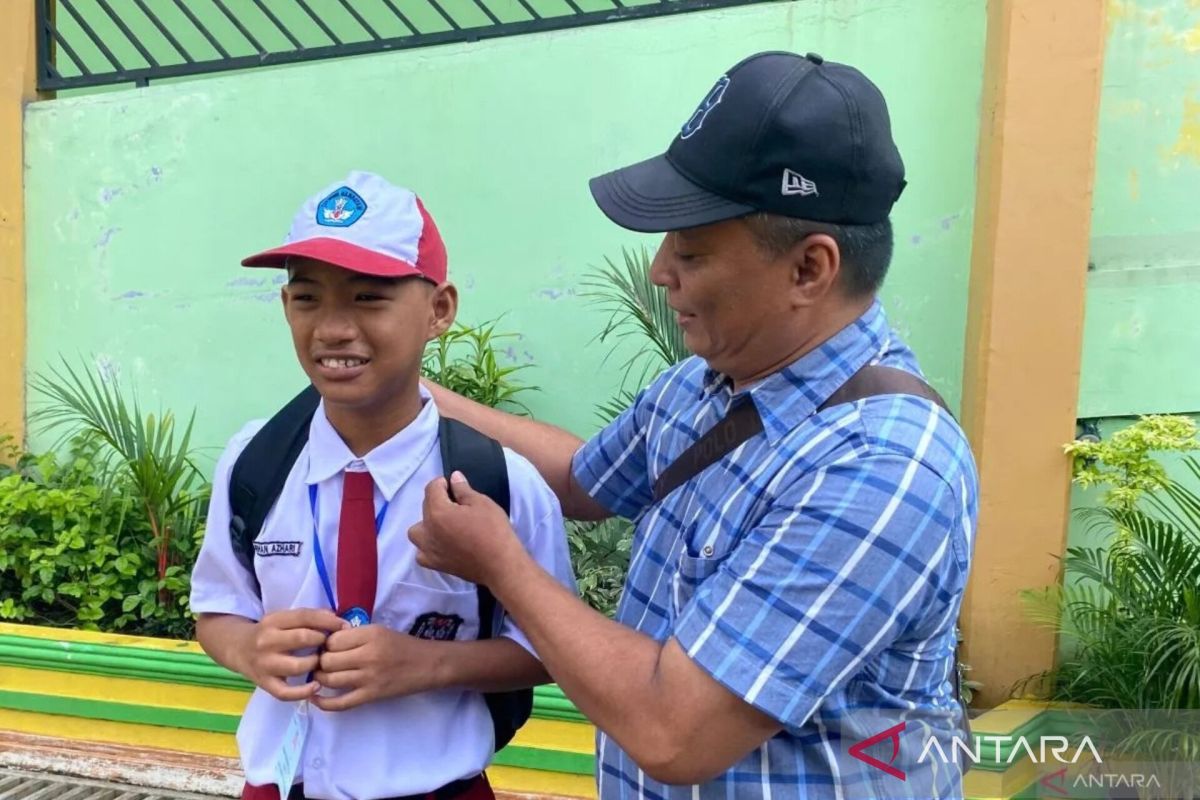
In fact, a father’s presence at that moment not only helps a child adapt to a new environment, but also presents an opportunity to build emotional closeness.
In the end, however, the impact of the incident was also felt by the perpetrator’s child, who had to leave their school.
Child psychologist Gloria Siagian believes the Fathers Escorting Children on the First Day of School movement (GAMAS) should not be understood as merely walking a child to the school gates.
According to her, beyond that, a father’s presence needs to be genuinely felt by the child.
There are many opportunities for a father to grow close to his child, from listening to the child’s stories, understanding their feelings as they enter a new environment, and providing a sense of security.
Conversely, if a father escorts his child while venting anger, busying himself with his mobile phone, or paying the child no attention, the meaning of his presence is lost.
Fathers are often seen as a symbol of strength within the family. Therefore, a father’s involvement on the first day of school can help a child feel confident when entering a new environment.
It is not only through togetherness that children learn; they also learn from how a father expresses his emotions. According to psychologists, fathers serve as role models, particularly for boys, so everyday behaviour is more easily imitated than advice that is given.
“If, for example, the father is accustomed to losing his temper, the child will model that the way to express emotions is by getting angry and shouting,” she said.
Psychologists say emotions, whether anger or sadness, are essentially neutral. What needs to be controlled is one’s behaviour when those emotions arise.
Therefore, parents need to familiarise themselves with recognising the emotions they feel, understanding their causes, and then expressing them in a healthy way.
“So expressing emotions is permissible and healthy, but the child should not end up hurt,” she said.
A child in such a situation risks confusion, because on one hand they love their parent, while on the other, school has long been a safe space for them.
In addition, the child also risks facing stigma from their surroundings, losing self-confidence, and developing feelings of shame and anger over what happened.
Support needs to be provided not only to the child, but also to the parents so that parenting patterns can change for the healthier.
Meanwhile, schools also play an important role in restoring the child’s relationship with their environment through the support of teachers, guidance and counselling (BK) teachers, and the school principal.
That way, the child can feel safe again, rebuild trust in their school, their parents and themselves, and grow up without being continually haunted by a wrongdoing that was not their own.
This is reflected in the example of a father named Ridho, who wakes up at 05.00 Western Indonesia Time every morning to escort his child to State Special School (SLB) 02 Jakarta before heading to the office.