
Gajah Wong River Once Exceeded Danger Threshold as EWS Siren Sounds at Two Metres
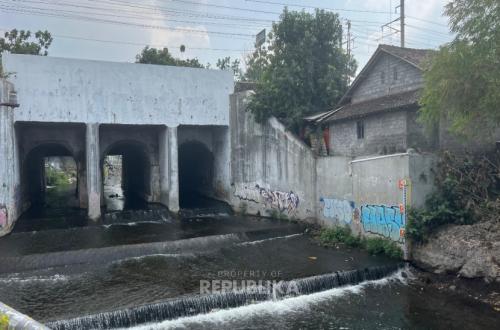
YOGYAKARTA — The flood Early Warning System (EWS) siren along the banks of the Gajah Wong River in Yogyakarta city starts sounding when the water level reaches 220 centimetres. The Yogyakarta City Disaster Management Agency (BPBD) said the river reached 281 centimetres on 17 January 2026, exceeding the Danger threshold.
Residents living along the river have experienced the siren sounding earlier than they expected. Nur Usaida Ningsih, 54, who has lived on the banks of the Gajah Wong in Gendeng for 28 years, said the siren once sounded when the water was only about two metres high.
“It wasn’t late; the siren actually went off first,” Nur said in an interview on Wednesday, 28 October 2026.
Grezia Eleganza Nur Pradhani, head of the BPBD Yogyakarta City Disaster Data, Information and Communication Working Team, said the thresholds in Gendeng are tiered: Alert at 220 centimetres, Prepared at 240 centimetres and Danger at 260 centimetres.
“The BPBD early warning system uses telemetry, water-level gauges and CCTV cameras. For the Gajah Wong River in Gendeng, 220 centimetres is the Alert status,” Grezia said on Monday, 2 November 2026.
Under these thresholds, the siren sounding at a water level of around two metres, as Nur experienced, is close to the Alert threshold. It is not known how much time residents have between the siren sounding and the water reaching a dangerous level.
Grezia said the siren could sound earlier. The river’s width, depth and banks vary from one point to another. In Gendeng, flooding may already occur at a level of around 200 centimetres, while it may not yet happen further downstream because the river is wider there. Residents and members of the Disaster-Resilient Community (KTB) need to monitor these conditions directly, she said.
Residents have been asked to learn the three siren codes. At Alert status, the siren sounds in six bursts with pauses, and residents are asked to remain calm and follow official BPBD updates. At Prepared status, it sounds rapidly in four repeated bursts; residents should switch off the electricity, prepare an emergency bag and check the nearest evacuation route. At Danger status, the siren sounds continuously, and residents must leave their homes immediately for a safe assembly point away from the riverbank.
The BPBD recorded eight flood incidents in 2026. On 17 January, flooding was reported at four locations along the Gajah Wong, with the water reaching 281 centimetres, above the 260-centimetre Danger threshold. According to Grezia, the water began rising significantly at about 3pm, briefly fell at around 4.43pm, then peaked at about 5.30pm. Flooding was recorded again at three locations in April 2026.
Grezia also said the EWS can experience system errors. Telemetry sensors, for example, can sometimes be disrupted by broken branches or passing tree trunks.
“System errors are bound to happen because this technology is made by humans and nothing is perfect. So far, we have coordinated directly with the system’s maker. If there is an error, the system sends a notification to the BPBD. Within about three to five minutes of receiving it, we follow up with the maker to check whether the sensor is genuinely detecting a flood or whether rubbish is caught on it,” Grezia said.
The BPBD has 36 EWS units in Yogyakarta city. Funding for routine inspections and drills is allocated each year, and all EWS units are checked before drills, which take place about four times a year. The BPBD also accepts reports through disaster facilitators in each area, who collect complaints from KTB leaders and administrators. The agency stressed that residents should report issues proactively, such as if the siren cannot be heard over a sufficient distance.
Across the Special Region of Yogyakarta, 36 EWS units are located along three rivers — the Gajah Wong, Code and Winongo — with one additional unit in Ngentak. Not all of them are automated, to guard against mobile-network or electricity failures during disasters.
The BPBD also held a simultaneous EWS drill on 2 September 2026 at five locations: Gendeng, Tegalgendu, Danukusuman, Ledok Tukangan and Pingit.
Deddy Hermawan, head of the Gendeng Disaster-Resilient Community, said the Gajah Wong EWS had been installed nearly seven years ago and is monitored by the BPBD whenever it rains. Rain lasting more than two hours almost always makes the water level rise, he said. If rain falls across the entire area from upstream to downstream for three to four hours, the water will certainly rise.
The worst flooding Deddy remembers followed more than four hours of rain, when water entered two housing complexes near the riverbank and residents gathered together. He said the water reached 3.4 metres as it spread into the residential areas.
Nur also recalled the highest water level she had experienced as being about three metres, close to the BPBD’s January 2026 record of 281 centimetres.
Deddy said the Gendeng KTB was established in 2014 and received its institutional decree in May 2015. It covers seven neighbourhood units (RW) and 34 community units (RT), and initially had 117 volunteers.
The volunteers signed up themselves rather than being selected, Deddy said. Initial training consisted of seven sessions; training is now conducted in accordance with guidance from the local urban village administration and the BPBD.
Source: jawawa.id (https://jawawa.id/newsitem/gajah-wong-river-once-exceeded-danger-threshold-as-ews-siren-sounds-at-two-metres-1794210658)
Originally published by Republika (https://rejogja.republika.co.id/berita/to82rs291/tinggi-air-sungai-gajah-wong-pernah-lewati-batas-awas-sirine-ews-berbunyi-saat-ketinggian-2-meter), translated from Indonesian