
Gaikindo Warns BI Rate Hike Could Delay Car Purchases for Months
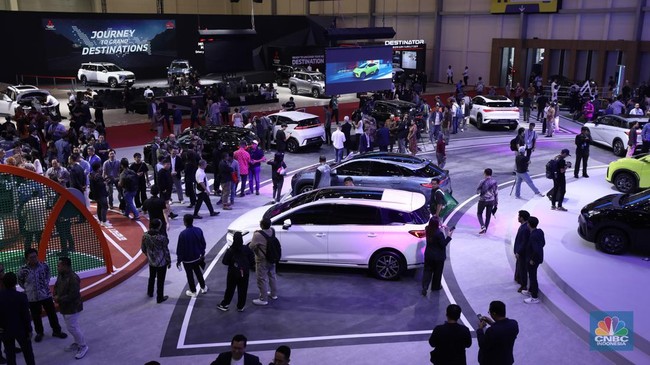
The increase in the BI Rate is not expected to immediately suppress national car sales, but the automotive industry is wary of the risk of consumers postponing purchases. The Association of Indonesian Automotive Industries (Gaikindo) highlighted that the biggest impact arises when potential customers choose to delay buying a vehicle due to higher credit interest rates.
The automotive industry assesses that changes in interest rates take time before they are truly felt by consumers. Beyond the banking channel, the decision to purchase a car is also influenced by the individual needs of each prospective buyer.
“From BI to the bank, from the bank to the potential customer. If it is translated directly to the customer, they also have their own way of dealing with it, whether to buy now or not. If an adjustment is made immediately, the impact is tremendous. Potential customers might tend to say, ‘I’ll leave it for now,’” said Gaikindo Secretary General Kukuh Kumara.
The decision to postpone a vehicle purchase can become a serious issue for the industry. Vehicles that have already been produced must be kept in storage, incurring additional costs for manufacturers and distribution networks.
For this reason, each brand has a different strategy to keep sales moving. The magnitude of the impact also cannot be generalised as it depends on the internal policies of each company.
“If they hold, it is usually for a long time. Not just a week or two, it could be two, three, or four months. We lose momentum. The vehicles have already been made at the factory, they cannot be folded away; they take up storage space and incur costs,” Kukuh explained.
There is no definite benchmark for when the impact of the interest rate hike will be felt on sales. Each manufacturer has a different capacity to face market changes.
“This is relative, depending on each brand. They have a cushion for a certain period. It cannot be generalised to three or four months. We have to look at historical data and each company’s policies,” Kukuh stated.
Despite being alert to these risks, Gaikindo observed that sales up to the middle of the year are still showing a positive trend, leading the industry to continue monitoring developments before taking further steps.
“The indications actually show the opposite. Sales from January to June are better compared to last year. We remain cautious, but it is still positive,” Kukuh noted.