
Gaikindo Deems It Fair for Electric Vehicles to Also Face Taxation
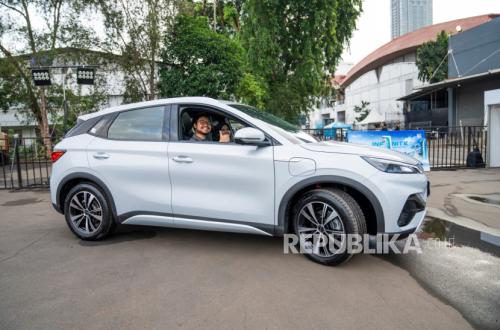
The Indonesian Automotive Industry Association (Gaikindo) considers the new electric vehicle (EV) taxation scheme, which no longer fully exempts them, to be a fair step, although it may affect market sales.
Gaikindo’s General Secretary, Kukuh Kumara, met in Jakarta on Wednesday (22/4/2026), stated that imposing taxes on electric vehicles can be understood from the perspective of using public infrastructure.
“Taxes on electric cars are not yet final, but it’s fair. Meaning, everyone uses the roads, so they should pay the same taxes,” he said.
This policy aligns with the implementation of Minister of Home Affairs Regulation No. 11 of 2026, which changes the motor vehicle tax scheme, including for electric vehicles. Under this regulation, electric vehicles are no longer automatically excluded from motor vehicle tax (PKB) and motor vehicle ownership transfer fee (BBNKB).
Nevertheless, the central government still provides room for local governments (pemda) to determine the amount of incentives, either in the form of exemptions or reductions in taxes. This makes the electric vehicle tax policy potentially vary across regions.
Kukuh acknowledged that the tax scheme change is not without consequences for the market. “There will definitely be an impact. That’s a business issue,” he said in response to the potential influence on electric vehicle sales.
According to him, the dynamics of policies at the regional level are something that industry players already understand.
Gaikindo stated that communication between the industry and local governments has been ongoing, particularly in seeking a balance between regional revenue needs and people’s purchasing power.
“The point is, they also want revenue (income), but they also want the taxes to be affordable,” said Kukuh.
The government has changed the motor vehicle tax imposition scheme, including for electric vehicles, through Minister of Home Affairs Regulation (Permendagri) No. 11 of 2026, meaning electric vehicles are now no longer excluded from motor vehicle tax (PKB) and motor vehicle ownership transfer fee (BBNKB).
It is known that under this regulation, electric vehicles are no longer objects excluded from motor vehicle tax (PKB) and motor vehicle ownership transfer fee (BBNKB). In other words, ownership or transfer still falls under the taxation scheme.
This means that electric cars are still subject to tax by regulation, but the amount paid is not always full and can even be zero rupiah, depending on regional policies.
The imposition of taxes is not absolute. The central government still opens room for incentives in the form of exemptions or reductions, as regulated in Article 19.
The amount of such incentives is left to each local government. Therefore, the future electric vehicle tax policy will no longer be uniform and can differ between regions.
Several regions are now beginning to respond to this regulation, including Jakarta, which is preparing policies related to electric vehicle incentives.